Figure 13.1: Example of a Failed Observation Analyzed with FGS_PLOTTER 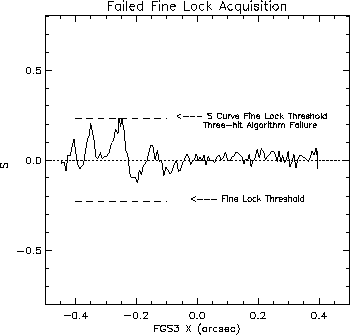
The interactive graphics tool fgs_plotter can display a variety of FGS quantities as functions of other data. For example, you can display the location of the IFOV in pickle coordinates as a function of x vs. y, or the fine error signal (partial S-curve) as a function of x during the WalkDown to FineLock. This tool works with guide star data as well as astrometry data.
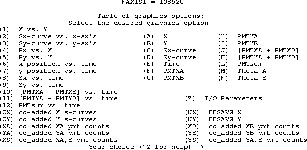
The fgs_plotter tool is both versatile and essential for analyzing failed observations and retrieving useful data from marginal observations. For example, Figure 13.1, generated with fgs_plotter, shows a failed observation in which the FGS was not able to acquire a star in FineLock because the fine error signal (Sx) did not exceed the necessary threshold. The tool can also be a valuable eductional aid for an observer who is unfamiliar with FGS data. Figure 13.2 shows the menu of functions in FGS_PLOTTER that are available to the observer.
Figure 13.1: Example of a Failed Observation Analyzed with FGS_PLOTTER
Figure 13.2: Options Available in FGS_PLOTTER