Scope

The school is meant for the RTN Ph.D. students and postdocs, in order to give them an extensive and complete review on the current observing and reduction techniques, in order to put them in the conditions of autonomously planning the observations and carrying out the data reduction according to what we think is the "right" way of doing it (whatever this means...).
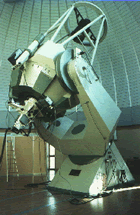
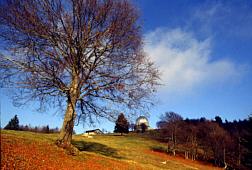
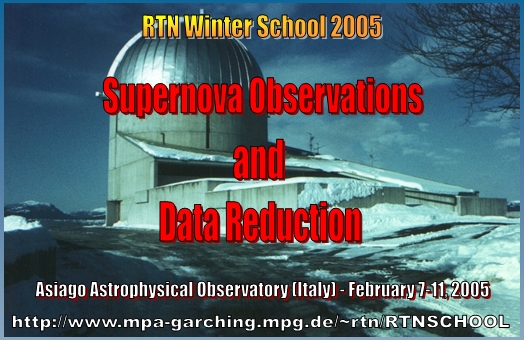
The school will be held in Asiago (Italy), at the Astrophysical Observatory, which hosts the 1.8m Copernicus telescope. This will give us the opportunity of having direct observing sessions, preceded and followed by data reduction lectures and seminars.


Topics covered

  • SN observations in general: methods, calibrations, problems and precautions
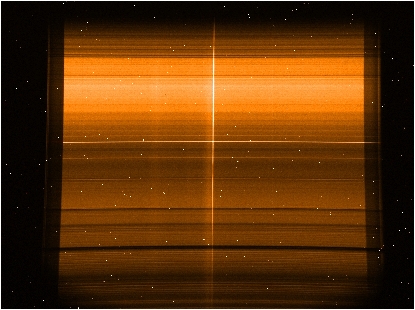
  • Data reduction for optical imaging and spectroscopy
  • Data reduction for near-IR imaging and spectroscopy
  • Polarimetry and Spectropolarimetry
  • Integral field spectroscopy

  • A more detailed description can be found
    here.

    Lecturers include Brian Schmidt, Stefano Benetti, Chris Gerardy, Nando Patat and Pierre Antilogus.

    Format

    The school will last three full days days, allowing for two free mornings, the ones immediately following the observations (if weather permits, of course). The lectures should last about 2 hours each and should include direct demonstrations and practical examples. We are trying to set up a room equipped with some PCs and Internet access for this purpose.

    Contributed Lectures

    Besides the official lectures, we plan to have some sessions for the young researchers as well. The idea is to invite some of them to give more specialistic talks, about some aspects they have been working on (e.g. S-correction, reddening correction, special observing techniques, different wavelength domains and so on).

    A preliminary list of contributed lectures can be found
    here.

    Observations

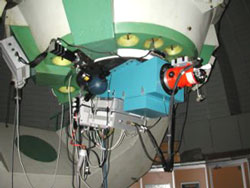
    If weather will permit, we plan to have two observing nights at the 1.8m telescope, equipped with the AFOSC instrument. The nights have been kindly made available by the Padova Supernova Group.

    Preliminary programme

    The programme will probably keep evolving in the next month or so. Please, check this page from time to time for the latest news.

    Mon 7 Evening Arrival in Asiago
    Tue 8 Morning/Afternoon
    Evening
    Lectures
    Social Dinner
    Wed 9 Morning/Afternoon
    Night
    Lectures
    Observations
    Thu 10 Morning
    Afternoon
    Night
    Sleeping
    Lectures
    Observations
    Fri 11 Morning
    Afternoon
    Sleeping
    Farewell
    NOTE: in case of bad weather, mornings will be used for discussions and contributed presentations.


    A more detailed program can be found here.

    List of Participants

    A list of the registered participants can be found
    here.

    Lodging

    Participants will be lodged at the
    Pennar Hotel, which is located at about 1km from the Observatory and very close to a "latteria", where you can taste the famous Asiago cheese. We have already booked the hotel rooms for you. The cost is approximately 40 EUR per night, including dinner and breakfast. According to the Hotel's availability, some of the participants will have to share double rooms. If you are not sure you have registered, please check the above list and/or contact us.
    As for lunches, Asiago offers a wide range of restaurants, where you can enjoy good food and wine. We will try to arrange a transportation to the town (about 1.m km from the Observatory).

    How to reach Asiago and the Observatory

    Asiago is located in the North-East of Italy. Clear instructions on how to reach the Observatory can be found here. The closest airport is Venice. From there, one can take the train to Bassano del Grappa or Vicenza (using the lines Padova-Bassano or Padova-Vicenza). Then, the most convenient way to reach Asiago is by bus.

    Note that the access to the Observatory by car is restricted. We will have a few magnetic cards to open the gate, which we will distribute to some of the participants coming with their own car.

    Weather

    Asiago is located at about 1000 m above sea level. In February the temperature can be pretty low (well below zero C) and one can reasonably expect snow. Therefore, warm clothes and snow booths are warmly recommended. Asiago and the surrounding area offer plenty of both downhill and cross-country ski resorts. Bring suitable clothes if you plan to stay over the week-end and enjoy the snow.

    Proceedings

    The lectures will be collected and published under the RTN web pages.

    Scientific Organizing Committee

    Stefano Benetti (co-Chair) - Italian National Institute for Astrophysics (INAF-Padua)
    Ferdinando Patat (co-Chair) - European Southern Observatory (ESO-Garching)
    Wolfgang Hillebrandt - Max Planck Institute for Astrophysics (MPA-Garching)
    Brian Schmidt - Australian National University (ANU-Australia)
    Massimo Turatto - Italian National Institute for Astrophysics (INAF-Padua)

    Further info

    Should you have any questions, please do not hesitate to
    contact us.

    School Poster

    The Winter School Poster can be downloaded here as
    PNG, JPG and PDF.

    Acknowledgements

    The school will be hosted in the Asiago Astrophysical Observatory and is patronized by the
    Department of Astronomy of the University of Padua and the Padua Astronomical Observatory (INAF).


    Sponsored by The Physics of Type Ia Supernovae - a European Research and Training Network


    fpatat@eso.org - Last Modified: Fri Jan 28 17:00:02 CET 2005

    Back To RTN Home Page