Les galaxies commencent à « mourir » lorsqu'elles cessent de former des étoiles, mais jusqu'à présent, les astronomes n'avaient jamais clairement entrevu le début de ce processus dans une galaxie lointaine. Grâce à ALMA (Atacama Large Millimeter/submillimeter Array), dont l'Observatoire Européen Austral (ESO) est partenaire, les astronomes ont vu une galaxie éjecter près de la moitié de son gaz nécessaire à la formation d'étoiles. Cette éjection se produit à un rythme effarant, qui équivaudrait à 10 000 fois la masse du soleil de gaz par an - la galaxie perd rapidement son combustible pour fabriquer de nouvelles étoiles. L'équipe pense que cet événement spectaculaire a été déclenché par une collision avec une autre galaxie, ce qui pourrait amener les astronomes à repenser la façon dont les galaxies cessent de donner vie à de nouvelles étoiles.
Le communiqué, les images et les vidéos sont disponibles sur :
https://www.eso.org/public/france/news/eso2101/
Amicalement,
The ESO Department of Communication
11 janvier 2021
|
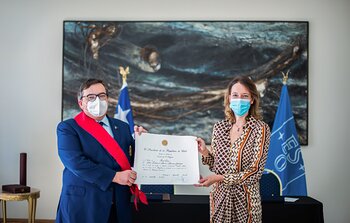
16 décembre 2020: On Friday 11 December, ESO Director General Xavier Barcons received the Order of Bernardo O’Higgins Grand Cross, at a ceremony chaired by Carolina Valdivia, the Chilean Undersecretary of Foreign ...
|
| Lire plus |

|
4 décembre 2020: The Extremely Large Telescope (ELT), ESO’s new flagship telescope being built to answer the biggest questions about our Universe, has received a 10% increase to its budget. The funding ...
|
| Lire plus |
|
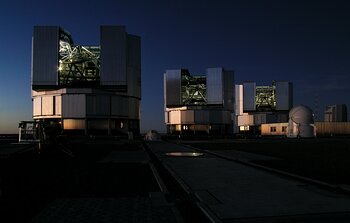
3 décembre 2020: To strengthen its cooperation with Chile, ESO provides and manages an annual fund that awards projects dedicated to the development of science research, technology and education in astronomy. The Joint ...
|
| Lire plus |
|
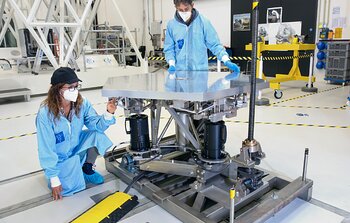
24 novembre 2020: M1, the main mirror of ESO’s Extremely Large Telescope (ELT), is moving closer to completion with the approval of the final design for its edge sensors, with its positions ...
|
| Lire plus |
|
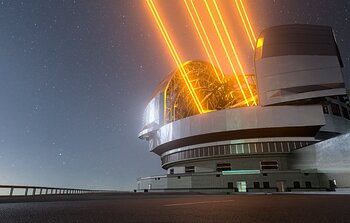
19 novembre 2020: While the construction of ESO's Extremely Large Telescope (ELT) in Chile's Atacama Desert is on hold due to the COVID-19 pandemic, important progress on the project is being ...
|
| Lire plus |
|
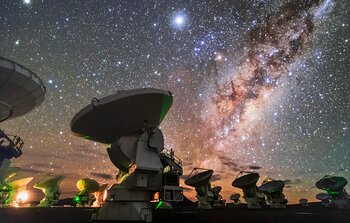
17 novembre 2020: A newly and better processed version of data on planet Venus, collected with the Atacama Large Millimeter/submillimeter Array (ALMA) in Chile, has now been made publicly available via the ...
|
| Lire plus |
|
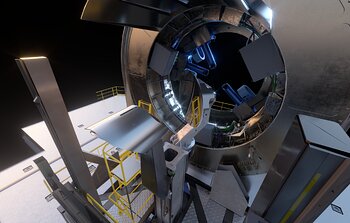
6 novembre 2020: A major component of ESO’s Extremely Large Telescope (ELT), its first prefocal station or PFS-A, is now close to completing its final design review. With this milestone nearly reached ...
|
| Lire plus |
|
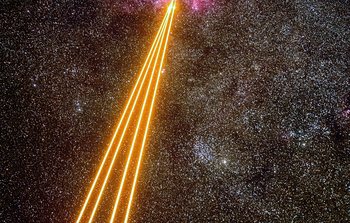
1 janvier 2021: From watching a star dance around a supermassive black hole to imaging multiple planets around a Sun-like star, 2020 has seen some amazing astronomical discoveries. In this blog post, we ...
|
| Lire plus |
|
Interview with Dinko Milaković
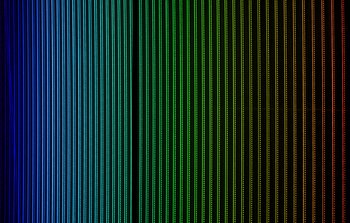
11 décembre 2020: One of the biggest mysteries in astronomy is understanding the laws that govern our Universe. Dinko Milaković has been part of a team of astronomers using ESO’s 3.6-metre telescope at ...
|
| Lire plus |
|
Anna Purdue
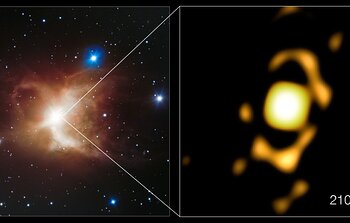
27 novembre 2020: A team of astronomers led by Keiichi Ohnaka in Chile have looked deep into the core of the Toby Jug Nebula to gather clues on how dying stars change into ...
|
| Lire plus |
|
Stephanie Rowlands
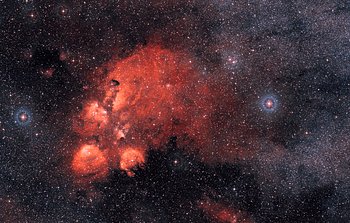
6 novembre 2020: ESO’s many telescopes at La Silla and Paranal Observatories in Chile gaze up at thousands of astronomical objects every year. Before astronomers catalogued these objects with names such as NGC ...
|
| Lire plus |
|
|
|
|