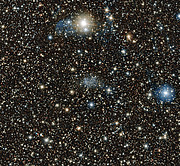
Una nube scura di polvere cosmica serpeggia in questa spettacolare immagine panoramica, illuminata dalla luce brillante di nuove stelle. La densa nube è una regione di formazione stellare nota come Lupus 3, in cui abbaglianti stelle caldissime nascono dalle masse di gas e polvere che collassano. L'immagine è stata prodotta dai dati del telescopio VST (VLT Survey Telescope) e del telescopio da 2,2 metri dell'MPG/ESO: è l'immagine più dettagliata di questa regione ottenuta finora.
Testo immagini e video disponibili su:
https://www.eso.org/public/italy/news/eso1804/
Cordiali saluti,
Il dipartimento dell'ESO per l'educazione e la divulgazione
31 Gennaio 2018
|
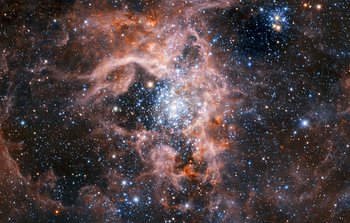
30 Gennaio 2018: ESO’s Very Large Telescope (VLT) now has a second instrument working with the powerful Adaptive Optics Facility (AOF). The infrared instrument HAWK-I (High Acuity Wide-field K-band Imager) [1] is ...
|
| Leggi ancora |
|
Interview with: Olivier Hainaut
Interview with: Andy Williams
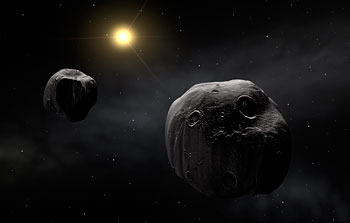
26 Gennaio 2018: 65 million years ago, the most famous asteroid in history slammed into Earth and most likely exterminated the dinosaurs. Disconcertingly, we are no less likely to be to hit by ...
|
| Leggi ancora |
|
|
|
|