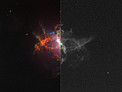
Il debole, effimero bagliore che emana dalla nebulosa planetaria ESO 577-24 persiste solo per poco tempo - circa 10.000 anni, un battito di ciglia in termini astronomici. Il Very Large Telescope dell'ESO ha catturato questo guscio di gas ionizzato incandescente - l'ultimo respiro della stella morente i cui resti ribollenti sono visibili nel cuore di questa immagine. Mentre il guscio gassoso della nebulosa planetaria si espande e si affievolisce, scomparirà lentamente alla vista.
Testo immagini e video disponibili su:
https://www.eso.org/public/italy/news/eso1902/
Cordiali saluti,
Il dipartimento dell'ESO per l'educazione e la divulgazione
22 Gennaio 2019
|
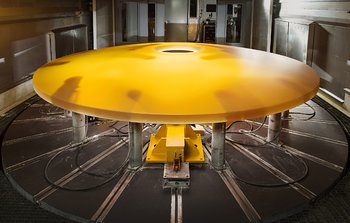
16 Gennaio 2019: Work on the elaborate optics of ESO’s 39-metre Extremely Large Telescope (ELT) has taken a major step forwards following the successful casting, annealing, ceramization, machining and acid-etching of the ...
|
| Leggi ancora |

|
14 Gennaio 2019: The Royal Observatory Greenwich, in association with Insight Investment and BBC Sky at Night Magazine, has announced the key dates for the Insight Investment Astronomy Photographer of the Year 2019 ...
|
| Leggi ancora |
|
Martin M. Roth
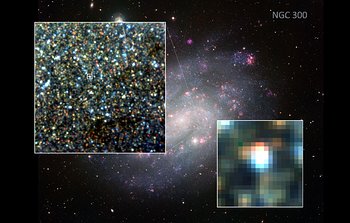
18 Gennaio 2019: Although they look like fuzzy patches of light, distant galaxies are actually made up of billions of stars and other astronomical intricacies. Telescopes are rarely powerful enough to study the ...
|
| Leggi ancora |
|
Ivana Kurečić
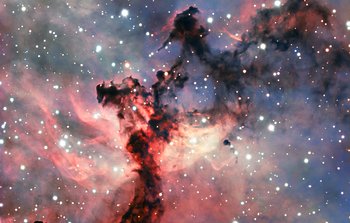
11 Gennaio 2019: Each year it seems that ESO makes ever more impressive discoveries, with 2018 bringing us a host of new exoplanets — including the first image of a newborn planet, the ...
|
| Leggi ancora |
|
|
|
|