Korzystając z należącego do Europejskiego Obserwatorium Południowego (ESO) teleskopu VLT, astronomowie odkryli absencję niestabilnej, masywnej gwiazdy w galaktyce karłowatej. Naukowcy sądzą, że może to wskazywać na to, iż gwiazda stała się mniej jasna i została częściowo przesłonięta przez pył. Alternatywnym wyjaśnieniem jest zapadnięcie się gwiazdy do czarnej dziury bez wybuchu supernowej. „Jeśli to prawda, byłaby to pierwsza bezpośrednia detekcja tego typu monstrualnej gwiazdy, kończącej życie w taki sposób” mówi Andrew Allan z Trinity, lider zespołu i doktorant w College Dublin w Irlandii.
Pełen tekst, zdjęcia i filmy są dostępne na stronie:
https://www.eso.org/public/poland/news/eso2010/
Z pozdrowieniami,
The ESO Department of Communication
30 czerwca 2020
|
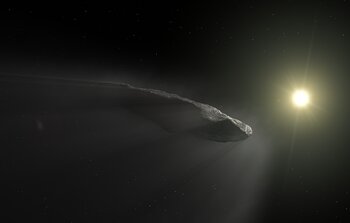
25 czerwca 2020: Astronomers use telescopes to peer into far away planetary systems, seeking to uncover the mysteries of their formation and evolution and reveal how they compare to our own. Occasionally though ...
|
| Czytaj dalej |
|
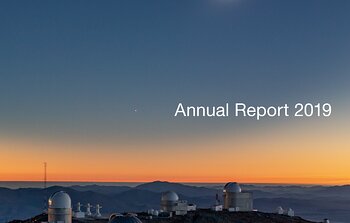
18 czerwca 2020: The ESO Annual Report 2019 is now available. It presents a summary of ESO’s many activities throughout the year. The contents include:
Research highlights from ESO facilities, including the ...
|
| Czytaj dalej |

|
Interview with Pierre Léna
26 czerwca 2020: Observing infrared light from the Universe reveals objects that are difficult or impossible to see in other types of light. In particular, infrared astronomy is useful for exploring cool, dusty ...
|
| Czytaj dalej |

|
Interview with Johann Kolb
12 czerwca 2020: Johann Kolb is an expert in adaptive optics — the correction of the distortion of light caused by turbulence in Earth’s atmosphere. Involving advanced technologies like deformable mirrors and powerful ...
|
| Czytaj dalej |
|
|
|
|