Lorsque Bételgeuse, une étoile orange brillante de la constellation d'Orion, est devenue beaucoup moins lumineuse fin 2019 et début 2020, les astrophysiciens sont restés perplexe. Une équipe de chercheurs vient de publier de nouvelles images de la surface de l'étoile, prises à l'aide du Very Large Telescope de l'Observatoire Européen Austral (le VLT de l'ESO), qui montrent clairement comment sa luminosité a changé. Ces nouvelles recherches révèlent que l'étoile était partiellement cachée par un nuage de poussière, une découverte qui résout le mystère de « l’important déclin » de Bételgeuse.
Le communiqué, les images et les vidéos sont disponibles sur :
https://www.eso.org/public/switzerland-fr/news/eso2109/
Amicalement,
The ESO Department of Communication
16 juin 2021

|
11 juin 2021: Preparations are being put in place to resume construction work on ESO’s Extremely Large Telescope (ELT) at Cerro Armazones in Chile, following disruption due to the COVID-19 pandemic, which ...
|
| Lire plus |

|
1 juin 2021: Today, ESO signed an agreement with an international consortium to build and operate MAVIS, a unique instrument to be installed on ESO’s Very Large Telescope (VLT) that will provide ...
|
| Lire plus |
|
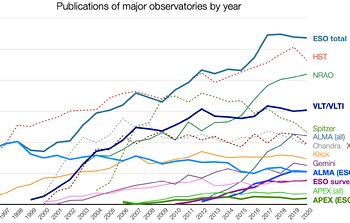
20 mai 2021: ESO observatories operated under challenging conditions in 2020 due to the unprecedented COVID-19 pandemic, having to reduce and even pause scientific observations for a few months. Nonetheless, 2020 was still ...
|
| Lire plus |
|
Thea Elvin
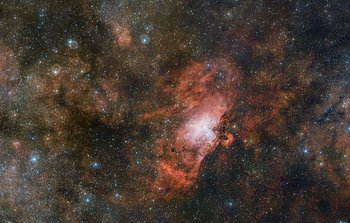
4 juin 2021: Next week, the VLT Survey Telescope (VST), located at ESO’s Paranal Observatory in the Chilean Atacama Desert, celebrates its tenth birthday. The anniversary marks ten years since the telescope’s “first ...
|
| Lire plus |
|
Juan Carlos Muñoz Mateos
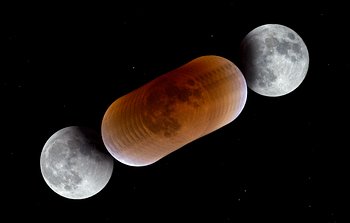
21 mai 2021: Astronomers have discovered thousands of exoplanets –– planets orbiting stars other than the Sun. When looking for the chemical fingerprints that life might have left in the atmospheres of these ...
|
| Lire plus |
|
|
|
|