Per la prima volta gli astronomi hanno scoperto la presenza di molecole organiche complesse, i mattoni della vita, in un disco protoplanetario che circonda una giovane stella. La scoperta, realizzata con ALMA (Atacama Large Millimeter/submillimeter Array), riconferma che le condizioni in cui hanno avuto origine la Terra e il Sole non sono uniche nell'Universo. I risultati vengono pubblicati nel numero del 9 aprile 2015 della rivista Nature.
Testo immagini e video disponibili su:
http://www.eso.org/public/italy/news/eso1513/
Sono disponibili traduzioni sulle pagine degli altri paesi: Österreich, België—Belgique—Belgien, Brasil, Chile, Česko, Suomi, France, Deutschland, Ísland, Nederland, Norge, Polska, Portugal, Россия, Srbija, España, Sverige, Suisse—Schweiz—Svizzera, Türkiye, International English
Cordiali saluti,
Il dipartimento dell'ESO per l'educazione e la divulgazione
08 Aprile 2015
|
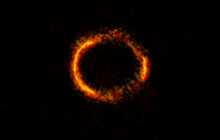
07 Aprile 2015: Images of unequalled sharpness that show the almost perfect gravitational Einstein ring of a distant galaxy and the surface of the asteroid Juno have recently been captured by the Atacama ...
|
| Leggi ancora |
|
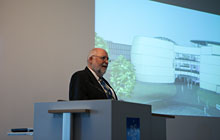
31 Marzo 2015: It is with great sadness that we have learned of the death of Dr. Klaus Tschira, who passed away unexpectedly today in Heidelberg at the age of 74.
Klaus Tschira ...
|
| Leggi ancora |

|
27 Marzo 2015: On 9 April 2015, ESO will host an industry event for Spanish businesses at its headquarters in Garching, Germany. At the meeting, representatives of interested Spanish companies and institutions will ...
|
| Leggi ancora |

|
26 Marzo 2015: As a scientific institution, ESO provides good infrastructure to deliver cutting-edge astronomical data to astronomers in ESO’s Member States. But, among many other things, ESO also offers almost 10 ...
|
| Leggi ancora |