European ARC Newsletter
30 Oct 2025

Welcome to the European ALMA Regional Centre Newsletter!  

This monthly newsletter is a compilation of recent European ALMA Regional Centre news and announcements, showcasing an exciting ALMA science result by European colleagues. Every month, you can learn an interesting ALMA fact in "Did you know" and give your opinion about a particular ALMA matter in the "Poll of the month".

News and announcements Science highlight Poll of the month Did you know


European ARC News and Announcements


Record number of observing hours in Cycle 11

29 Oct 2025:

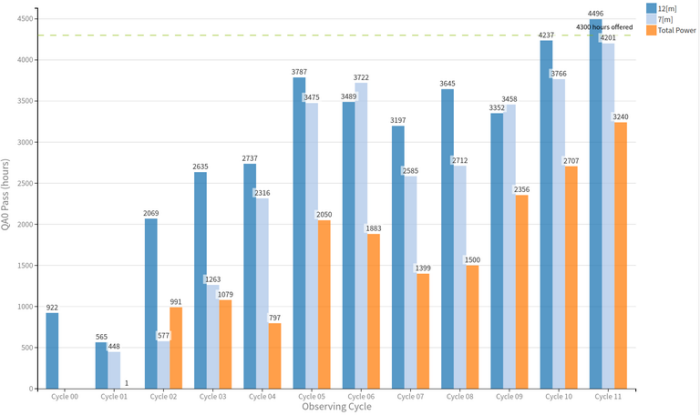
The ALMA Observatory is delighted to announce that Cycle 11 has set a new all-time record in the number of science-quality observing hours (QA0 PASS observations) delivered across all three arrays. During Cycle 11, ALMA successfully acquired a total of 4496 hours of science-quality data with the 12-m Array, surpassing for the first time the ambitious goal of 4300 hours offered. In addition, 4201 hours were delivered with the 7-m Array, and 3240 hours with the Total Power Array.

Read more


Unveiling ALMA Band 2 Workshop abstract submission deadline

28 Oct 2025:

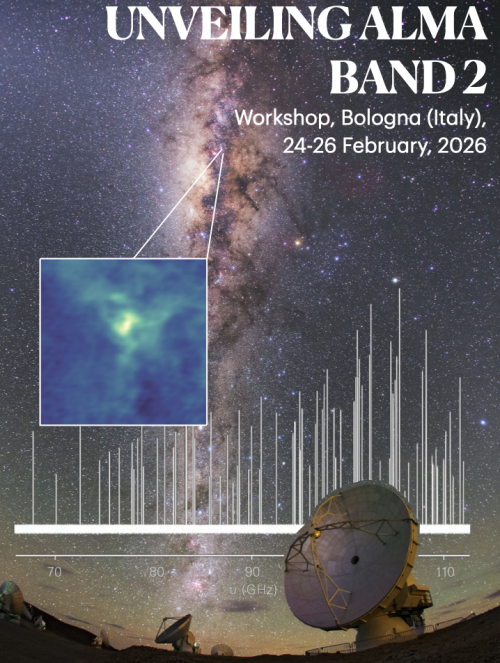
In anticipation of Band 2 being offered in the near future, this European ARC workshop brings together astronomers and ALMA/ARC staff to discuss the new potential for various scientific fields. We plan to have a dedicated session focused on looking at the Band 2 Science Verification data. The meeting is hosted by the Italian ALMA Regional Centre node. It will be held in person at the CNR Area in Bologna from Tuesday February 24 to Thursday February 26, 2026

The workshop will have a number of invited talks to provide information about the Band 2 receiver, and cover the main scientific areas for which Band 2 is expected to be important. In addition, there will be space for several contributed talks and posters. Participants that are interested in presenting their science and ideas, including synergies with other wavelength regimes, are encouraged to submit an abstract by October 31st.

Read more


Science Highlight

Pinpointing the Origins of Far-Infrared Emission in Quasars with ALMA
 

Figure from the paper
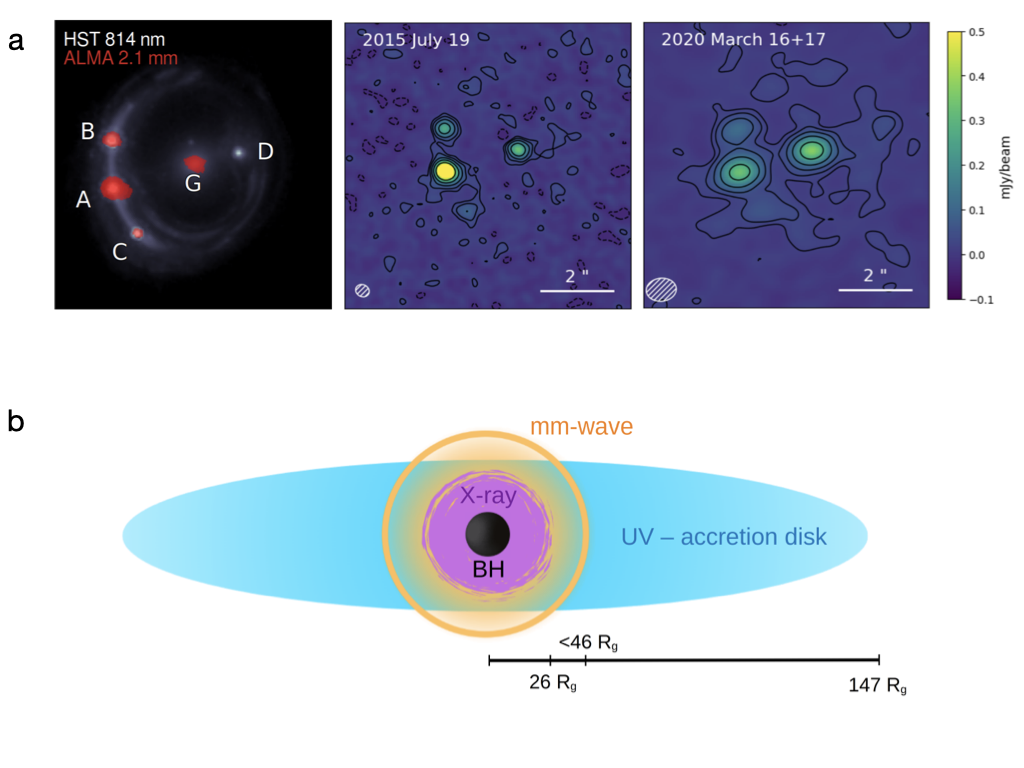
a) Left: ALMA Band 4 (red) and Hubble Space Telescope F814W (white) imaging of RXJ1131-1231 showing the four lensed images (A,B,C,D) and the lensing galaxy (G). Center: ALMA imaging from July 2015. Right: ALMA imaging from March 2020.
b) A schematic showing the relative sizes of mm-wave (orange), X-ray (corona, purple) and UV emission (accretion disc, blue) from the lensed quasar RXJ1131-1231.

Understanding how quasars produce their emission is key to studying the environments around supermassive black holes. For radio-faint quasars, the source of centimetre- to millimetre-wave radiation remains uncertain, with possible origins including star formation, a dusty torus, weak jets, or the accretion-disc corona. Resolving these possibilities requires extremely fine spatial detail (<0.1 pc) - well beyond ALMA’s capabilities.

In a recent study, Matus Rybak and colleagues report the serendipitous discovery of microlensing of millimetre emission from the gravitationally lensed quasar RXJ1131-1231 (z = 0.65). ALMA Band 4 continuum observations over multiple epochs from 2015 and 2020 showed changes in the relative brightness quasar’s three lensed images. These changes in flux ratios (rather than total flux) are due to microlensing by stars in the intervening galaxy. This effect implies that the millimetre emission originates from a very compact region, less than 100 AU across, ruling out jets or a dusty torus as the source. The inferred size matches expectations for emission from the accretion disc corona, providing the first direct measurement of the size of a quasar’s millimetre-wave corona.


Contributed by Matus Rybak


ALMA poll of the month


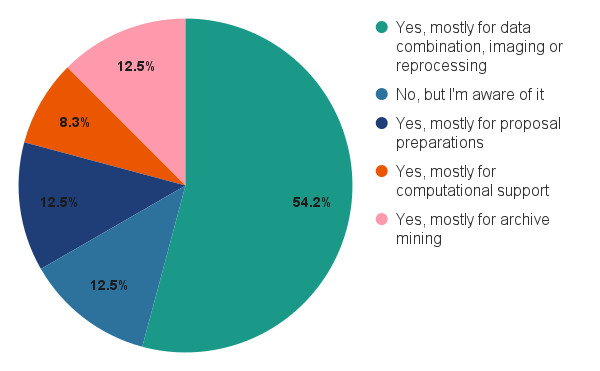
Results from last month's poll, "Have you ever obtained support from an ARC Node?"
What telescope do you use most frequently, apart from ALMA?


Did you know?

Band 2 will be a new type of wideband reciever that will span 67-116 GHz GHz, including the current Band 3 (84-116 GHz), and represents the first step towards the wideband sensitivity upgrade (WSU) of ALMA. You can learn more about ALMA's recieved bands here.


If you would like to contribute an ALMA science highlight, please contact the newsletter editor at Hannah.Stacey@eso.org.