Bookmark and Share

Picture of the Week 2010

27 December 2010

The Long and Winding Road*

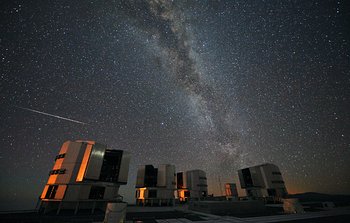
This splendid panorama shows the European Southern Observatory's Very Large Telescope (VLT) on Cerro Paranal in the Chilean Atacama desert. The mountaintop, 120 km south of the town of Antofagasta, is a remote haven for scientific exploration.

Its distance from populated areas means that light pollution is essentially non-existent, which helps to guarantee clear views for the telescopes. It also ensures that activity is not disturbed by other human activities, such as traffic on nearby roads or dusty air from mines. The desert location means that moisture in the atmosphere is at a very low level, which contributes to the excellent atmospheric conditions. As well as the VLT, Paranal Observatory is also home to the VISTA telescope on an adjacent peak, from which this photograph was taken. The road which links the two peaks can be seen in the centre of the image, winding through the desert landscape.

The two distinct bright patches seen here in the night sky are the Large and Small Magellanic clouds, which are neighbouring galaxies to the Milky Way, about 160 000 and 200 000 light-years away respectively. The path of the Milky Way itself can be seen on the left of the image. Astronomers use the VLT to study our own galaxy, the neighbouring Magellanic Clouds, and naturally also much more distant galaxies billions of light-years from Earth. On the long and winding road to the stars, observatories like the VLT are our first steps.

Links


20 December 2010

Monuments of Science*

On a remote mountaintop, 2600 metres above sea level in the Chilean Atacama Desert, lies the world’s most advanced visible-light observatory. The European Southern Observatory’s Very Large Telescope (VLT) is not only a window on the Universe; it is also a celebration of modern science and technology.

This photograph shows two of the four Unit Telescopes that make up the VLT. With its giant 8.2-metre diameter mirrors, sensitive detectors, and state-of-the art adaptive optics system, the VLT uses cutting-edge technology at every opportunity. Even the telescope enclosures — the domes — are highly advanced, being thermally controlled to reduce air turbulence in the telescope structure.

Every night the VLT studies the sky to make discoveries about the Universe. Visible in this photo, sweeping between the two Unit Telescopes, is the plane of the Milky Way. Containing billions of stars, it is our own corner of the cosmos, but the VLT's vision can peer much deeper than this, our home galaxy, and look out to the extremes of space, all in the name of science and discovery.

This image is available as a mounted image in the ESOshop.

Links


13 December 2010

Collecting Precious Starlight*

As soon as the Sun sets over the Chilean Atacama Desert, ESO’s Very Large Telescope (VLT) begins catching light from the far reaches of the Universe. The VLT has four 8.2-metre Unit Telescopes such as the one shown in the photograph. Many of the photons — particles of light — that are collected have travelled through space for billions of years before reaching the telescope’s primary mirror. The giant mirror acts like a high-tech “light bucket”, gathering as many photons as possible and sending them to sensitive detectors. Careful analysis of the data from these instruments allows astronomers to unravel the mysteries of the cosmos.

The telescopes have a variety of instruments, which allow them to observe in a range of wavelengths from near-ultraviolet to mid-infrared. The VLT also boasts advanced adaptive optics systems, which counteract the blurring effects of the Earth's atmosphere, producing images so sharp that they could almost have been taken in space.


This image is available as a mounted image in the ESOshop.


6 December 2010

Up Close and Personal with the Very Large Telescope

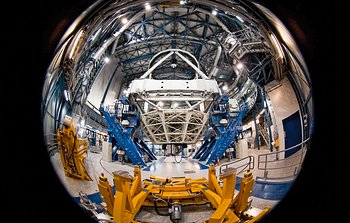
Imagine being a fly on the wall of ESO's Very Large Telescope (VLT) at the world's most advanced optical observatory. You could have a view a little like this. Fisheye photography gives this unusual view of the 8.2-metre diameter telescope, poised and ready to begin gathering light from the deep recesses of the Universe as soon as the dome opens and starlight pours in.

The VLT has four of these 8.2-metre Unit Telescopes, called Antu, Kueyen, Melipal and Yepun. These are the Mapuche names for the Sun, Moon, Southern Cross and Venus. This photograph shows Yepun. The names are from the native language of the indigenous people who live mostly in the area south of the Bio-Bio River, some 500 km south of Santiago de Chile.

The VLT is so powerful that it allows us to see objects four thousand million times fainter than those that can be seen with the unaided eye. This has helped make ESO the most productive ground-based observatory in the world.

Links


29 November 2010

Crash of the Titans

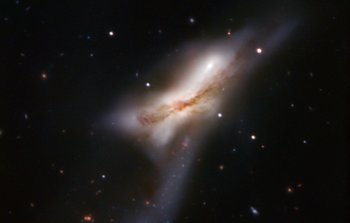
NGC 520 — also known as Arp 157 — looks like a galaxy in the midst of exploding. In reality, it’s the exact opposite. Two enormous spiral galaxies are crashing into each other, melding and forming a new conglomerate. This happens slowly, over millions of years — the whole process started some 300 million years ago. The object, about 100 000 light-years across, is now in the middle stage of the merging process, as the two nuclei haven’t merged yet, but the two discs have. The merger features a tail of stars and a prominent dust lane. NGC 520 is one of the brightest interacting galaxies in the sky and lies in the direction of Pisces (the Fish), approximately 100 million light-years from Earth.

This image was taken by the ESO Faint Object Spectrograph and Camera attached to the 3.6-metre telescope at La Silla in Chile. It is based on data obtained through B, V, R and H-alpha filters.


22 November 2010

Looking into the Milky Way’s Heart — ISAAC observes the Galactic Centre

The centre of our own galaxy, the Milky Way, is again in the sights of ESO telescopes. This time it’s the turn of ISAAC, the VLT’s near- and mid-infrared spectrometer and camera.

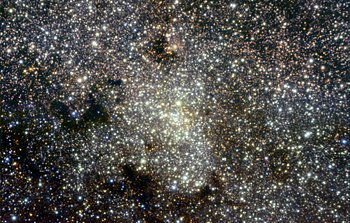
From Chile’s Atacama Desert, site of the ESO observatories, the Milky Way offers magnificent views, particularly in the southern hemisphere winter, when the central region of our galaxy is most visible (see eso0934). However, the Galactic Centre itself, located about  27 000 light-years away in the constellation of Sagittarius, hides behind thick clouds of interstellar dust, which appear as dark obscuring lanes in visible light, but which are transparent at longer wavelengths such as the infrared. In this image, the infrared observations clearly reveal the dense clustering of stars in the galactic core.

ESO telescopes have been tracking stars orbiting the centre of the Milky Way for more than 18 years, getting the highest resolution images of this area and providing a definitive proof of the existence of a supermassive black hole in the heart of our galaxy (read more in eso0226 and eso0846). Infrared flashes emitted by hot gas falling into the supermassive black hole have also been detected with ESO telescopes (see eso0330).

This representative-colour picture is composed of images taken by ISAAC at near-infrared wavelengths through 2.25, 2.09, and 1.71 µm narrowband filters (shown in red, green and blue respectively). It covers a field of view of 2.5 arcminutes.


15 November 2010

An Ancient Cluster of Stars Against a Stunning Background

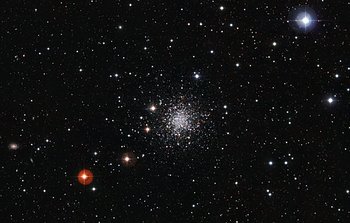
Among the myriad of stars in this image shines NGC 2257, a collection of cosmic gems bound tightly by gravity. Many billions of years old, but still sparkling brightly, it is an eye-catching astronomical object.

NGC 2257 is a globular cluster, the name given to the roughly spherical concentrations of stars that orbit galactic cores, but are often found far out from the centres in the halo areas of galaxies. Globular clusters contain very old stars, being typically over 10 billion years old, and can therefore be used like a "fossil record" to learn more about the Universe’s past. They are densely packed, with tens to hundreds of thousands of stars gathered within a diameter of just a few tens of light-years. NGC 2257 lies on the outskirts of the Large Magellanic Cloud (LMC), a satellite galaxy of our own Milky Way. It is one of 15 very old globular clusters in the LMC.

The image is made from data taken with the Wide Field Imager instrument on the 2.2-metre MPG/ESO telescope at La Silla, in B, V and I filters, which are shown here in blue, green and red respectively. The field of view is approximately 20 by 20 arcminutes. These observations were made as part of the ESO Imaging Survey project, which was planned to make public imaging surveys to identify targets for follow-up observations with the Very Large Telescope.

Links


8 November 2010

Shooting a Laser at the Galactic Centre

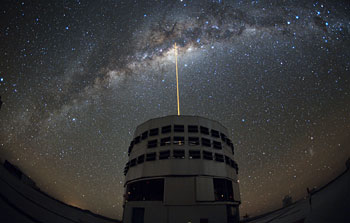
This impressive image, taken on 10 May 2010 by ESO astronomer Yuri Beletsky, beautifully depicts the sky above Paranal. One of the 8.2-metre telescopes of ESO's Very Large Telescope, Yepun, Unit Telescope 4, is seen against the wonderful backdrop of the myriad of stars and dust that makes up the Milky Way. A laser beam is coming out of Yepun, aiming perfectly at the Galactic Centre. When used with the adaptive optics system the artificial star created by the beam allows the telescope to obtain images and spectra that are free from the blurring effect of the atmosphere. When this image was taken, astronomers Stefan Gillessen and Hauke Enkel were using the SINFONI instrument, together with the laser guide star facility, to study the centre of our Milky Way, where a supermassive black hole is lurking.

The field of view of the image is very wide, about 180 degrees. One of the 1.8-metre Auxiliary Telescopes used for interferometry can be seen on the right.


1 November 2010

ESO’s Very Large Telescope Peers into a Distant Nebula*

Astronomers using data from ESO's Very Large Telescope (VLT), at the Paranal Observatory in Chile, have made an impressive composite of the nebula Messier 17, also known as the Omega Nebula or the Swan Nebula. The painting-like image shows vast clouds of gas and dust illuminated by the intense radiation from young stars.

The image shows a central region about 15 light-years across, although the entire nebula is even larger, about 40 light-years in total. Messier 17 is in the constellation of Sagittarius (the Archer), about 6000 light-years from Earth. It is a popular target for amateur astronomers, who can obtain good quality images using small telescopes.

These deep VLT observations were made at near-infrared wavelengths with the ISAAC instrument. The filters used were J (1.25 µm, shown in blue), H (1.6 µm, shown in green), and K (2.2 µm, shown in red). In the centre of the image is a cluster of massive young stars whose intense radiation makes the surrounding hydrogen gas glow. To the lower right of the cluster is a huge cloud of molecular gas. At visible wavelengths, dust grains in the cloud obscure our view, but by observing in infrared light, the glow of the hydrogen gas behind the cloud can be seen shining faintly through. Hidden in this region, which has a dark reddish appearance, the astronomers found the opaque silhouette of a disc of gas and dust. Although it is small in this image, the disc has a diameter of about 20 000 AU, dwarfing our Solar System (1 AU is the distance between the Earth and the Sun). It is thought that this disc is rotating and feeding material onto a central protostar — an early stage in the formation of a new star.

This image is available as a mounted image in the ESOshop.

Links

  • The research for which these observations were originally made was described in ESO press release eso0416.

25 October 2010

Starry La Silla

The stars rotate around the southern celestial pole during a night at ESO’s La Silla Observatory in northern Chile. The fuzzy parts in the trails on the right are due to the Magellanic Clouds, two small galaxies neighbouring the Milky Way. The dome seen in the image hosts ESO’s 3.6-metre telescope and is home to HARPS (High Accuracy Radial velocity Planet Searcher), the world’s foremost exoplanet hunter. The rectangular building seen in the lower right of the image contains the 0.25-metre TAROT telescope, designed to react very quickly when a gamma-ray burst is detected. Other telescopes at La Silla include the 2.2-metre MPG/ESO telescope, and the 3.58-metre New Technology Telescope, the first telescope to use active optics and, as such, the precursor to all modern large telescopes. La Silla was ESO’s first observing site and is still one of the premier observatories in the southern hemisphere.

#L


18 October 2010

Reflecting on the VLT

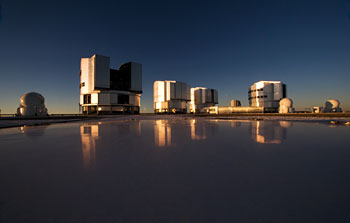
The Sun sets at ESO’s Very Large Telescope (VLT) in this image. Taken at the observatory on Cerro Paranal in the dry Atacama Desert of Chile, the observatory’s four 8.2-metre telescopes can be seen preparing for the night ahead. Three of the VLT’s four Auxiliary 1.8-metre Telescopes (AT), used for interferometry, are also visible. The telescopes are seen reflected in the protection cover of one of the AT stations. The ATs are mounted on tracks and can be moved between precisely defined observing positions from where the beams of collected light are combined in the interferometric laboratory. The ATs are very unusual telescopes, as they are self-contained in their own ultra-compact protective domes, and travel with their own electronics, ventilation, hydraulics and cooling systems. Each AT has a transporter that lifts the telescope and moves it from one position to the other. At 2600 metres above sea level, the observing climate is excellent, with little disturbance from clouds. 


11 October 2010

New Temporary Offices at ESO Headquarters

ESO has grown significantly since 1980, when its European staff originally moved from offices at CERN to a dedicated headquarters building in Garching, near Munich, Germany. In the intervening three decades the number of ESO’s member states has increased from six to fourteen, and the organisation has achieved milestones such as the First Light of the New Technology Telescope at La Silla and of the Very Large Telescope at Paranal, becoming in the process the most productive observatory in the world. Today, ESO is constructing the Atacama Large Millimeter/submillimeter Array at Chajnantor in collaboration with international partners, and is in the detailed design phase of a 40-metre-class European Extremely Large Telescope, which will be “the world’s biggest eye on the sky”.

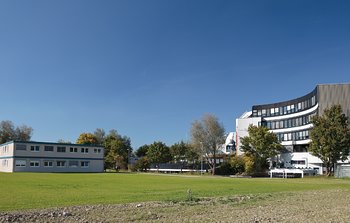
Over the years, the number of ESO staff working in Garching has increased from about 100 to about 450, as the organisation has grown and tackled these exciting new projects. When the capacity of the headquarters building was exceeded, it became necessary to rent additional office space elsewhere on the Garching Forschungszentrum research campus. A recent development during the summer of 2010 is the construction of several new temporary office buildings, seen on the left in this photograph, which are immediately adjacent to the main headquarters (on the right). These buildings make it possible to bring more of the ESO Garching staff onto the main headquarters site from their scattered offices around the campus, so that people can work more easily together. It is planned that a new permanent building, next to the original headquarters, will be constructed for offices and meeting facilities.


4 October 2010

ALMA Antennas on Chajnantor

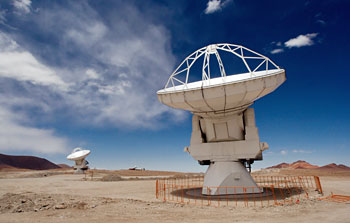
Two of the Atacama Large Millimeter/submillimeter Array (ALMA) 12-metre antennas gaze at the sky at the observatory’s Array Operations Site (AOS), high on the Chajnantor plateau at an altitude of 5000 metres in the Chilean Andes.

Eight antennas have been installed at the AOS since November 2009. More antennas will be installed on the Chajnantor plateau during the next months and beyond, allowing astronomers to start producing early scientific results with the ALMA system around late 2011. After this, the interferometer will steadily grow to reach its full scientific potential, with at least 66 antennas.

ALMA is the largest ground-based astronomy project in existence, and will comprise a giant array of 12-metre submillimetre quality antennas, with baselines of up to about 16 kilometres. An additional, compact array of 7-metre and 12-metre antennas will complement the main array. The ALMA project is an international collaboration between Europe, East Asia and North America in cooperation with the Republic of Chile. ESO is the European partner in ALMA.


27 September 2010

A Solargraph taken from APEX at Chajnantor

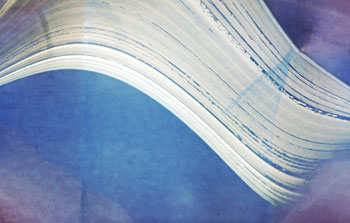
This unusual and artistic image, made using a technique known as "solargraphy" in which a pinhole camera captures the movement of the Sun in the sky over many months, was taken from the Atacama Pathfinder Experiment (APEX) telescope on the plateau of Chajnantor. The plateau is also where ESO, together with international partners, is building the Atacama Large Millimeter/submillimeter Array (ALMA). The solar trails in the image were recorded over half a year and clearly show the quality of the 5000-metre altitude site, high in the Chilean Andes, for astronomical observations.

The idea for creating the solargraphs at ESO's telescopes came from Bob Fosbury, an astronomer based at ESO Headquarters in Germany, after learning about the technique from Finnish artist Tarja Trygg. Trygg provided the cameras, known as "cans". The cans are constructed from small black plastic canisters used for storing 35 mm film cassettes. A pinhole in a sheet of aluminium foil is placed over a small aperture drilled into the side of the can, and a rectangle of black and white photographic printing paper is curled and placed snugly around the inside of the can.

Two cans were sent to APEX where David Rabanus, the APEX Station Manager, mounted one facing west of north on the gatepost of the telescope enclosure, close to the telescope itself, and the other on the roof of the generator powerhouse facing east of north. Both were pointed at an elevation of about 45 degrees. The cans at APEX were exposed for a full six months from mid-December 2009 until the southern winter solstice in June 2010. The image from the second can is shown here. It includes the tilted profile of Cerro Chajnantor on the right, silhouetted against the trails of the rising Sun. The mostly unbroken solar trails show that there were some clouds at the ALMA site during the six months — but not many! This solargraph is so sharp that holes in the fleeting clouds over Chajnantor on the few partly cloudy days sometimes managed to create individual "snapshots" of the solar disc (seen as dots in the broken sequences).

The colours appearing in this pinhole camera picture are not related to the actual colours of the scene. The colour comes from the appearance of finely divided metallic silver growing on silver halide grains. With solargraphic images, the photographic paper is not developed but simply scanned with a normal colour scanner after exposure and then "inverted" — switched from negative to positive — in the computer. This reveals the latent image, which in a normal photograph consists of around ten silver atoms per billion atoms of silver halide grain and is usually invisible. On continued exposure however, the latent image clumps grow so that the first visible signs of an image are yellowish, which then darkens to sepia and finally to a maroonish-brown hue as the particle size increases. Eventually the maximum exposure produces a slate-grey shade.

APEX is a collaboration between the Max-Planck Institute for Radio Astronomy (MPIfR), the Onsala Space Observatory (OSO) and ESO. The telescope is operated by ESO.

Links


20 September 2010

Starlight Shines Brightly Above Paranal

After the Sun sets at ESO’s Paranal Observatory darkness descends, but the black sky is speckled with a glorious myriad of sparkling stars. This 15-second exposure demonstrates just how dazzling the skies above Paranal are. Located high in the Atacama Desert in Chile far from any sources of light pollution, on a clear moonless night it is possible to see your shadow cast by the light of the Milky Way alone.

Says visual artist and ESO Photo Ambassador José Francisco Salgado, “The skies at Paranal are among the darkest and steadiest I have photographed. I love photographing observatories and at Paranal it's incredible how you can still see just with starlight and zodiacal light!

In the image the stars of the Milky Way seem to be pouring forth from the open dome of the telescope. The brightest patch close to the telescope is the Carina Nebula (NGC 3372), which contains some of the most massive stars in our galaxy (see for example eso0905 and eso1031). Near the top of the image are the stars of Crux, the Southern Cross. This constellation, and that of Carina, are in the southern sky and are therefore not visible from most northern latitudes.

The telescope in the image is the fourth 1.8-metre Auxiliary Telescope, part of the Very Large Telescope Interferometer (VLTI). The VLTI consists of four 8.2-metre telescopes, and the four smaller Auxiliary Telescopes, which have mirrors 1.8 metres across. Thanks to the size of the telescopes, their cutting-edge technology, and the excellent conditions at the site, it is no wonder that Paranal is considered the most advanced visible-light observatory in the world.


13 September 2010

The Great Barred Spiral Galaxy

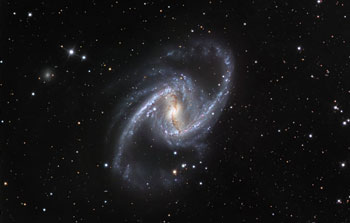
Spiralling around, 61 million light-years away in the constellation Fornax (the Furnace), NGC 1365 is enormous. At 200 000 light-years across, it is one of the largest galaxies known to astronomers. This, plus the sharply defined bar of old stars across its structure is why it is also known as the Great Barred Spiral Galaxy. Astronomers think that the Milky Way may look very similar to this galaxy, but at half the size. The bright centre of the galaxy is thought to be due to huge amounts of superhot gas ejected from the ring of material circling a central black hole. Young luminous hot stars, born out of the interstellar clouds, give the arms a prominent appearance and a blue colour. The bar and spiral pattern rotates, with one full turn taking about 350 million years.

This image combines observations performed through three different filters (B, V, R) with the 1.5-metre Danish telescope at the ESO La Silla Observatory in Chile.


6 September 2010

A Laser Beam Towards the Milky Way's Centre*

In mid-August 2010 ESO Photo Ambassador Yuri Beletsky snapped this amazing photo at ESO’s Paranal Observatory. A group of astronomers were observing the centre of the Milky Way using the laser guide star facility at Yepun, one of the four Unit Telescopes of the Very Large Telescope (VLT).

Yepun’s laser beam crosses the majestic southern sky and creates an artificial star at an altitude of 90 km high in the Earth's mesosphere. The Laser Guide Star (LGS) is part of the VLT’s adaptive optics system and is used as a reference to correct the blurring effect of the atmosphere on images. The colour of the laser is precisely tuned to energise a layer of sodium atoms found in one of the upper layers of the atmosphere — one can recognise the familiar colour of sodium street lamps in the colour of the laser. This layer of sodium atoms is thought to be a leftover from meteorites entering the Earth’s atmosphere. When excited by the light from the laser, the atoms start glowing, forming a small bright spot that can be used as an artificial reference star for the adaptive optics. Using this technique, astronomers can obtain sharper observations. For example, when looking towards the centre of our Milky Way, researchers can better monitor the galactic core, where a central supermassive black hole, surrounded by closely orbiting stars, is swallowing gas and dust.

The photo, which was chosen as Astronomy Picture of the Day for 6 September 2010 and Wikimedia Picture of the Year 2010, was taken with a wide-angle lens and covers about 180 degrees of the sky.


This image is available as a mounted image in the ESOshop.


#L


30 August 2010

Arp 271 — Galaxies Drawn Together*

NGC 5426 and NGC 5427 are two spiral galaxies of similar sizes engaged in a dramatic dance. It is not certain that this interaction will end in a collision and ultimately a merging of the two galaxies, although the galaxies have already been affected. Together known as Arp 271, this dance will last for tens of millions of years, creating new stars as a result of the mutual gravitational attraction between the galaxies, a pull seen in the bridge of stars already connecting the two. Located 90 million light-years away towards the constellation of Virgo (the Virgin), the Arp 271 pair is about 130 000 light-years across. It was originally discovered in 1785 by William Herschel. Quite possibly, our own Milky Way will undergo a similar collision in about five billion years with the neighbouring Andromeda galaxy, which is now located about 2.6 million light-years away from the Milky Way.

This image was taken with the EFOSC instrument, attached to the 3.58-metre New Technology Telescope at ESO's La Silla Observatory in Chile. The data were acquired through three different filters (B, V, and R) for a total exposure time of 4440 seconds. The field of view is about 4 arcminutes.


23 August 2010

Starry Night at Paranal*

During a night at ESO’s Very Large Telescope (VLT), the stars seem to rotate around the southern celestial pole. The skies over Paranal provide splendid observing opportunities for the astronomers below. At the observatory on Cerro Paranal in the dry Atacama Desert of Chile, one of the observatory’s four 8.2-metre telescopes can be seen on the right performing its nightly task of looking at the heavens. Two of the four 1.8-metre Auxiliary Telescopes are also seen in the picture. The dry, high environment at 2600 metres above sea level, and the extraordinarily advanced equipment makes observing time at the VLT highly sought after by astronomers around the world. 

This image is available as a mounted image in the ESOshop.


16 August 2010

The 2010 Perseids over the VLT

Every year in mid-August the Perseid meteor shower has its peak. Meteors, colloquially known as “shooting stars”, are caused by pieces of cosmic debris entering Earth’s atmosphere at high velocity, leaving a trail of glowing gases. Most of the particles that cause meteors are smaller than a grain of sand and usually disintegrate in the atmosphere, only rarely reaching the Earth’s surface as a meteorite.

The Perseid shower takes place as the Earth moves through the stream of debris left behind by Comet Swift-Tuttle. In 2010 the peak was predicted to take place between 12–13 August 2010. Despite the Perseids being best visible in the northern hemisphere, due to the path of Comet Swift-Tuttle's orbit, the shower was also spotted from the exceptionally dark skies over ESO’s Paranal Observatory in Chile. In order not to miss any meteors in the display, ESO Photo Ambassador Stéphane Guisard set up 3 cameras to take continuous time-lapse pictures on the platform of the Very Large Telescope during the nights of 12–13 and 13–14 August 2010. This handpicked photograph, from the night of 13–14 August, was one of Guisard’s 8000 individual exposures and shows one of the brightest meteors captured. The scene is lit by the reddened light of the setting Moon outside the left of the frame.

Although the comet debris particles are travelling parallel to each other, the meteors appear to radiate from a spot on the sky in the constellation of Perseus (here seen very low on the horizon and partly covered by the VLT enclosures). This effect is due to perspective, as the parallel tracks seem to converge at a distance. The apparent origin in Perseus is what gives the Perseid meteor shower its name.

Around the globe, many thousands of people were out observing the Perseids. Some of them took part in citizen science projects such as Meteorwatch and the annual campaign organised by the International Meteor Organization (IMO). According to the IMO measurements, the 2010 Perseid meteor shower was above normal with a peak activity of over 100 meteors per hour under optimal viewing conditions, but not spectacular. In the coming nights the Perseids will still be visible, but with fewer and fewer meteors night by night.

Links


9 August 2010

Frenzied Star Birth in Haro 11

Haro 11 appears to shine gently amid clouds of gas and dust, but this placid facade belies the monumental rate of star formation occurring in this “starburst” galaxy. By combining data from ESO’s Very Large Telescope and the NASA/ESA Hubble Space Telescope, astronomers have created a new image of this incredibly bright and distant galaxy. The team of astronomers from Stockholm University, Sweden, and the Geneva Observatory, Switzerland, have identified 200 separate clusters of very young, massive stars. Most of these are less than 10 million years old. Many of the clusters are so bright in infrared light that astronomers suspect that the stars are still emerging from the cloudy cocoons where they were born. The observations have led the astronomers to conclude that Haro 11 is most likely the result of a merger between a galaxy rich in stars and a younger, gas-rich galaxy. Haro 11 is found to produce stars at a frantic rate, converting about 20 solar masses of gas into stars every year.

Haro galaxies, first discovered by the noted astronomer Guillermo Haro in 1956, are defined by unusually intense blue and violet light. Usually this high energy radiation comes from the presence of many newborn stars or an active galactic nucleus. Haro 11 is about 300 million light-years away and is the second closest of such starburst galaxies.

The paper describing this result (“Super star clusters in Haro 11: Properties of a very young starburst and evidence for a near-infrared flux excess”, by A. Adamo et al.) is available at http://adsabs.harvard.edu/doi/10.1111/j.1365-2966.2010.16983.x


2 August 2010

Exoplanet Hunters at La Silla*

In the search for distant worlds, few telescopes have had as much success as ESO's 3.6-metre telescope and the Swiss 1.2-metre Leonhard Euler Telescope, both of which are shown in this image.

The 3.6-metre telescope is home to HARPS (High Accuracy Radial velocity Planet Searcher), a spectrograph with unrivalled precision, and holder of many records in the field of exoplanet research, including the discovery of the least massive exoplanet, as well as of the smallest ever measured. Together with HARPS, the Leonhard Euler Telescope has allowed astronomers to find that six exoplanets from a larger sample of 27 were orbiting in the opposite direction to the rotation of their host star — providing an unexpected and serious challenge to current theories of planet formation.

At 2400 metres above sea level in the southern part of Chile’s Atacama Desert, La Silla was ESO’s first observation site. Along with the 3.6-metre telescope, it also hosts the New Technology Telescope (NTT) and the MPG/ESO 2.2-metre telescope as well as several national and smaller telescopes.


26 July 2010

Arp 22 Stretches Out

NGC 4027, also known as Arp 22, stretches its single extended spiral arm in this face-on image. Located about 75 million light-years away in the constellation of Corvus (the Crow), this barred spiral galaxy is identified as a peculiar galaxy by this extended arm, thought to be the result of a collision with another galaxy millions of years ago — most likely a small galaxy known as NGC 4027A. NGC 4027 is part of the NGC 4038 Group, a group of galaxies that also contains the famous distorted couple known as the Antennae Galaxies (see eso0209 and heic0615).

This image is based on data collected with the ESO Faint Object Spectrograph and Camera (EFOSC) attached to the 3.58-metre New Technology Telescope (NTT) at the ESO La Silla Observatory in Chile. The data were collected through three broadband filters (B, V and R) and two narrowband filters (Hα and doubly ionised oxygen).


19 July 2010

A European ALMA antenna takes a ride on a transporter

A European Atacama Large Millimeter/submillimeter Array (ALMA) antenna takes a ride on Lore, one of the ALMA Transporters, at the 2900-metre altitude Operations Support Facility in the Chilean Andes. This took place on 23 June 2010, and was the first time that European antennas have been lifted with the transporters, a procedure that was fully successful, with both moves completed in a single day.

The first two European antennas for ALMA have been moved to two new outdoor foundation pads in order to perform tests of their dish surface accuracy. In this process, known as holography, the antennas observe the signals from a special transmitter located on a nearby tower. In order to allow parallel assembly of several antennas, two new foundations have recently been built. As the newly built foundations lie between the original positions of the two antennas and the holography tower, the antennas were moved to the new locations.

The European ALMA antennas are provided by ESO, through a contract with the AEM Consortium (Thales Alenia Space, European Industrial Engineering, and MT-Aerospace). The ALMA antenna transporters are also provided by ESO, and manufactured by the company Scheuerle Fahrzeugfabrik GmbH. ALMA, an international astronomy facility, is a partnership of Europe, North America and East Asia in cooperation with the Republic of Chile.

Links


12 July 2010

Partial Solar Eclipse over the VLT

Yesterday 11 July 2010, between 20:15 and 22:51 CEST, the path of a total solar eclipse streaked across the Pacific Ocean touching several small islands including Tuamotu in French Polynesia, Mangaia in the Cook Islands and Chile's Easter Island. The total eclipse brushed the southern mainland of Chile, and was seen as a partial eclipse in the rest of the country. At ESO's Paranal Observatory ESO Photo Ambassador Yuri Beletsky snapped this photo near the mid-point of the eclipse.

On the mainland of Chile, outside the zone of complete darkness, the partial eclipse was visible from ESO's Paranal Observatory. With the naked eye, eclipses are difficult — and dangerous — to watch until they reach totality, as the Sun is so bright. But a filter reduces the glare and here reveals the advancing disk of the Moon as it moves across the face of the Sun. In this photograph, the filter is held by hand between the camera lens and the Sun, and lets us see the definite bite-mark on the left of the Sun. Around it is the dramatic location of Paranal's Very Large Telescope.

In addition to the ESO staff watching the partial eclipse over Paranal, a small group of enthusiastic science photographers from ESO, including members of the ESO education and Public Outreach Department, spent their vacation at Easter Island to witness the total eclipse. Among them was ESO Photo Ambassador Stéphane Guisard.

Links


5 July 2010

Building the E-ELT

This series of artist’s impressions shows some of the main phases in the early stages of construction of the European Extremely Large Telescope (E-ELT), assuming the final go-ahead is given at the end of 2010. The E-ELT is to be built on Cerro Armazones, a 3060-metre high mountain near ESO’s Paranal Observatory in Chile, and is planned to be operational early in the next decade.

With a primary mirror 39 metres across, far larger than any visible light telescope currently in operation, the E-ELT will be “the world’s biggest eye on the sky”. This will give it an unparalleled power to see faint and distant objects in the sky.

The E-ELT will tackle the biggest scientific challenges of our time, and aim for a number of notable firsts, including tracking down Earth-like planets around other stars in the habitable zones where life could exist — one of the Holy Grails of modern observational astronomy. It will also perform “stellar archaeology” in nearby galaxies, as well as make fundamental contributions to cosmology by measuring the properties of the first stars and galaxies and probing the nature of dark matter and dark energy. On top of this astronomers are also planning for the unexpected — new and unforeseeable questions will surely arise from the new discoveries made with the E-ELT. The E-ELT may, eventually, revolutionise our perception of the Universe, much as Galileo’s telescope did, 400 years ago.

Erecting the E-ELT’s housing is a major engineering feat. Because of the size of the equipment inside, the moveable dome of the building has to be over 80 m high — about the height of the dome of St Paul’s Cathedral in London.

The design for the E-ELT shown here was published in 2010 and is preliminary.

More information about the E-ELT is available in the E-ELT web pages, the E-ELT Press Kit and the E-ELT FAQ.


28 June 2010

The Oddest Member of the Leo Triplet

NGC 3628 is a spiral galaxy and a member of a small, but conspicuous group of galaxies located about 35 million light-years away, toward the constellation of Leo (the Lion). The other distinguished members of this family, known collectively as the Leo Triplet, are two well-known prominent spiral galaxies, Messier 65 and Messier 66 (not seen on the image), which were both discovered in 1780 by famous French comet hunter Charles Messier. NGC 3628 is the faintest of the trio and escaped Messier’s observations with his rather small telescope. It was discovered and catalogued by William Herschel only four years later.

NGC 3628 hides its spiral structure because it is seen perfectly edge-on, exactly as we observe the Milky Way on a clear night. Its most distinctive feature is a dark band of dust that lies across the plane of the disc and which is visibly distorted outwards, as a consequence of the gravitational interaction between NGC 3628 and its bullying companions. This boxy or “peanut-shaped” bulge, seen as a faint X-shape, is formed mainly of young stars and gas and dust, which create the bulge away from the plane of the rest of the galaxy through their powerful motions. Because of its appearance, NGC 3628 was catalogued as Arp 317 in the Atlas of Peculiar Galaxies, published in 1966, which aimed to characterise a large sample of odd objects that fell outside the standard Hubble classification, to aid understanding of how galaxies evolve.

The depth of the image reveals a myriad of galaxies of different shapes and colours, some of which lie much further away than NGC 3628. Particularly noticeable is the fuzzy blob just in the centre of the image, which is a diffuse satellite galaxy. A number of globular clusters can be seen as fuzzy reddish spots in the halo of the galaxy. Also visible as bright spots near the lower edge of the image (the two blue star-like objects below the satellite galaxy) are two quasars, the central engines of distant and very energetic galaxies, billions of light-years away.

This image has been taken with the FORS2 instrument, attached to one of the ESO Very Large Telescope’s Unit Telescopes. It is a combination of exposures taken through different filters (B, V and R), for a total exposure time of just below one hour. The field of view is about 7 arcminutes across, which is why this large galaxy does not fit into the image.

Links


21 June 2010

Celestial Tic-Tac-Toe: Mercury, Venus and the Moon Align

One morning, in March 2008, a rare and beautiful sight greeted Yuri Beletsky, astronomer at ESO’s Very Large Telescope (VLT) observatory at Paranal in northern Chile. In the sky above the observing deck, the planets Mercury and Venus were in alignment above the Moon, in a celestial event known as a conjunction.

Mercury, the smallest of the planets and shining highest in the sky in this image, orbits closest to the Sun of all the eight planets in our Solar System. Venus comes next, followed by Earth and its Moon. So this image captures the full stock of major astronomical bodies that pass between Earth and its host star.

To the bottom left, seen as an impressive silhouette, and accompanying this cosmic chance encounter, is one of the four 1.8-metre Auxiliary Telescopes (ATs) deployed at Paranal. These mobile telescopes are used for interferometry, an astronomical technique that essentially combines the observing power of all the telescopes involved into one giant telescope, allowing astronomers to probe the mysteries of the Universe in even greater detail.


14 June 2010

A Quintuplet of ALMA Antennas — And Then There Were Five

On the Chajnantor plateau, the Atacama Large Millimeter/submillimeter Array (ALMA) is growing. On 31 May 2010, the number of ALMA’s state-of-the-art antennas on the 5000-metre-altitude plateau in the Chilean Andes increased to five. This photograph shows the five 12-metre diameter antennas at the Array Operations Site, clustered on the closely spaced foundation pads of what will be ALMA’s “Atacama Compact Array”.

When complete, ALMA will have fifty-four 12-metre and twelve 7-metre diameter antennas, operating together as an interferometer: the signals from the individual antennas are combined in a specialised supercomputer — the ALMA correlator — so that the array of antennas acts as a single, giant telescope. The team of astronomers and engineers have now achieved a successful test linking all of these first five antennas together as an interferometer.

This result follows the successful first measurements with a pair of antennas in October 2009 (see ESO Announcement) and the linkup of three antennas in November (see ESO Press Release eso1001). These milestones have already demonstrated the excellent performance of the instruments, but the addition of yet more antennas represents a further step in ALMA’s growth, and has allowed the team to make some further tests of the correlator that were not possible with fewer antennas.

ALMA will probe the sky in millimetre and submillimetre wavelengths of light. This light comes from vast cold clouds in interstellar space, at temperatures only a few tens of degrees above absolute zero, and from some of the earliest and most distant galaxies in the Universe.

The team are now carrying out additional tests on the antennas, and over the course of the coming months more antennas will arrive on the high site. ALMA will start early scientific observations using a partial array of antennas around 2011, with construction to be completed around 2012.

ALMA, the largest astronomical project in existence, is a partnership of Europe, North America and East Asia in cooperation with the Republic of Chile. ESO is the European partner in ALMA.

More info: ESO ALMA web pages


7 June 2010

Dramatic Moonset — Amazing Sight on Cerro Paranal, Home of ESO’s Very Large Telescope*

As the full Moon sets, the Sun is about to rise on the opposite horizon. The Very Large Telescope (VLT) has already closed its eyes after a long night of observations, and telescope operators and astronomers sleep while technicians, engineers and day astronomers wake up for a new day of work. Operations never stop at the most productive astronomical ground-based observatory in the world.

ESO staff member Gordon Gillet welcomed the new day by capturing this stunning image from 14 km away, on the road to the nearby Cerro Armazones, the peak recently chosen by the ESO Council as the preferred location for the planned 40-metre-class European Extremely Large Telescope (E-ELT).

Contrary to what one may think, this picture is no montage. The Moon appears large because it is seen close to the horizon and our perception is deceived by the proximity of references on the ground. In order to get this spectacular close view, a 500-mm lens was necessary. The very long focal length reduces the depth of field making the objects in focus appear as if they were at the same distance. This effect, combined with the extraordinary quality of this picture, gives the impression that the Moon lies on the VLT platform, just behind the telescopes, even though it is in fact about 30 000 times further away.


31 May 2010

The Blinking Galaxy

NGC 6118, a grand-design spiral galaxy, shines bright in this image, displaying its central bar and tight spiral arms from its home in the constellation of Serpens (The Snake). The galaxy is sometimes known to amateur astronomers as the “Blinking Galaxy” because this relatively faint, fuzzy object would appear to flick into existence when viewed through their telescopes in a certain orientation, and then suddenly disappear again as the eye position shifted. The brilliant blue star-forming regions of the galaxy, where hot young stars are born, are beautifully illuminated, even from over 80 million light-years away. In 2004, regular observers of this galaxy saw a “new star” appear near the edge of the galaxy (above the centre of the image). Far from being a new star, this object, supernova 2004dk, is in fact the final, powerful burst of light emitted by the explosion of a star.

Though shy to lesser telescopes, the galaxy cannot hide from ESO’s Very Large Telescope (VLT) at Cerro Paranal, Chile. The image was obtained using the VIsible MultiObject Spectrograph (VIMOS) at the VLT.


24 May 2010

Building Connections with EVALSO

Alongside the B-710 road, between the Paranal airstrip and the turn-off to Cerro Armazones in the Chilean Atacama Desert, a crew is hard at work laying a fibre data cable. The cable will connect the observatories at Paranal (ESO) and Armazones (OCA) with the main scientific data backbone in South America, bridging the gap between these remote outposts and the scientific community thirsty for their data.

This new cable, laid down by ESO, is part of the EVALSO (Enabling Virtual Access to Latin-American Southern Observatories) project that aims to create an entire high-speed data infrastructure between these two astronomical sites in Chile and the rest of the scientific and academic community.

Once completed, the high-speed interconnectivity will be from the Santiago area,  via the main Chilean backbone along the Panamerican Highway, to the ESO site on Cerro Paranal, which houses the Very Large Telescope (VLT) and to Cerro Armazones, currently housing OCA and the baseline site for the planned 40-metre-class European Extremely Large Telescope (E-ELT).

EVALSO will make use of the infrastructure of REUNA (the Chilean academic network) and CLARA/ALICE (the Latin American academic networks interconnection) and will assume the transit of the data through the European federal research network infrastructure (DANTE/GEANT) and the European national research and education networks. A strong relationship with Latin American partners and the academic world is planned.

EVALSO is funded under the European Commission FP7 and is a partnership between Universita’ degli Studi di Trieste (I), ESO, Ruhr-Universitaet Bochum (D), Consortium GARR (Gestione Ampliamento Rete Ricerca) (I), Universiteit Leiden (NL), Istituto Nazionale di Astrofisica (I), Queen Mary and Westfield College University of London (UK), Cooperacion LatinoAmericana de Redes Avanzasas (CLARA) (U), and Red Universita Nacional (REUNA)(CL), .


17 May 2010

Great progress for the ALMA Santiago Central Office building

The Santiago Central Office building, the soon-to-be headquarters of the Atacama Large Millimeter/submillimeter Array (ALMA) project in the Vitacura district of the Chilean capital. The new building is rapidly approaching completion and is adjacent to ESO’s Santiago offices. It was built by ESO as part of its responsibilities as the European ALMA partner. The ALMA Santiago Central Office building covers nearly 7000 square metres, stands two storeys tall, and includes an underground parking area for 130 cars.

ALMA, the largest astronomical project in existence, is a revolutionary astronomical telescope, comprising an array of 66 giant 12-metre and 7-metre diameter antennas observing at millimetre and submillimetre wavelengths. The facility is currently under construction on the 5000-metre high Chajnantor plateau in the Chilean Andes. ALMA is a partnership of Europe, North America and East Asia in cooperation with the Republic of Chile.


10 May 2010

Snow Visits the ALMA Site*

High in the Chilean Andes, at 5000 metres above sea level, one of the giant Atacama Large Millimeter/submillimeter Array (ALMA) antenna transporters contemplates an unexpected sight — a delicate dusting of snow whitens the breathtaking landscape of the Chajnantor plateau, home of the ALMA project. Snow is a very rare event at this extremely arid site and is a consequence of the Altiplanic winter, caused when the jet stream reverses and comes from the chill east. Chajnantor is one of the driest sites in the world, making it excellent for astronomical observations. The hill in the background is Toco, a 5600-metre mountain toward the north. This image was taken on 30 April 2010.

The ALMA transporters, two giant custom-built vehicles, can move the antennas across the Chajnantor plateau, allowing different configurations of the array. Since late 2009, there have been three antennas at 5000 metres. Eventually ALMA will have a total of 66 antennas when complete, around 2012, and early scientific observations are expected around 2011.

This image is available as a mounted image in the ESOshop.


3 May 2010

Paranal’s Telescopes in the Distance

This picture looks like a scene from a science fiction movie, with strange, distant structures rising over a desolate alien valley. In fact, this is the barren Atacama Desert in northern Chile, and the oddly shaped buildings silhouetted against the sky are part of ESO’s Very Large Telescope (VLT) observatory, the world’s most advanced ground-based observatory. The four 8.2-metre Unit Telescopes stand out to the right on the summit of Mount Paranal. To the left looms the new 4.1-metre Visible and Infrared Survey Telescope for Astronomy (VISTA), the largest survey telescope in operation.

The extremely arid conditions and high altitude of the Paranal region make it an optimum site to locate an astronomical observatory. The otherworldliness and remoteness of the area add to the adventure of conducting cutting-edge astronomy.


26 April 2010

Starbursting Sculptor Galaxy

NGC 253, also known as the Sculptor Galaxy, is the brightest of the Sculptor Group of galaxies, found in the constellation of the same name, and lying approximately 13 million light-years from Earth. The Sculptor Galaxy is known as a starburst galaxy for its current high rate of star formation, one result of which is its superwind, a stream energetic material spewing out from the centre of the galaxy out into space. The purple light comes from that frenzy of star formation, which originally began 30 million years ago, while the yellowish colour is created by dust lit up by young, massive stars.

This image combines observations performed through three different filters (B, V, R) with the 1.5-metre Danish telescope at the ESO La Silla Observatory in Chile.


19 April 2010

The Glow of the Lagoon Nebula

Gas and dust condense, beginning the process of creating new stars in this image of Messier 8, also known as the Lagoon Nebula. Located four to five thousand light-years away, in the constellation of Sagittarius (the Archer), the nebula is a giant interstellar cloud, one hundred light-years across. It boasts many large, hot stars, whose ultraviolet radiation sculpts the gas and dust into unusual shapes. Two of these giant stars illuminate the brightest part of the nebula, known as the Hourglass Nebula, a spiralling, funnel-like shape near its centre. Messier 8 is one of the few star-forming nebulae visible to the unaided eye, and was discovered as long ago as 1747, although the full range of colours wasn’t visible until the advent of more powerful telescopes. The Lagoon Nebula derives its name from the wide lagoon-shaped dark lane located in the middle of the nebula that divides it into two glowing sections.

This image combines observations performed through three different filters (B, V, R) with the 1.5-metre Danish telescope at the ESO La Silla Observatory in Chile.


12 April 2010

Stellar Titans of Pismis 24

Home to some of the largest stars ever discovered, the open stellar cluster Pismis 24 blazes from the core of NGC 6357, a nebula in the constellation of Scorpius (the Scorpion). Several stars in the clusters weigh in at over 100 times the mass of the Sun, making them real monster stars. The strange shapes taken by the clouds are a result of the huge amount of blazing radiation emitted by these massive, hot stars. The gas and dust of the nebula hide huge baby stars in the nebula from telescopes observing in visible light, as well as adding to the hazy appearance of the image.

This image combines observations performed through three different filters in visible light (B, V, R) with the 1.5-metre Danish telescope at the ESO La Silla Observatory in Chile.


5 April 2010

Moonlit panorama at La Silla

This panoramic image shows the La Silla observatory glistening under the cool glow of moonlight. Because the image wraps around almost a full 360 degrees, the angle of the lighting becomes downright surreal ; notice how the photographer’s shadow seems to stretch towards the Moon, and how the shiny ESO 3.6-metre telescope in the foreground appears to reflect light from a source located opposite the Moon. Fortunately, such optical trickery does not trouble La Silla’s fleet of telescopes, which reside at an altitude of 2,400 metres in the arid Chilean Atacama Desert. In fact, La Silla’s MPG/ESO 2.2-metre telescope has snapped some of astronomy’s iconic images with the Wide Field Imager (WFI) camera. Also at this observatory, the 3.58-metre New Technology Telescope (NTT) broke new ground for telescope engineering and design and was the first in the world to have a computer-controlled main mirror (active optics), a technology developed at ESO and now applied to most of the world's current large telescopes. A spectrograph called HARPS (High Accuracy Radial velocity Planet Searcher), mounted on the ESO 3.6-metre telescope, stands as the world’s foremost exoplanet hunter. La Silla, ESO’s first observatory, remains at the cutting-edge of astronomical discovery.

A virtual tour is available here


29 March 2010

Assembly of a European ALMA Antenna

A European antenna for ALMA, the Atacama Large Millimeter/submillimeter Array, is placed on its base. The 12-metre diameter reflecting dish is attached to the base, with the whole structure weighing over 100 tonnes. When complete, the reflecting surface of the dish will be accurate to less than the thickness of a sheet of paper, and the antenna will be able to point precisely enough to pick out a golf ball at a distance of 15 kilometres. This is the second European antenna to be assembled at the 2,900-metre altitude Operations Support Facility in Chile. The antennas will ultimately be transported to the Chajnantor plateau, 5000 metres above sea level in the Chilean Andes.

ALMA, which will comprise 66 giant 12-metre and 7-metre diameter antennas observing the Universe at millimetre and submillimetre wavelengths, is a partnership of Europe, North America and East Asia in cooperation with the Republic of Chile. ESO has contracted with the AEM (Alcatel Alenia Space France, Alcatel Alenia Space Italy, European Industrial Engineering S.r.L., MT Aerospace) Consortium for the supply of 25 of the 12-metre diameter ALMA antennas.


22 March 2010

Dying Star Puffs a Cosmic Dragon

NGC 5189 is a planetary nebula with an oriental twist. Similar in appearance to a Chinese dragon, these red and green cosmic fireworks are the last swansong of a dying star.

At the end of its life, a star with a mass less than eight times that of the Sun will blow its outer layers away, giving rise to a planetary nebula. Some of these stellar puffballs are almost round, resembling huge soap bubbles or giant planets (hence the name), but others, such as NGC 5189 are more intricate.

In particular, this planetary nebula exhibits a curious “S”-shaped profile, with a central bar that is most likely the projection of an inner ring of gas discharged by the star, seen edge on. The details of the physical processes producing such a complex symmetry from a simple, spherical star are still the object of astronomical controversy. One possibility is that the star has a very close (but unseen) companion. Over time the orbits drift due to precession and this could result in the complex curves on the opposite sides of the star visible in this image.

This image has been taken with the New Technology Telescope at ESO’s La Silla Observatory in Chile, using the now decommissioned EMMI instrument. It is a combination of exposures taken through different narrowband filters, each designed to catch only the light coming from the glow of a given chemical element, namely hydrogen, oxygen and nitrogen.


15 March 2010

Solargraphy at Sunny Paranal

Solargraphy, the art of using a single long-term exposure with a pinhole camera to photograph the movement of the Sun over the course of many weeks, helps show just why Cerro Paranal in northern Chile makes the perfect home for ESO’s Very Large Telescope (VLT). The pinhole camera, made from a small film canister and a piece of photographic paper, was placed on the roof of the VLT control building by Gerd Hüdepohl from 15 October to 26 December 2009, covering spring in the southern hemisphere. The white streaks across the top of the image are the Sun’s progress across the sky over the whole period. When clouds come between the Sun and the camera, breaks in the streak form but, as can be seen here, no clouds obscured the sky during the entire exposure. Perfect astronomy weather in other words! The VLT’s Unit Telescope 1 is visible as a ghostly outline at the bottom of the picture.

The idea for creating the solargraphs at ESO’s telescopes came from Bob Fosbury, an astronomer based at ESO headquarters in Germany, after learning about the technique from Finnish artist Tarja Trygg. Trygg provided cameras — basically cylinders with a hole and a piece of unexposed photographic paper mounted along the inner wall — and Fosbury had Observatory director Andreas Kaufer deliver the cameras, known as “cans”, to ESO’s observatory sites in Chile and then collect them four months later for final processing by Trygg. “It’s an absolutely unique image,” Fosbury says. “I’ve never seen unbroken solar trails like this before in images exposed from all around the world.

 The colours appearing in this pinhole camera picture are not related to the actual colours of the scene. The colour comes from the appearance of finely divided metallic silver growing on silver halide grains. With solargraphic images, the photographic paper is not developed but simply scanned with a normal colour scanner after exposure and then “inverted” — switched from negative to positive — in the computer. This reveals the latent image, which in a normal photograph consists of around ten silver atoms per billion atoms of silver halide grain and is usually invisible. On continued exposure however, the latent image clumps grow so that the first visible signs of an image are yellowish, which then darkens to sepia and finally to a maroonish-brown hue as the particle size increases. Eventually the maximum exposure produces a slate grey shade.

In this solargraph you can see curved reflections of the solar image forming a “caustic” about one third of the way across the image. Such effects are common in solargraphs when the Sun is near the edge of the field and are created by reflections from the white paper where the photographic paper departs from a circle and flattens near its ends.

Links:


8 March 2010

Snowy ESO Headquarters*

The European Southern Observatory’s Headquarters chills out in the snow beneath the full Moon one late afternoon in January. The winter snows at the Garching technical campus north of Munich, Germany make a stark contrast to the dry deserts of ESO’s observatories in Chile.

ESO Headquarters is the scientific, technical and administrative centre of ESO and is where technical development programmes are carried out, providing the observatories with the most advanced instruments in the world. It is also home to the Space Telescope — European Coordinating Facility, operated jointly by ESO and the European Space Agency.

This image is available as a mounted image in the ESOshop.


1 March 2010

Darth Vader’s Galaxy, NGC 936

Glowing in the cosmos at a distance of about 50 million light-years away, the galaxy NGC 936 bears a striking resemblance to the Twin Ion Engine (TIE) starfighters used by the evil Dark Lord Darth Vader and his crew in the epic motion picture Star Wars. The galaxy’s shiny bulge and a bar-like structure crossing it bring to mind the central engine and cockpit of the spacecraft; while a ring of stars surrounding the galactic core completes the parallel, corresponding to the wings of the TIE fighters that are equipped with solar panels.

This galaxy harbours exclusively old stars and shows no sign of any recent star formation. Bars such as that observed in NGC 936 are common features of galaxies; however, this one is significantly more marked than average. Although a perfect symbol for the dark side of the “Force”, it is still debatable whether this galaxy is dominated, like most others, by a large amount of dark matter.

This image has been obtained using the FORS instrument mounted on one of the 8.2-metre telescopes of ESO’s Very Large Telescope on top of Cerro Paranal, Chile. It combines data acquired through four wide-band filters (B, V, R, I). The field of view is about 7 arcminutes.


22 February 2010

A Dwarf in the Fornax Cluster

In this dazzling image, the galaxy NGC 1427A is seen as it travels through the Fornax cluster of galaxies, to which it belongs. NGC 1427A is an example of a dwarf irregular galaxy, a type of galaxy that is significantly less bright than regular galaxies and characterised by a peculiar shape. In this particular case, the shape of the galaxy has been forged by its rapid, upwards motion through the cluster: with a speed of two million kilometres per hour relative to the cluster, NCG 1427A is being torn apart and will eventually be disrupted.

The interaction with the Fornax cluster has led to the birth of many stars, seen here as a boomerang-shaped region of young, glowing stars in the galaxy. NGC 1427A exhibits a striking resemblance to one of our galactic neighbours, the Large Magellanic Cloud, which has undergone similar episodes of star formation, triggered by its interaction with the Milky Way.

This image has been obtained using the FORS instrument mounted on one of the 8.2-metre telescopes of ESO’s Very Large Telescope on top of Cerro Paranal, Chile. It combines data acquired through four broadband filters (U, B, V, I) and a narrowband one (H-alpha). 

North is on the left and West is up. The field of view is 7 arcminutes.


15 February 2010

The Hidden Engine of NGC 4945

Portrayed in this image is the spiral galaxy NGC 4945, a close neighbour of the Milky Way. Belonging to the Centaurus A group of galaxies, it is located at a distance of almost 13 million light-years. Showing a remarkable resemblance to our own galaxy, NGC 4945 also hides a supermassive black hole behind the thick, ring-shaped structure of dust visible in the picture. But, unlike the black hole at the centre of our Milky Way, the million-solar-mass black hole inside NGC 4945 is an Active Galactic Nucleus that is frantically consuming any surrounding matter, and so releasing tremendous amounts of energy.

This image combines observations performed through three different filters (B, V, R) with the 1.5-metre Danish telescope at the ESO La Silla Observatory in Chile.


8 February 2010

Bird’s Eye View of the Very Large Telescope*

A bird soaring over the remote, sparsely populated Atacama Desert in northern Chile — possibly the driest desert in the world — might be surprised to come upon the technological oasis of ESO’s Very Large Telescope (VLT) at Paranal. The world’s most advanced ground-based facility for astronomy, the site hosts four 8.2-metre Unit Telescopes, four 1.8-metre Auxiliary Telescopes, the VLT Survey Telescope (VST), and the 4.1-metre Visible and Infrared Survey Telescope for Astronomy (VISTA), seen in the distance on the next mountain peak over from the main platform.

This aerial view also shows other structures, including the Observatory Control Room building, on the main platform’s front edge.


1 February 2010

Paranal from on High

This aerial photograph shows the summit of Cerro Paranal in northern Chile, the home of ESO’s Very Large Telescope (VLT). This flagship facility for ground-based astronomy hosts four 8.2-metre Unit Telescopes along with four mobile 1.8-metre Auxiliary Telescopes. These can work together, in groups of two or three, as one giant telescope, known as the VLT Interferometer, or VLTI.

This image displays the winding access road that leads up to the observing platform as well as the Observatory Control Room in the front. The picture helps give a sense of the remoteness of the VLT site, which is located in the extremely arid Atacama Desert at an altitude of 2600 metres. The first Unit Telescope began operations at Paranal in 1999. The VLT Survey Telescope, which is scheduled to begin observations in 2010, is missing from this photo, taken in 2004.


25 January 2010

Vertical panorama of the ESO 3.6-metre telescope

This impressive vertical panorama shows the ESO 3.6-metre telescope in great detail. The telescope is located on the 2400 m high La Silla mountain, home of ESO’s first observing site in the southern edges of the Atacama Desert. Equipped with HARPS, the best exoplanet finder in the world, the ESO 3.6-metre telescope was commissioned in 1977 and completely upgraded in 1999. The primary mirror is located below the dark protective cover, and the large black structure above holds the secondary mirror. The white cube on top of the secondary mirror mount contains the computer that controls the secondary mirror.


18 January 2010

The Future European Extremely Large Telescope

This architectural concept drawing of ESO’s planned European Extremely Large Telescope (E-ELT) shows the world’s largest planned optical telescope gazing heavenwards. Slated to begin operations early in the next decade, the E-ELT will tackle the biggest scientific challenges of our time. A chief goal will be to track down Earth-like planets around other stars in the “habitable zones” where life could exist — one of the Holy Grails of modern observational astronomy. The E-ELT will also make fundamental contributions to cosmology by measuring the properties of the first stars and galaxies and probing the nature of dark matter and dark energy.

On top of this, astronomers are also planning for the unexpected — new and unforeseeable questions will surely arise from the discoveries made with the E-ELT. With a primary mirror measuring an astounding 39 metres across, the E-ELT will collect 25 times more light than one 8.2-metre telescope at ESO’s Very Large Telescope observatory in Chile, which is currently a world leader in terms of astronomical observational capacity.

The design for the E-ELT shown here was published in 2011 and is preliminary.


  1 | 2 Next »
Showing 1 to 50 of 52