Telescopes and Instrumentation
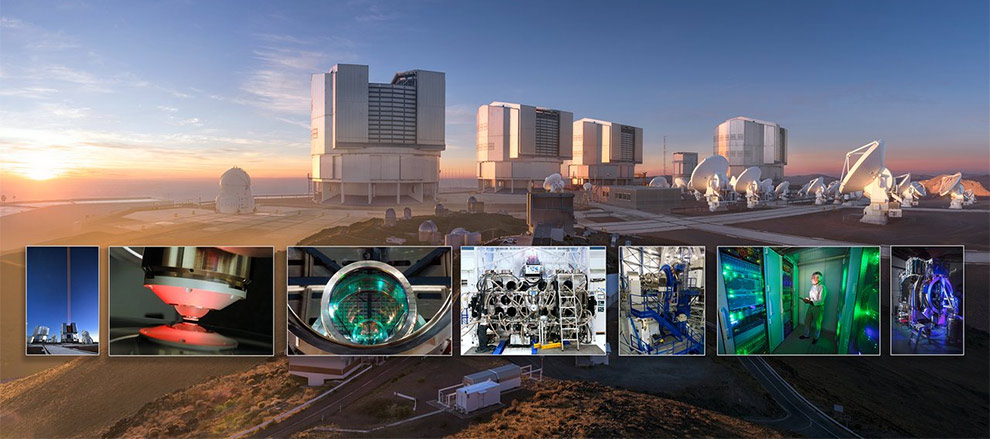
Image credit: ESO/M. Kornmesser/F. Kamphues/TNO
As set out in its convention, ESO provides state-of-the-art-facilities for Europe's astronomers and promotes and organises cooperation in astronomical research. Today, ESO operates some of the world's largest and most advanced observational facilities at three sites in northern Chile: La Silla, Paranal and Chajnantor. These are the best locations known in the southern hemisphere for astronomical observations. With other activities such as technology development, conferences and educational projects, ESO also plays a decisive role in forming a European Research Area for astronomy and astrophysics.
Paranal Observatory
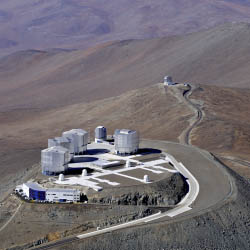
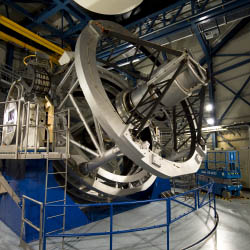
 The Very Large Telescope (VLT) at Cerro Paranal is ESO's premier site for observations in visible and infrared light. All four 8.2-metre diameter Unit Telescopes (UTs) operate individually using a large collection of instruments.
The VLT also offers the possibility to combine the light from the four UTs to work as an interferometer. The Very Large Telescope Interferometer (VLTI), with its own suite of instruments, ultimately providing imagery at the milliarcsecond level as well as astrometry at 10 microarcsecond precision. In addition to the 8.2-metre diameter telescopes the VLTI is complemented by four 1.8-metre diameter Auxiliary Telescopes (AT) to improve its imaging capabilities and enable full nighttime use on a year-round basis.
ESO’s Visible and Infrared Survey Telescope for Astronomy (VISTA, 4.1-metre), a telescope dedicated to imaging surveys in the infrared, and a few hosted telescopes are also in operation at Paranal.
See the VLT on Google Maps, including photos from members of the public. Information about visiting the ESO Sites is available on a separate page.
La Silla Observatory
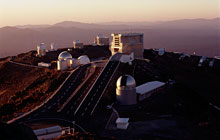 ESO operates two major telescopes (the ESO 3.6-metre telescope and the New Technology Telescope (NTT) at the La Silla Observatory. They are equipped with state of the art instruments either built completely by ESO or by external consortia, with substantial contribution by ESO.
See La Silla on Google Maps, including photos from members of the public. Information about visiting the ESO Sites is available on a separate page.
ALMA
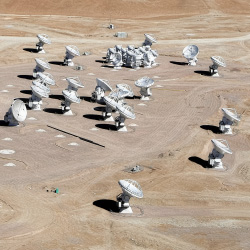
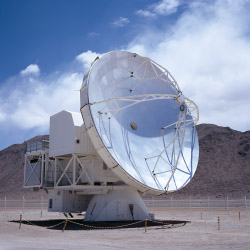
 The Atacama Large Millimeter/submillimeter Array, or ALMA, is an international collaboration to operate a telescope of revolutionary design to study the Universe from a site in the foothills of Chile's Andes Mountains. ALMA is composed of 66 high precision antennas, operating at wavelengths of 0.32 to 3.6 mm. Its main 12-metre array has fifty antennas, each measuring 12 metres in diameter, acting together as a single telescope — an interferometer. An additional compact array of four 12-metre and twelve 7-metre antennas complements this. The ALMA antennas can be arranged in different configurations, where the maximum distance between antennas can vary from 150 metres to 16 kilometres. The ALMA correlator, a specialised computer that combines the information received by the antennas, can perform a remarkable 16 000 million-million (1.6x10¹⁶) operations per second.
ALMA was inaugurated in 2013, but early scientific observations using a partial array already began in 2011.
ALMA is a partnership between ESO (representing its Member States), NSF (USA) and NINS (Japan), together with NRC (Canada), NSC and ASIAA (Taiwan), and KASI (South Korea), in cooperation with the Republic of Chile. The Joint ALMA Observatory is operated by ESO, AUI/NRAO and NAOJ.
For more information please read the ALMA page. Information about visiting the ESO Sites is available on a separate page.
ELT
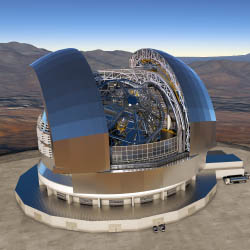
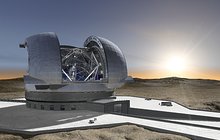 ESO has been working together with its user community of European astronomers and astrophysicists to define the new giant telescope needed by the middle of the next decade: the Extremely Large Telescope (ELT). The ELT will be the largest optical/near-infrared telescope in the world: the world’s biggest eye on the sky. The mirror stretches over almost half the length of a soccer field.
The green light for ELT construction was given in late 2014, with science first light planned for 2028.
The site of the ELT will be Cerro Armazones, 20 kilometres from Paranal, which is the site of the VLT.
With a 39-metre primary mirror and its adaptive optics concept, the ELT may revolutionise our perception of the Universe, much as Galileo's telescope did, 400 years ago, when he first pointed a telescope to the sky.
For more information please check the ELT website.
For scientists
- More information about ESO’s Observing Facilities
- More information about Future Facilities
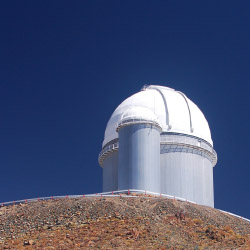
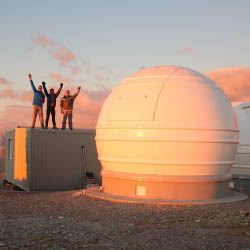
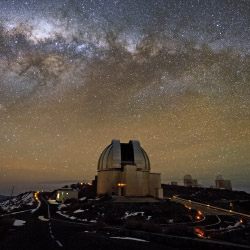
Telescopes currently operating or under construction
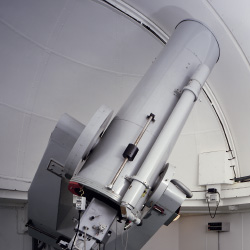
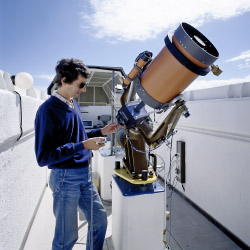
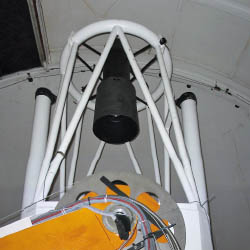
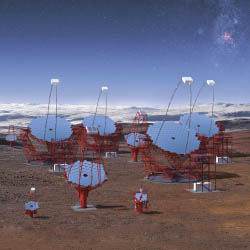
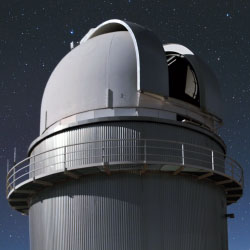
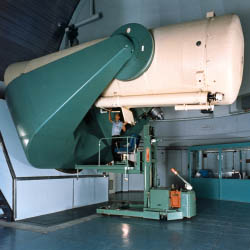
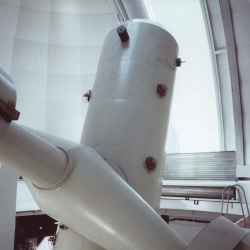
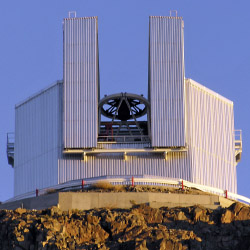
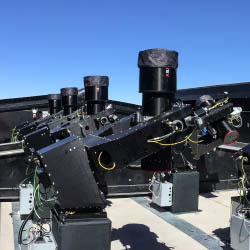
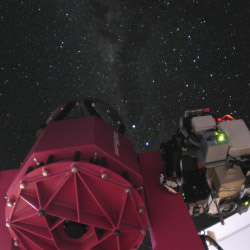
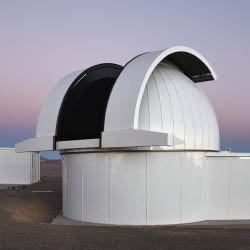
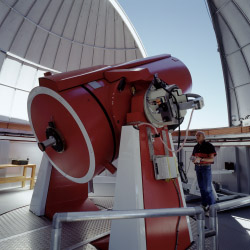
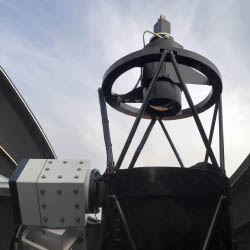
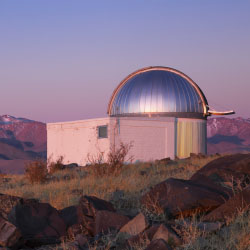
Here you see ESO's telescopes and telescopes hosted at ESO’s sites. Those with marked with a * are currently under construction.





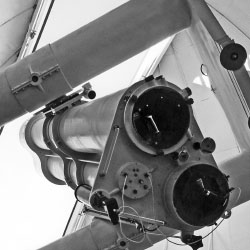
Decommissioned telescopes