 mirror sites:
PL (internal link)
HQ
[?]
mirror sites:
PL (internal link)
HQ
[?]
Quality Control and
Data Processing
|
 |
FORS2: Calibration lamp stability
This page refers to the determination of linearity and gain by the DETMON recipe from the dedicated (TPL.ID=FORS2_img_tec_detLin) calibrations. Conversion factor derived traditionally from imaging SCREEN FLATS by the fors pipeline can be found here.  Imaging Lamps
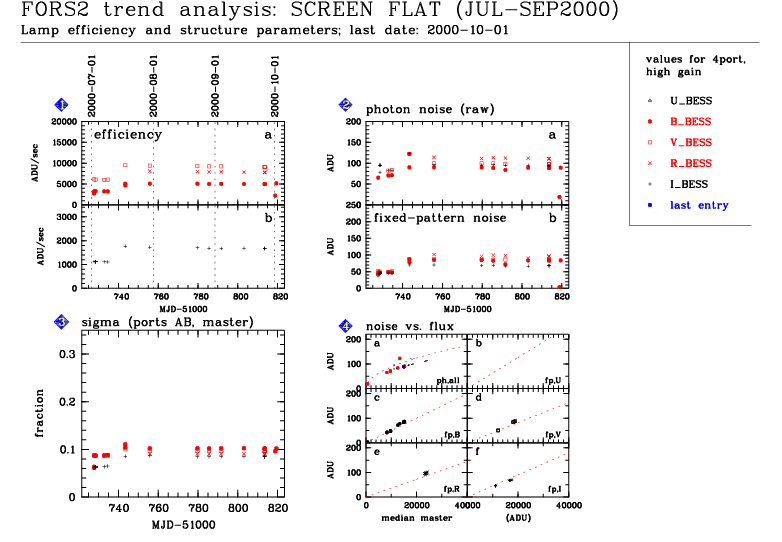
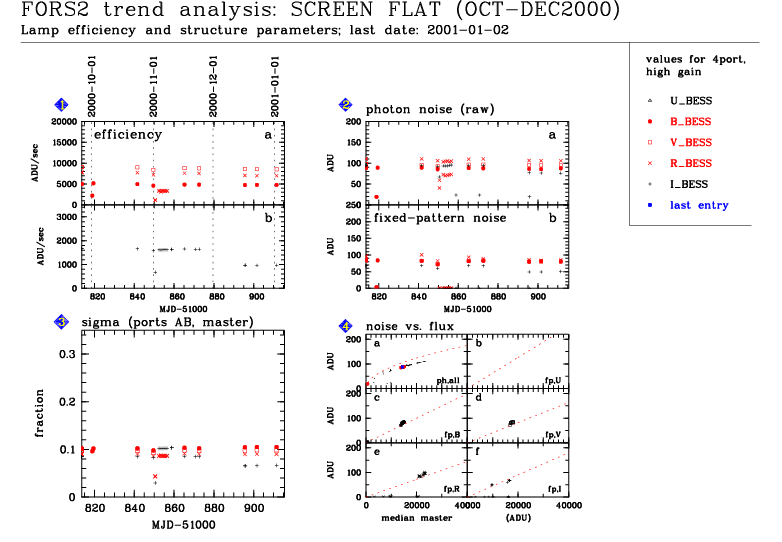
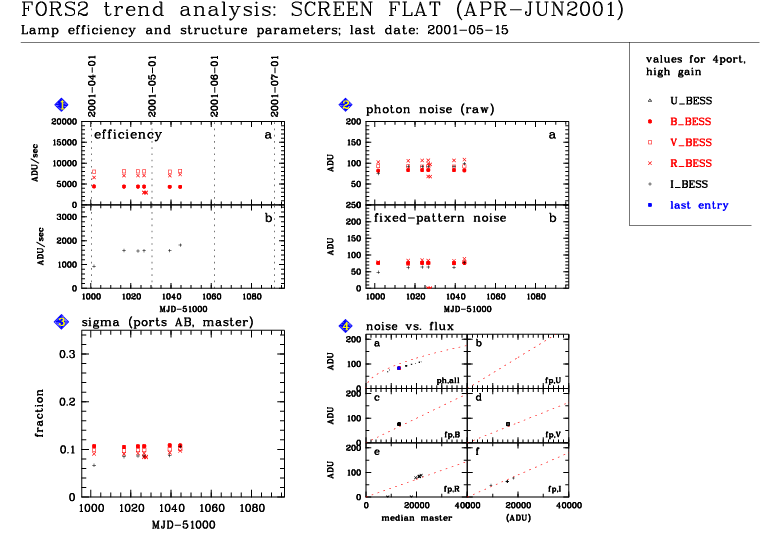
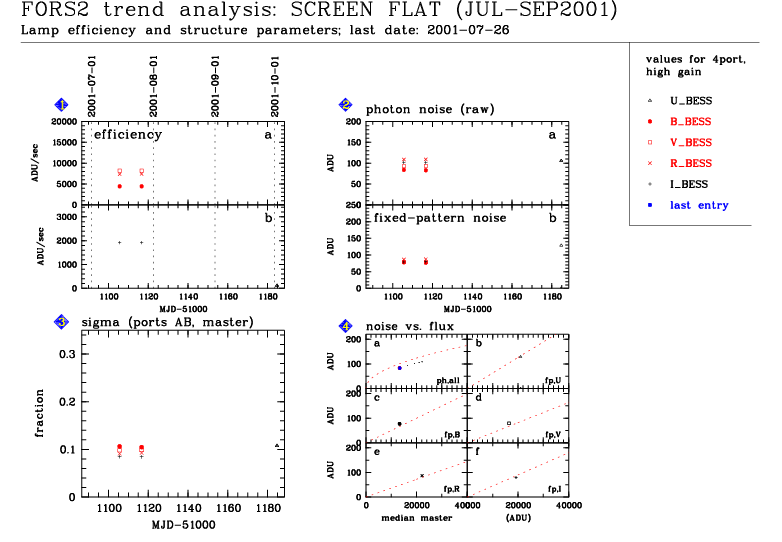
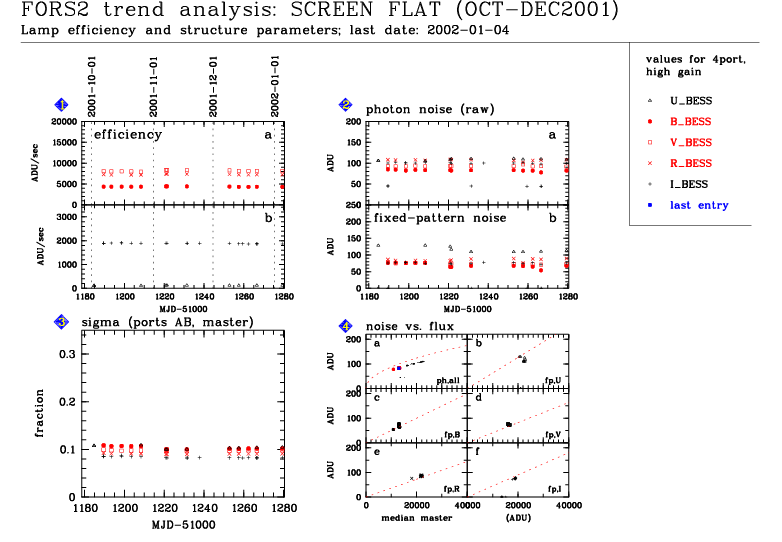
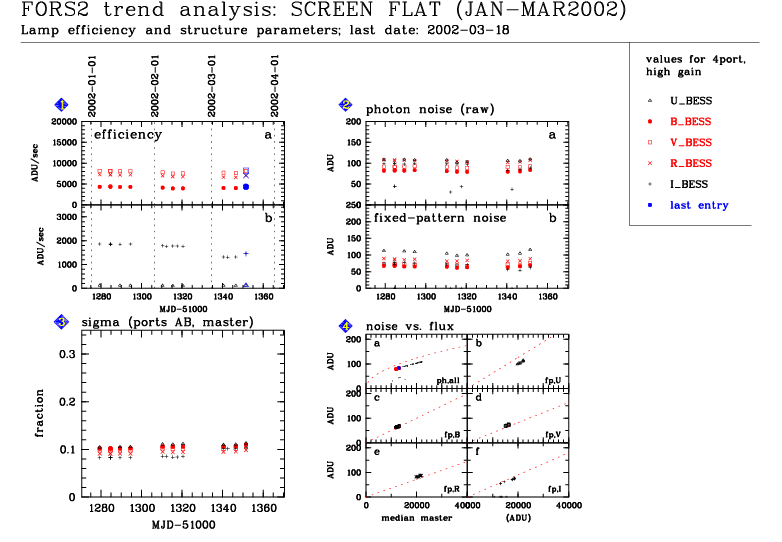
The flux of the lamps used for imaging, FlatBlue+1 and FlatBlue+2, is monitored based on the imaging screen flats.
The flux of the imaging lamps is trended here for different filters. Also, the RMS is trended here. Only data obtained with binning 2x2 and standard resolution collimator are trended. Scoring&thresholds Imaging Lamps
The flux of the FlatBlue+1 and FlatBlue+2 lamps is very stable. It is loosely scored with constant thresholds. The only requirement is stability on the calibration timescale.
Trending of the old FORS2 CCD (until 2002-03-31):
The lamp efficiency is the median signal of the first raw frame devided by exposure time. The median value is computed within a window 250x150 pixel chosen close to the gap region between the 2 CCDs to minimize the illumination gradient. This is only a nominal 'efficiency' actually measuring the stability of exposure level (influenced by e.g. aging of lamps etc.). The RMS (sigma_master) is calculated from the master screen flat image pixel sample (2x2 binning) X: @200 @1800 and Y: @400 @800 covering the unvignetted area of chip1 and chip2.
Spectroscopic Lamps
The flux of the lamps used for spectroscopy (both flat and arcs) is monitored based on dedicated, daily lamp exposures (LAMP_CHECK). Spectroscopic lamps:
For trending we use only data obtained with the 300V grism with the GG435 filter and a 1" slit, using the standard resolution collimator. In particular, monitoring of the lamp flux of the two high brightness blue halogen lamps FlatBlue+3 and FlatBlue+4, used to generate spectroscopic flats in blue (G300V, G600B) spectroscopic setups is performed. On April 18, 2016 the FlatBlue+4 lamp was disabled and later taken out of the instrument's calibration unit. Since then, only FlatBlue+3 lamp is used for spectroscopic flats. On November 15, 2016 the sub-plots relevant to the FlatBlue+4 lamp were removed. Scoring&thresholds Spectroscopic Lamps
The flux of the spectroscopic lamps is tightly scored with constant thresholds. This is to ensure flux stability (to detect moments when lamp needs to be replaced) and to avoid possible saturations and underexposition. The requirement is stability on the calibration timescale.
Th lamp flux is determined from a bias-subtracted calibration lamp exposure in LSS mode. After background subtraction the total signal is integrated and normalized by the exposure time and the total number of original CCD pixels (keeping into account possible binning). The background is evaluated from the available overscan regions.
|
|||||||||||||||||||||||||||||||||||||||||||||||||||||||||||||||||||||||||||||||||||||||||||||||||||||||||||||||||||||||||||||||||||||||||||||||||||||||||||||||||||||||||||||||||||||||||||||||||||||||||||||||||||||||||||||||||||||||||||||||||||||||||||||||||||||||||||||||||||||||||||||||||||||||||||||||||||||||||||||||||||||||||||||||||||||||||||||||||||||||||||||||||||||||||||||||||||||||||||||||||||||||||||||||||||||||||||||||||||||||||||||||||||||||||||||||||||||||||||||||||||||||||||||||||||||||||||||||||||||||||||||||||||||||||||||||||||||||||||||||||||
| |
|||||||||||||||||||||||||||||||||||||||||||||||||||||||||||||||||||||||||||||||||||||||||||||||||||||||||||||||||||||||||||||||||||||||||||||||||||||||||||||||||||||||||||||||||||||||||||||||||||||||||||||||||||||||||||||||||||||||||||||||||||||||||||||||||||||||||||||||||||||||||||||||||||||||||||||||||||||||||||||||||||||||||||||||||||||||||||||||||||||||||||||||||||||||||||||||||||||||||||||||||||||||||||||||||||||||||||||||||||||||||||||||||||||||||||||||||||||||||||||||||||||||||||||||||||||||||||||||||||||||||||||||||||||||||||||||||||||||||||||||||||||
 |
|
||||||||||||||||||||||||||||||||||||||||||||||||||||||||||||||||||||||||||||||||||||||||||||||||||||||||||||||||||||||||||||||||||||||||||||||||||||||||||||||||||||||||||||||||||||||||||||||||||||||||||||||||||||||||||||||||||||||||||||||||||||||||||||||||||||||||||||||||||||||||||||||||||||||||||||||||||||||||||||||||||||||||||||||||||||||||||||||||||||||||||||||||||||||||||||||||||||||||||||||||||||||||||||||||||||||||||||||||||||||||||||||||||||||||||||||||||||||||||||||||||||||||||||||||||||||||||||||||||||||||||||||||||||||||||||||||||||||||||||||||||||