 mirror sites:
PL (internal link)
HQ
[?]
mirror sites:
PL (internal link)
HQ
[?]
Quality Control and
Data Processing
|
 |
GIRAFFE: Grating stability
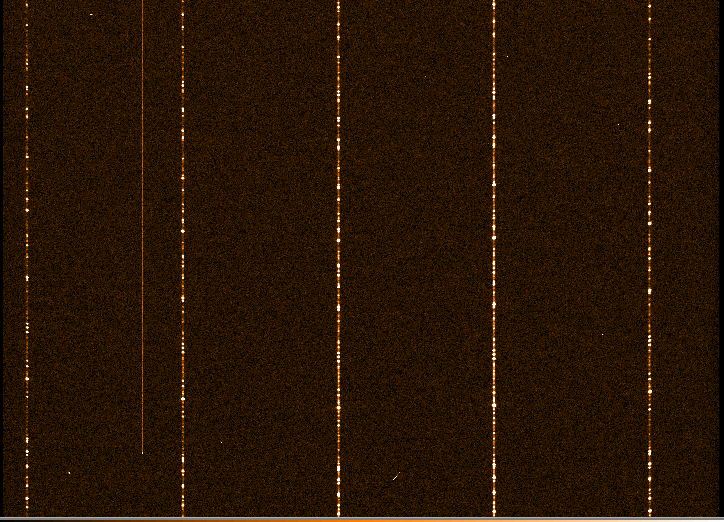
A set of frames is measured daily to monitor the stability of the gratings and of the fiber system. These frames carry the DPR TYPE SIMLAMP,TAL (TAL = thorium-argon lamp) and are created by the arclamp of the simultaneous calibration unit. The arc lamp is used to illuminate the simultaneous calibration fibres. The signal is correlated both in X (cross-disperion) and Y (dispersion) against a reference frame. There is a set of six such health check measurements, one (using the LR grating) for each slit system (Medusa1 and 2, IFU1 and 2, Argus), plus one for the HR grating and the Medusa1 slit system. The data are also used to monitor the simlamp efficiency.
 Temperature
The GIRAFFE gratings have some minor thermal motions, and occasional non-thermal jumps. To control the thermal motions, the temperature sensor TEMP53 is monitored here, located on top of the grating table close to the grating.
As a comparison evalue, the temperature TEMP53 is plotted in box 1 and repeated in box 4 of the trending plot. Scoring&thresholds Temperature No scoring done. Not applicable. Not applicable.
Grating motions in X and Y
Each of the Health Check data is correlated in X and Y to a reference frame. The set of reference frames is arbitrarily taken from date 2003-07-24. The difference (X_new - X_ref) is plotted vs. time. The same is done for the Y (dispersion) direction.
Boxes 2 and 3 of the trending plot display the X motions of the HR and LR grating (selected is the Medusa1 frame), boxes 5 and 6 the Y motions. Box 4 repeats the temperature record from box 1 for comparison.
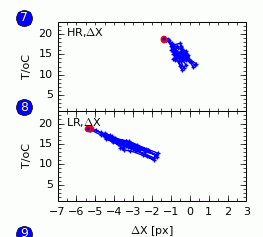
Scoring&thresholds Grating motions in X and Y The scoring thresholds in plots #2 and #5 (for the HR grating) and #3 and #6 (LR) are set such as to indicate a) a sudden, non-thermal jump, or b) a slow drift towards critical values for the position of the gratings (critical because the pipeline then might loose parts of the fibre signal). The positions have no particular physical meaning but are relative and based on historical behaviour. The incremental grating motions due to temperature are well visible in the correlation plots #7-10 (see below). The correlation slope is very stable over time, indicating clearly non-thermal motions (interventions, earthquakes). Algorithm Grating motions in X and Y The cross-correlation between the actual file and fixed reference is calculated in X and Y.
Correlation of shifts with temperature
The third panel shows the shifts in X and Y versus temperature TEMP53. For both directions, there is essentially the same (anti-) correlation with temperature.
Note that the Giraffe gratings occasionally show sudden non-thermal shifts. These are detected in the trending plot as corresponding shift of the correlation pattern in X direction.
Same as above. Scoring&thresholds Correlation of shifts with temperature The scoring thresholds in plots #2 and #5 (for the HR grating) and #3 and #6 (LR) are set such as to indicate a) a sudden, non-thermal jump, or b) a slow drift towards critical values for the position of the gratings (critical because the pipeline then might loose parts of the fibre signal). The marked and scored position thresholds are based on historical experience and represent the best spectral format, in terms of resolution and accuracy of the dispersion solution.
Algorithm Correlation of shifts with temperature Not applicable.
|
||||||||||||||||||||||||||||||||||||||||||||||||||||||||||||||||||||||||||||||||||||||||||||||||||||||||||||||||||||||||||||||||||||||||||||||||||||||||||||||||||||||||||||||||||||||||||||||||||||||||||||||||||||||||||||||||||||||||||||||||||||||||||||||||||||||||||||||||||||||||||||||||||||||||||||||||||||||||||||||||||||||||||||||||||||||||||||||||||||||||||||||||||||||||||||||||||||||||||||||||||||||||||||||||||||||||||||||||||||||||||||||||||||||||||||||||||||||||||||||||||||||||||||||||||||||||||||||||||||||||||||||||||||||||||||||||||||||||||||||||||||
| |
||||||||||||||||||||||||||||||||||||||||||||||||||||||||||||||||||||||||||||||||||||||||||||||||||||||||||||||||||||||||||||||||||||||||||||||||||||||||||||||||||||||||||||||||||||||||||||||||||||||||||||||||||||||||||||||||||||||||||||||||||||||||||||||||||||||||||||||||||||||||||||||||||||||||||||||||||||||||||||||||||||||||||||||||||||||||||||||||||||||||||||||||||||||||||||||||||||||||||||||||||||||||||||||||||||||||||||||||||||||||||||||||||||||||||||||||||||||||||||||||||||||||||||||||||||||||||||||||||||||||||||||||||||||||||||||||||||||||||||||||||||||
 |
|
|||||||||||||||||||||||||||||||||||||||||||||||||||||||||||||||||||||||||||||||||||||||||||||||||||||||||||||||||||||||||||||||||||||||||||||||||||||||||||||||||||||||||||||||||||||||||||||||||||||||||||||||||||||||||||||||||||||||||||||||||||||||||||||||||||||||||||||||||||||||||||||||||||||||||||||||||||||||||||||||||||||||||||||||||||||||||||||||||||||||||||||||||||||||||||||||||||||||||||||||||||||||||||||||||||||||||||||||||||||||||||||||||||||||||||||||||||||||||||||||||||||||||||||||||||||||||||||||||||||||||||||||||||||||||||||||||||||||||||||||||||||