


ANOTHER EXPERIMENT
SCIENCE AREAS
COS - Cosmology and/or fundamental physics
LSS - Large scale structure of the Universe
GAL - Structure and evolution of galaxies (including AGN)
MW - Milky Way dynamics and evolution
ISM - Life cycle of interstellar matter
STAR - Life cycle of stars
PLAN - Planetary system formation and evolution
EXO - Exoplanets and their atmospheres
LIFE - Search for life outside Earth
SUN - The Sun and the solar system
HIGH - High energy astrophysics
MATT - Extreme states of matter
RESEARCH METHODS
OBS - Observations
INS - Instrumentation
THEO - Theory
SIM - Simulation, modelling or computation
DATA - Data processing, analysis tools
AI - Artificial intelligence, machine learning
See also the PhD Thesis Topics offered by ESO Faculty Members (Garching and Chile) and the ESO Santiago Staff and Research page for scientific staff in Chile.
GAL · STAR · EXO · LIFE · OBS · DATA · FACULTY
Valentin joined ESO as a Paranal fellow in 2001, after receiving a PhD at University of Arizona, Tucson. Three years later he became a support astronomer at the La Silla Paranal Observatory and he is working now at the Science Data Products group in Garching. His research interests include the Milky Way galaxy, star clusters, young and low mass stars, brown dwarfs and planets.
Scientific interests:
- Star clusters
- Young/low mass stars
- Brown dwarf
- Planets
COS · GAL · MW · HIGH · THEO · SIM · DATA · AI · SCIENTIST

Felix Stoehr is the Subsystem Scientist of the ALMA Science Archive. He joined ESO in 2007 working for the HST group and then moved to the ALMA Regional Center. He obtained his PhD from the LMU in 2003 working on Simulations of Galaxy Formation and large Scale Structure.
Scientific interests:
- Large-scale structure formation
- Galaxy formation
- Machine learning
FACULTY
Anna joined ESO in 2017 as a Fellow and two years later joined the ALMA Regional Centre (ARC) at ESO with an Astronomer position. She received her PhD at Leiden Observatory in 2018 on the topic "The puzzle of protoplanetary disk masses". Anna's scientific focus is on planet-forming disks, as highlighted by her recent review on "Setting the Stage for Planet Formation: Measurements and Implications of the Fundamental Disk Properties" (https://ui.adsabs.harvard.edu/abs/2023ASPC..534..501M/abstract).
Scientific interests:
- Planet-forming disks
- Astrochemistry
- Sub-mm interferometry
ISM · PLAN · OBS · FACULTY
Enrique joined ESO in 2019 as an ALMA Fellow in Chile. He moved to the ALMA Regional Centre (ARC) at ESO-Garching in 2021. Since 2024, he is the Head of the ARC. Enrique received his PhD in 2016 at the Instituto de Astrofísica de Andalucía (IAA-CSIC) in Granada, Spain. His thesis analysed high angular resolution (sub-)mm/cm observations of protoplanetary discs with the goal of better understanding their substructures and the role they play in planet formation. Enrique's current research focuses on the characterisation of the dust content in protoplanetary discs by combining (sub-)mm/cm observations at multiple wavelengths.
Scientific interests:
- Protoplanetary disc structure, evolution, and dispersal
- Dust growth and evolution in protoplanetary discs
- Planet formation
- Sub-mm and cm interferometry.
PLAN · OBS · FACULTY
Carlo joined ESO as IMPRS PhD student in 2011 and then again, as Fellow, in 2017. He became an ESO staff Astronomer since 2020. He received his PhD at Ludwig-Maximilians-University Munich in 2014 with a thesis on Accretion onto young stars. Between 2014 and 2017, he was an ESA Fellow at ESTEC (NL).
Carlo's scientific highlights include the correlation between disk mass and accretion rates in young stars (Manara et al. 2016), missing mass budget problem in planet formation (Manara et al. 2018) and Protostars & Planets VII review (Manara et al. 2023)
Scientific interests:
- Protoplanetary disk evolution
- Impact of the environment on protoplanetary disks
- Origin of disk substructures
- Accretion and winds in young stellar objects
MW · STAR · OBS · DATA · GAL · FACULTY
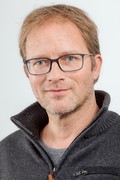
Michael is Head of the Office for Science in Garching since February 2023. He joined ESO in 2006 as User Support Astronomer and was involved in the operations of CRIRES, VIMOS, VIRCAM, OmegaCAM and MUSE. He obtained his PhD in Astrophysics from the University of Bonn (Germany) in 1998, working on the interrelation of dwarf galaxies, cD halo and globular clusters in the center of the Fornax galaxy cluster. During his PhD work and a Postdoc position at the Universidad Catolica in Santiago (Chile) he discovered a new type of compact stellar systems, the so-called ultra-compact dwarf galaxies. After his time in Chile and before joining ESO, Michael went back to Bonn as a Research Scientist in the University Observatory.
Scientific interests:
- Galactic and extragalactic star clusters
- Dwarf galaxies in the Local Volume and nearby galaxy clusters
- Formation and evolution of galaxies over cosmic time
- Galaxy dynamics
MW · ISM · STAR · PLAN · OBS · DATA · FACULTY
Morten joined ESO in 2021 and is the Project Scientist for HARMONI, the near-infrared integral field unit for the ELT. He obtained his PhD in 2005 from Potsdam University on the topic of the low-mass stellar content in young massive star clusters. He then did several postdocs in the US and Europe before joining Gemini South Observatory in 2016.
Scientific interests:
- Galactic and extragalactic star clusters
- The Initial Mass Function
- Formation of Brown Dwarfs
- Star cluster dynamics
GAL · HIGH · OBS · THEO · FACULTY
Paolo has worked in the ELT Science Office since 2011. He joined ESO in 2003 as an Astrophysical Virtual Observatory Science Manager in the Space Telescope European Coordinating Facility. In 2004, he became Head of the Virtual Observatory Systems Department, later the Virtual Observatory Project Office (2008). He earned his PhD from the University of Padua in 1989, studying Active Galactic Nuclei (AGN)
masses. He held postdoctoral positions at STScI and ESO, a professorship in Rome, and from 1997 to 2003 was an ESA Archive Scientist at STScI. Paolo is well known for his AGN research across the electromagnetic spectrum and has recently expanded into neutrino astronomy. He has also have written six review papers.
Scientific interests:
- Multi-wavelength emission of Active Galactic Nuclei
- High-energy astrophysics
- Neutrino Astronomy
MW · ISM · STAR · OBS · INS · DATA · FACULTY
Katharina is an ALMA Regional Centre staff astronomer since January 2023 when she joined ESO. She obtained her PhD in Astrophysics from the University of Bonn (Germany) in 2013, studying the formation of high-mass stars in several star-forming regions. After her PhD, Katharina spent three years as a fellow at ESO Garching, three years as a support scientist at the Joint Institute for VLBI ERIC (The Netherlands) and two years as a postdoctoral researcher at the Allegro ARC node at the University of Leiden (The Netherlands).
Scientific interests:
- High-mass star formation
- Astrochemistry and Masers
- Galactic structure and dynamics
- Galactic Centre
COS · LSS · GAL · OBS · SIM · DATA · FACULTY
Paola holds a PhD in Physics from LMU Munich as part of the first IMPRS in Garching. Her career began as a GOODS Fellow at ESO, designing the VIMOS GOODS spectroscopic survey, followed by a Junior Scientist role at MPE, contributing to Herschel PACS photometry and extragalactic surveys. She later became a Junior Research Group Leader at the Excellence Cluster UNIVERSE, mentoring over ten students and PostDocs. In 2021 Paola joined ESO as a USD astronomer and secured an ERC Consolidator Grant "CLEVeR" to explore the interplay between AGN feedback, galaxy and the large-scale structure evolution. In 2024, she became Deputy of the Office for Science at ESO, overseeing approximately 55 PhD students and fellows while continuing to lead my her research group.
Scientific interests:
- text too long
STAR · MATT · OBS · DATA · FACULTY
Nando joined ESO in 1999, first in the Quality Control group (1999-2001) and then in the Users Support Department (2001-2011). Since 2011 he leads the Observing Programmes Office. He received his PhD at the Padua University in 1996 with a thesis on Supernovae. He has been an ESO student in Garching and a fellow in Chile.
Scientific interests:
- Supernovae
- Type Ia Supernova progenitors, SN light echoes, SN-GRB connection
- Optical counterparts of GW sources
- Physics of the high terrestrial atmosphere
STAR · HIGH · OBS · DATA · FACULTY
Dirk joined ESO in 2008 as part of the CASA team, then moved to European ALMA Regional Centre operations scientist position in 2009 (continuing part-time work on CASA). Received PhD in 1998 from Technical University of Munich on the first European detections of extragalactic very-high-energy gamma rays from the Blazars Mkn 421 and 501. Postdoc positions at IFAE in Spain (working on MAGIC) and at Iowa State University (working on VERITAS) until 2002. Then staff positions at NASA/GSFC (for GLAST, later Fermi) and at MPE/DLR (for INTEGRAL) until 2008. Pioneering work on Cherenkov telescopes, observations of Blazars, first spectrally resolved high-energy gamma image of Earth (from EGRET data), contributions to radio interferometry.
Scientific interests:
- Radio-interferometry
- Symbiotic Novae
- Blazars
- Cherenkov Telescopes
Leibundgut, Bruno (Astronomer Emeritus)
COS · STAR · HIGH · OBS · INS · FACULTY · PENSIONER

Bruno joined ESO in 1993, starting as a operations astronomer. He graduated from the University of Basel, Switzerland, and held postdoctoral positions at the Harvard-Smithsonian Center for Astrophysics and the University of California, Berkeley. At ESO he worked with the VLT Programme Scientist during the VLT construction and the start of VLT operations, started and led the VLT quality control group, was the Head of the Office for Science and Director for Science. After several years as VLT Programme Scientist, he returned as Director for Science for a short period. Bruno's scientific interests include supernova physics, cosmology, nucleosynthesis and stellar evolution. One of his favourite objects is SN 1987A, which he followed since its explosion.
Scientific interests:
- Supernova physics
- Nucleosynthesis
- SN 1987A
ISM · OBS · THEO · SIM · FACULTY
Ralf has been a Project Scientist in Garching since 2000, leading instruments such as TIMMI2, VISIR, VISIR2, CRIRES, SPHERE, HAWK-I,
NEAR, and FORSUp. He has also conducted instrument studies for the Overwhelmingly Large Telescope (OWL) and the Extremely Large Telescope (ELT). Ralf is the elected president of the IAU Commission on Spectral Energy Distributions of Galaxies. He obtained his PhD in Astrophysics from the University of Bonn (Germany) in 1991, working at the Max Planck Institute for Radio Astronomy (MPIfR) on dust models, including quantum-heated nanoparticles (PAH). He was an ESO Fellow in 1992 before joining the European Space Agency (ESA) as a resident astronomer for ISOCAM (1993–2000). Ralf published several decadal papers and original research on cosmic dust.
Scientific interests:
- Cosmic dust from the ISM to high-redshift galaxies
- Light scattering theories
- 3D polarized dust transfer via Monte Carlo methods
- SED model libraries for starbursts and AGN
PLAN · SUN · OBS · SIM · DATA · FACULTY
Olivier started at ESO in 1989 as a cooperant on La Silla, then was a student at the headquarters. After defending his PhD thesis in 1994, on minor bodies in the outer Solar System, he was a post-doc at IfA/U. Hawai`i. Hainaut then returned to La Silla as a fellow, then as an astronomer as leader of the NTT Team, then of the La Silla Science Operations, then Paranal Science Operation. In 2008, he moved to Garching, where he worked for Education and Public Outreach department, before returning to the Directorate of Operations.
Scientific interests:
- Text too long
MW · OBS · INS · DATA · FACULTY
Elena is an Instrument Project Scientist in Garching since January 2021 working on the first-generation ELT instruments MICADO and MORFEO.
In 2006, shortly after obtaining her PhD in Astronomy from the University of Bologna (Italy), with a thesis on the study of the Milky Way bulge stellar population, she joined ESO Chile as Fellow. Working as support astronomer at VLT, she has operated several instruments such as CRIRES, ISAAC, FORS2, NACO, SINFONI and HAWK-I.
In 2010, Elena became an ESO staff at the User Support Department in Garching, contributing to the operation of NACO, SINFONI, HAWK-I, MUSE, CRIRES and UVES, as well as in the development of CRIRES+ and ERIS.
Scientific interests:
- Resolved stellar populations studies in the Milky Way and beyond
- Globular Clusters dynamics
- Variable stars
GAL · OBS · FACULTY
Martin joined ESO, as a fellow, in 2003. Following the completion of the fellowship, he was the first astronomer employed at the newly established ALMA Regional Centre, which he became manager of in 2016. In 2023, he was appointed head of the ALMA Development Team department, a role he combines with the position of deputy ALMA Programme Manager. Martin obtained his PhD from the Kapteyn Institute at the University of Groningen in 2000, followed by a postdoctoral appointment at the University of Melbourne until 2003. Career highlights include publications on the HI mass function, creating the first ALMA image using data from three(!) antennas, and running the ALMACAL survey.
Scientific interests:
- Intergalactic/circumgalactic medium
- ISM in high-z galaxies
- Survey/statistical studies
STAR · OBS · INS · DATA · FACULTY
Anna is a User Support Astronomer since November 2024. She obtained her PhD from the University of Warwick (UK) in 2018, with a thesis on the evolution of Cataclysmic Variables. After completing her PhD, she was a Fellow at ESO in Garching (2018-2021) and then at the European Space Agency in Madrid (2021-2024).
Her research focuses on the study of accreting white dwarfs, binaries in which matter from a companion star is transferred onto a white dwarf. She uses multi-wavelength data from space- and ground-based observatories to obtain a full insight into the physical mechanisms driving their evolution, which is key to unveil their connection with Type Ia Supernovae and constrain the evolution of all mass exchanging binaries.
Scientific interests:
- White dwarfs (single and in binaries)
- Binary star evolution and accretion physics
- Population studies and large surveys
- Observational techniques and multi-wavelength astronomy
ISM · STAR · PLAN · EXO · FACULTY

Mario van den Ancker is a support astronomer at ESO Garching. In the User Support Department he has been involved in the operations of the CRIRES, FORS1, FORS2, NACO, SINFONI, SPHERE, VISIR, and XSHOOTER instruments on the VLT. He is currently supporting the preparations for the front-end operations for METIS at the ELT and coordinating the overall preparations for ELT front-end operations. Mario obtained a PhD in Astrophysics from the University of Amsterdam in 1999, working on ISO spectroscopy of circumstellar matter around young stars. After completing a post-doctoral fellowship at the Harvard-Smithsonian Center for Astrophysics (Cambridge, MA), he joined ESO as a staff member in September 2002.
Scientific interests:
- Herbig Ae/Be Stars
- Galactic Star & Planet Formation
- Protoplanetary Disks
- Exoplanets
Baade, Dietrich (Astronomer Emeritus)
STAR · OBS · INS · PENSIONER · FACULTY
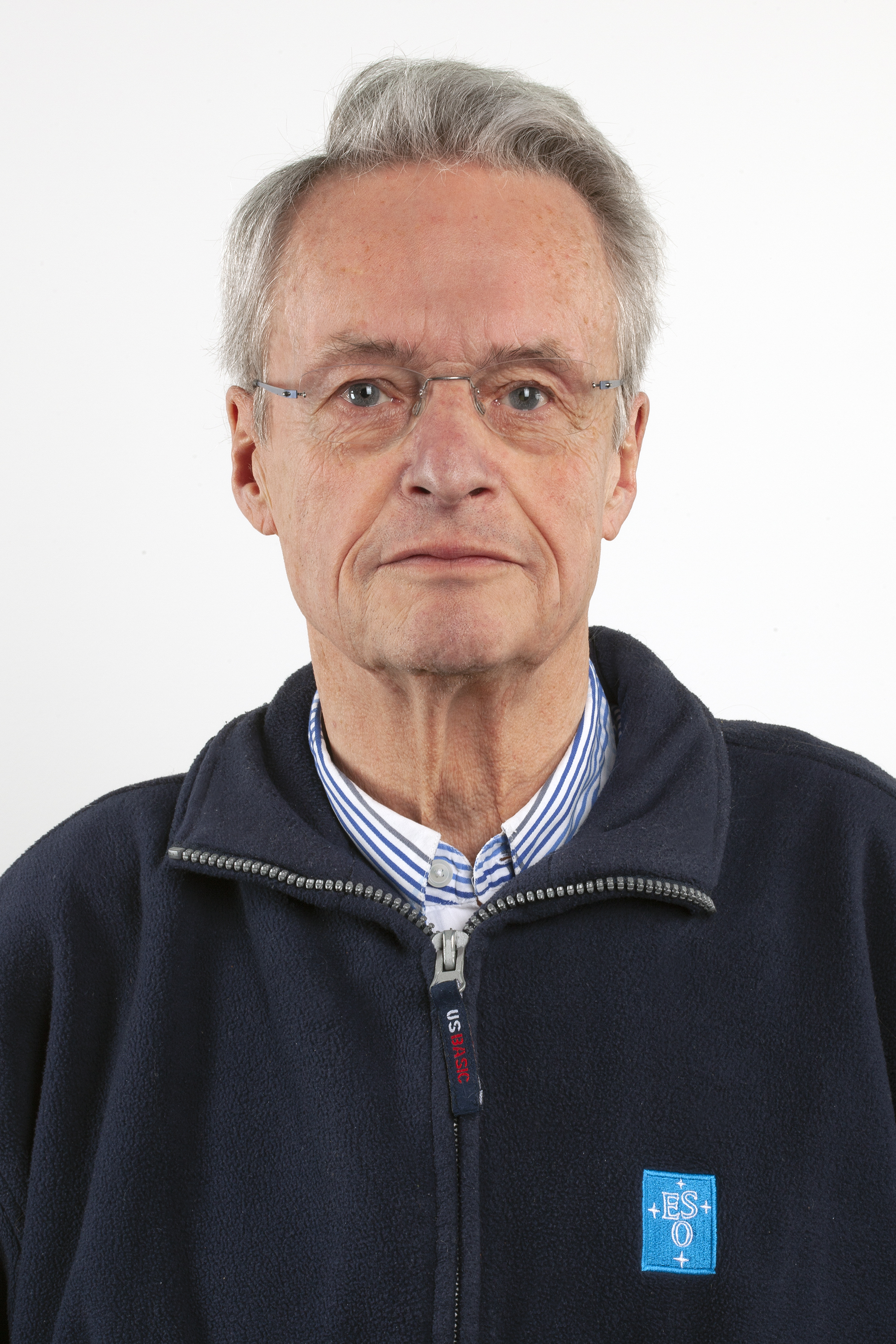
Dietrich joined ESO Garching as a Fellow in 1981, after completing his PhD on the discovery of nonradial pulsations in Be stars (Münster, Germany, 1979). Following his work for the Space Telescope-European Coordinating Facility (Garching), he organised User Support at Headquarters (pioneering remote observing), authored the VLT Science Operations Plan, initiated the NTT Upgrade, and served as Project Scientist for the Wide Field Imager, OmegaCAM, and 4MOST. Dietrich founded the NTT and the 2p2 teams at La Silla and led the Optical Detector and the Instrument Science Departments. The NGC detector controller and ESO Reflex were his initiatives. He chaired the Astronomy Faculty and retired in 2016 as Deputy Director for Science. Thereafter, space photometry enabled Dietrich to demonstrate that pulsations trigger the outbursts of Be stars.
Scientific interests:
- Be stars: pulsations, mass loss, binarity
- Circumstellar disks of Be stars: formation, dynamics
- Supernova explosions: geometry (from spectropolarimetry)
- Supernovae: circumstellar matter (from spectropolarimetry)
STAR · PLAN · OBS · INS · DATA · AI · FACULTY
Amelia joined ESO as Project Scientist in 2022 and is a full astronomer since 2024. She received her PhD from Universidad Autónoma de Madrid (research conducted at the Center for Astrobiology and the Spitzer Science Center) in 2009 on putting spectroscopic observational constraints to the formation process(es) of substellar objects. Amelia was an ESO fellow with duties in Paranal and an independent post-doc at MPIA. After that, she was a full professor in Universidad de Valparaiso for eight years and the PI of the Millennium Nucleus for Planet Formation. She is deeply committed to inclusive astronomy with focus on the visually impaired community.
Scientific interests:
- Substellar objects
- Disk evolution
- Observations and Instrumentation
- Multi-object spectroscopy
- Astroinformatics
PLAN · OBS · SIM · FACULTY

Johan Olofsson joined ESO-Garching in November 2023, to become part of the User Support Department. He is involved in the operations of the SPHERE, GRAVITY, and MATISSE instruments. He obtained his PhD from the University of Grenoble (France) in 2009. As a postdoc Johan worked at the Max Planck Institute for Astronomy in Heidelberg (Germany) and at the Institute of Astrophysics in Valparaiso (Chile), where he later on became associate professor, as the group leader of a Max Planck Tandem Group. His main research focuses on debris disks, combining high angular resolution observations with numerical simulations. He is also very interested in multi-wavelength observations, from near-IR to sub-mm, as the synergy between them is crucial to get the bigger picture.
Scientific interests:
- Debris disks, planet formation
- Dust dynamics and dust properties
- Numerical simulations; N-body and radiative transfer
- High angular resolution and high contrast observations
STAR · PLAN · OBS · INS · DATA · FACULTY

Markus Schöller is a project scientist within the Directorate for Science. He joined ESO Garching in 1997 to work on the VLT Interferometer. Between 2001 and 2008, Markus stayed in Chile to work on Paranal, commissioning first the VLTI and later leading it
as VLTI Scientist into science operations. As a project scientist, he has worked on the instruments AMBER, MIDI, Gravity, ERIS, MATISSE, and lately SOXS and CUBES. Markus obtained his PhD from the University of Bonn in 1996, working at the MPIfR on speckle interferometric observations of massive stars and binaries. He is a co-author of the book "Magnetic fields in O, B, and A stars".
Scientific interests:
- High angular resolution of massive multiple stellar systems
- Observations of magnetic fields in massive stars
- Magnetic field generation and impact on stellar evolution
- Instrumentation for visible and near-infrared wavelengths
STAR · PLAN · EXO · OBS · INS · DATA · FACULTY
Antoine is VLTI programme Scientist in Garching since 2017. He joined ESO in 2008 as support astronomer and then VLTI System Scientist in Chile. Prior, he was a postdoc at the CHARA Array in California for two years after receiving his PhD from Paris University in 2005. He has worked in instrumentation developments, data reduction and interpretation, with a keen interest in precise measurements of sizes, masses, distances, and orbits of various stellar and non-stellar objects. In recent years, he is particularly interested in finding isolated stellar mass black holes by following up microlensing events with interferometry.
Scientific interests:
- Fundamental parameters of stars, distance scales
- Exoplanets and planet formation
- Isolated stellar mass black holes
- Data analysis methods for optical interferometry
GAL · MW · ISM · OBS · INS · THEO · DATA · SIM · FACULTY
Eric joined ESO in 2009. He acted as Head of the Garching Office for Science until 2019, and presently Head of Project Science.
An engineer from the Ecole Centrale de Lyon, he also holds a Master of Engineering from Cornell University (USA) and a PhD from Lyon (FR) in 1994 on the observations and modelling of galactic nuclei. Eric completed an EARA Post-doctorate in Leiden (NL) and an ESO Fellowship (DE), and held an astronomer position at CRAL (Lyon). Since 1987, he has contributed to the development and exploitation of integral-field spectroscopy (e.g., TIGER, TIGER2, OASIS, SAURON, MaNGA, MUSE) and led or contributed to various transformative scientific campaigns and projects (e.g., SAURON, Atlas3D, MaNGA, PHANGS). He has also developed and contributed to modelling tools and formalisms (e.g., MGE, pPXF).
Scientific interests:
- Galaxy Evolution
- Dynamics
- Spectrographs
- Modelling
STAR · OBS · INS · FACULTY
Christian joined ESO Chile in 2003 and moved to Garching in 2007. Before taking up his appointment at ESO, Christian was an astronomer with the United States Naval Observatory. He obtained his PhD from the University of Bonn, while working at the Max-Planck-Institut for Radioastronomy. Christian has considerable experience in long baseline interferometry, beginning with VLBI in the radio, which he used to study jets of quasars, and continuing with the MERLIN and VLA interferometers for further studies of extragalactic radio sources. He has used his knowledge of imaging radio interferometric data which he acquired during his work in Bonn to extract some of the first images of spectroscopic binaries from optical interferometric data, and has developed an imaging algorithm for multi-wavelength aperture synthesis observations.
Christian's primary research interests include the determination of physical parameters of stars in multiple stellar systems through interferometric and spectroscopic observations. He also works on near- and mid-infrared observations of pre-main sequence stars. He has written comprehensive data reduction and modeling software for Mark III and NPOI data, capable of combining interferometric and spectroscopic data to analyze hierarchical stellar systems. Dr. Hummel was also involved in the reduction of wide angle astrometric data from the NPOI.
Scientific interests:
- Observations of spectroscopic binaries with optical interferometers
- Massive star evolution
- Interferometric imaging of stars and multiple stellar systems
COS · GAL · ISM · OBS · DATA · AI · FACULTY
Paola joined Joined ESO in 2006 as ALMA Regional Centre (ARC) Manager, leading the development of European user support at ESO and establishing the European ARC Regional Centre. Worked closely with ALMA partners in the USA, Japan, and Chile to build ALMA Operations from the ground up, starting with the drafting of the ALMA Operations Plan.
Elected Faculty Chair in 2019, serving as Faculty Chair and Head of the Office for Science until 2023. Led the implementation of key policy documents, including the Astronomer Charter and the Scientific Evaluation of the ESO Astronomer Workflow, ensuring the organization remained aligned with modern research demands.
Since February 2024, Cherenkov Telescope Array Observatory (CTAO) Programme Scientist, responsible for engaging ESO member states in CTAO science.
Scientific interests:
- Physical processes in the interstellar and circumgalactic medium
- Galaxy Clusters and Proto-clusters
- Active Galactic Nuclei and their host galaxies
GAL · OBS · SIM · DATA · FACULTY
Evanthia joined ESO in 2006 as the Virtual Observatory Facility Centre Astronomer, a position she held until 2011. After that, she took the role of the European ALMA Regional Centre (ARC) Network Coordinator until 2019, when she became the deputy Head of the ARC and Interim Head of the ARC from 2022 to 2024. She received her PhD in 2000 from the Université Paul Sabatier in Toulouse, France, on "Quasar formation and evolution and cosmological constraints". She did her first postdoc at ESO as a member of the ESO Imaging Survey team. She then moved into a Spitzer/Herschel postdoc at the Instituto de Astrofísica de Canarias in Tenerife, Spain, where she stayed until her returned to ESO in 2006.
Scientific interests:
- Active Galactic Nuclei (AGN) across wavelengths and cosmic time
- AGN impact on the properties of their hosts galaxies
- Extragalactic Surveys
- Galaxy formation and evolution
GAL · MW · ISM · STAR · OBS · DATA · AI · FACULTY
Ashley joined ESO in 2022, initially as a Fellow and now serving as Faculty member. He received his PhD at LJMU/MPE in 2018 on the topic of Star Formation across the Galaxy (2014 - 2018). Following this, he held a postdoctoral position at the University of Bonn from 2018 to 2022.
Ashley's scientific highlights include recent work published as part of the PHANGS and ACES collaborations,
Scientific interests:
- Star Formation and Stellar Feedback
- Galaxy Evolution and ISM Structure
- Milky Way and Nearby Galaxies
- Multi-Wavelength Observations of Galaxies
PLAN · EXO · LIFE · SUN · OBS · INS · DATA · AI · SCIENTIST
Eric joined ESO in 2010, beginning with the commissioning of ALMA before moving into its science operations, and is now involved in future developments. He earned his PhD in 2008 from Université de Versailles Saint Quentin en Yvelines, focusing on the study of the atmosphere of Venus using the SPICAV instrument onboard Venus Express.
Scientific interests:
- Planetary atmospheres
- Exoplanets
- Protoplanetary disks
- Astrometr
GAL · MW · STAR · OBS · DATA · FACULTY
Francesca is the Phase1 Project Scientist and responsible for most OPC-related matters in the Observing Programmes Office, since 2015. She obtained her PhD in Astrophysics in 1995 from University of Trieste, studying the evolution of the light elements (LiBeB) in the galaxy. After a post-doc at the University of Chicago, she joined ESO in 1997 as Fellow, then in 2000 became User Support Astronomer (UVES, FLAMES) and from 2006 to 2015 she was the Head of USD. Further roles at ESO include a long membership/chairship of the SPC and chairing the ESO Faculty (2012-2018). Since 2005, she has strongly engaged in EDI matters, covering different roles. Her efforts have been recognized with the inaugural Nancy Grace Roman Award (2023).
Scientific interests:
- Text is too long
GAL · ISM · HIGH · OBS · INS · DATA · FACULTY
Vincenzo joined ESO in 2001 as an ESO student in Garching. After completing his Ph.D. in Physics at the University of Roma Tre, Italy, in 2003, entitled "A new view on the nature and evolution of AGN with the new generation of X-ray telescopes", he held a postdoctoral position at MPE, Garching, followed by an ESO Fellowship. He then became an Astronomer in the User Support Department. Since 2015 he has been a Project Scientist in the Project Science Department.
Vincenzo's scientific highlights include first observational evidence that a large fraction of AGNs are obscured by gas and dust confirming the prediction of the X-ray background synthesis models (Mainieri et al. 2002); pioneering work applying SED decomposition methods to derive precise photometric redshifts for AGN selected from deep X-ray surveys (Mainieri et al. 2005); PI of a 280 hours SINFONI Large Programme at VLT (SUPER) that performed the first statistical study of AGN driven ionized outflows at Cosmic Noon (Mainieri et al. 2021).
Scientific interests:
- Influence of AGN feedback on galaxy evolution
- Baryon cycle
- AGN growth and evolution over cosmic time
- Spectroscopic surveys
D'Odorico, Sandro (Astronomer Emeritus)
COS · GAL · ISM · OBS · INS · DATA · FACULTY · PENSIONER

Sandro is an ESO Astronomer Emeritus since June 2010. He obtained a degree in Physics in 1967 at the Padova University with a thesis on dwarf Magellanic galaxies and was astronomer of the Padova Observatory from 1968 to 1980. He was Carnegie fellow at the DTM in Washington D.C. and has had extended scientific stays at various university and observatories. He joined ESO in Geneve in 1980 as fellow and become staff member in Garching in 1981. He held the positions of Head Optical Instrumentation (1983-1993), of Head of Optical Instrumentation and Detectors (1994-95), of Deputy Head of the Instrumentation Division (1994-2004) and Coordinator of the ELT Instrumentation Studies (2004-2011). He was P.I. of the VLT instruments UVES and X-Shooter.
Scientific interests:
- Interstellar and Intergalactic Medium
- High redshift galaxies
- Scientific drivers and specifications for instruments at ground-based telescopes
STAR · PLAN · OBS · INS · FACULTY

Suzanne joined ESO in 2007 working on the Phase A instrumentation studies for the ELT as a project scientist and also followed the delivery of KMOS to the VLT as instrument scientist. Suzanne later went on to be deputy and manager of the ELT instrumentation project and is now Deputy Manager of the ESO Instrumentation Programme. Suzanne has had a long career in the development of infrared spectrographs, starting with her PhD at the University of Edinburgh. She remained at the Royal Observatory, Edinburgh (now UK ATC), leading instruments for UKIRT and Gemini, until moving to ESO.
Scientific interests:
- Low and high mass young stellar objects
- Accretion and outflows
- Instrumentation
- NIR spectroscopy including with IFUs
COS · LSS · GAL · OBS · INS · THEO · SIM · FACULTY
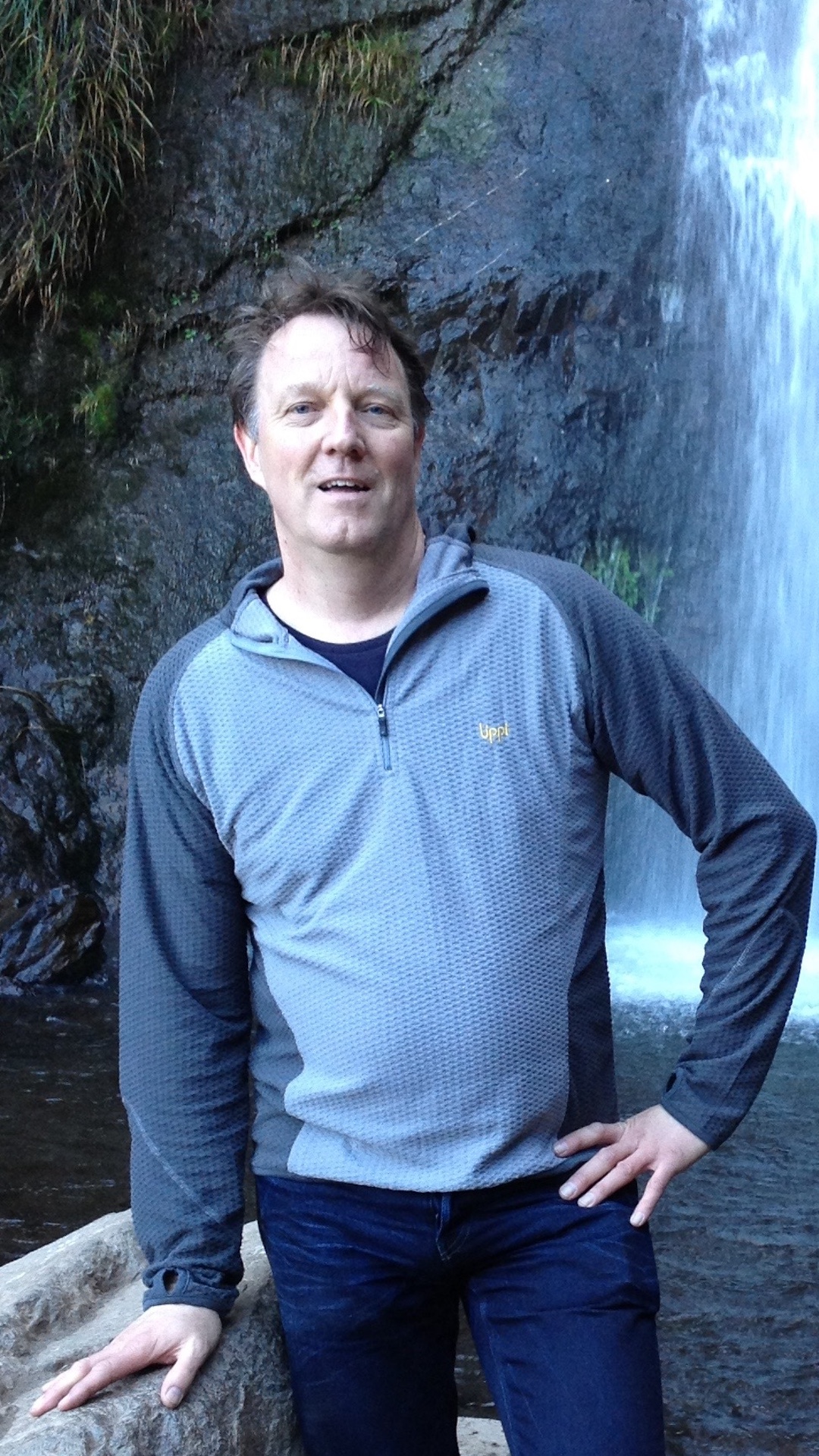
Eelco joined ESO in 2008. He received his PhD from Leiden University in 1994 on the topic Clusters of Galaxies and Voids. His career path led him from Edinburgh to Copenhagen, back to Edinburgh, then to Innsbruck, before arriving at ESO, where he progressed from ARC Scientist to ARC Astronomer.
Scientific interests:
- Galaxy formation and evolution in over-dense regions
- Galaxy surveys to constrain cosmology and galaxy formation models
- Strong gravitational lensing
- Sub-mm observational techniques
STAR · PLAN · OBS · DATA · FACULTY

Monika joined ESO in 2003 when she became a Staff Astronomer at the User Support Department. She carried out her thesis work at the Max-Planck-Institute for Astronomy and obtained her PhD from the University of Heidelberg in 1998. Afterwards she spent almost 2 years in ESO Chile as a Fellow, before taking a postdoc position at the Max-Planck-Instiute for Radioastronomy in Bonn.
Monika's research is in the area of star formation, in our galaxy and in the nearby Magellanic Clouds dwarf galaxies. With data from a variety of instruments and taken from optical to radio wavelength, she is investigating how binary stars, brown dwarfs and planetary mass objects form, how stellar binarity affects the evolution of protoplanetary discs, or how young clusters and OB associations emerge from large molecular clouds.
Scientific interests:
- Formation and evolution of low-mass stars, brown dwarfs and planetary mass objects
- Stellar initial mass function
- Young stellar clusters and OB associations
- Adaptive optics imaging
GAL · HIGH · OBS · DATA · AI · FACULTY
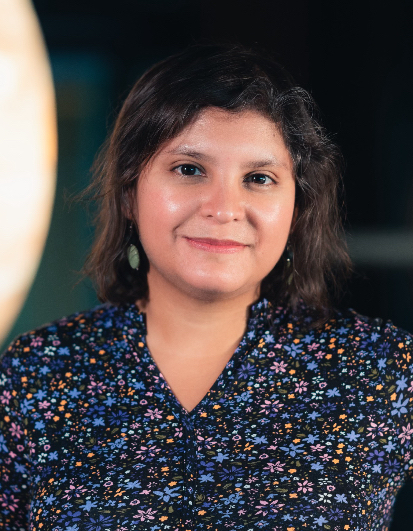
Paula joined ESO as a Fellow in November 2021 and since March 2024 serves as User Support Astronomer. She obtained her PhD from the Universidad de Chile in 2019, focusing on AGN variability in the era of big data. Following her doctorate, she worked as a postdoctoral researcher at the Pontificia Universidad Católica, the Millennium Institute of Astrophysics (MAS), and Inria Chile from May 2019 to October 2021. Her scientific work includes contributions as a member of the ALeRCE broker team and the 4MOST CHANGES survey.
Scientific interests:
- Active Galactic Nuclei (AGN) variability
- Extragalactic nuclear transients
- Time domain surveys
- Machine learning and deep learning
GAL · MW · STAR · OBS · DATA · FACULTY
Marina has been the Head of the ESO User Support Department (USD) since 2015. She joined ESO in 2000 as a PhD student, obtained her PhD from PUC, Chile in 2002, and rejoined ESO as a Fellow. In 2005, she became a USD astronomer supporting optical VLT instruments and leading the development of survey operations tools. She initiated the web-based p2 development and is the project scientist for the La Silla Paranal Observatory (LPO) scheduling tools. As USD Head, she is responsible for Paranal Service Mode users' support and Visiting Astronomers travel support to observatory sites in Chile, is in charge of the development of front-end operations tools, is the ESO contact for Users Committee matters, and since 2023 has been leading LPO telescopes scheduling operations.
Scientific interests:
- Resolved and unresolved stellar populations in nearby galaxies
- Variable stars as distance indicators and population tracers
- Globular clusters in the Milky Way and nearby galaxies
- Dwarf galaxies in the Local Volume and nearby galaxy clusters
COS · GAL · STAR · DATA · AI · FACULTY
Jarle joined ESO in April 2025 as Director of Science. He obtained his PhD at Cambridge University in 2000 on the physical evolution of galaxies whereupon he had post-docs at Oxford, MPA, CAUP before his first faculty position at the University of Leiden in 2008, where he stayed for 10 years. Jarle was then director of CAUP and researcher at IA in Portugal 2018-2023 and faculty at the University of Porto and coordinator of IA in 2024. His most well-known work is on the star formation in galaxies, from 2004, that led to the creation of a widely used database of galaxy properties, which continues to be a value resource for the astronomical community.
Scientific interests:
- Emission line properties of galaxies
- Dark matter in galaxies from ultra-faint dwarfs
- Galaxy formation and evolution
- Statistical methods for astrophysics
STAR · OBS · SIM · DATA · FACULTY
Suzanna joined ESO in 2006 as a Fellow with duties on Paranal. In 2009 she took up a temporary position in the VLT quality control department, before joining the ALMA Regional Centre as staff in 2010. She received her PhD from the University of Montreal in 2006 with the thesis "Asteroseismological Studies of Long- and Short-Period Variable Subdwarf B Stars" under the supervision of Prof. Gilles Fontaine.
Scientific interests:
- Evolution of hot subdwarfs
- Pulsations and Asteroseismology
- Born-again stars
- AGB stars
Personal website
COS · LSS · ISM · PLAN · DATA · AI · SCIENTIST
Fabrizia has been at ESO since 2017, working in the ALMA Regional Centre Department. She joined as a Pipeline Processing Analyst and was promoted to Scientist in 2020. She received her PhD in Astronomy from LMU in 2010, studying high-energy emission from galaxy clusters and developing an imaging algorithm based on astrostatistics and AI. She held positions at OATo (astrometric group), STScI (Summer Student to AURA employee), and the Max Planck Society (studentship and Postdoc). Her scientific highlights include pioneering the integration of AI into ALMA data analysis, enhancing faint source detection, and optimizing operational workflows.
Scientific interests:
- IGM/CGM, ISM in high-z galaxies
- Statistical studies, environment
- Young Stellar Objects
ISM · PLAN · OBS · DATA · FACULTY

Marta joined ESO as Faculty in 2025 working in the ALMA Regional Center, supporting European users and ALMA science operations. She received her PhD from the University Grenoble Alpes in 2022, focusing on the chemical characterization of young protostars and their hot corinos. During her PhD, she combined VLA and (sub-)millimeter observations to uncover a new hot corino previously hidden by dust, highlighted in a NRAO/CNRS/INAF press release and opening a new avenue for using cm observations to study protostar chemistry. After her PhD, she was awarded both the NRAO Jansky and ESO Fellowships, pursuing the latter starting in 2022. Her research uses VLA, ALMA, NOEMA, and the IRAM 30m telescope, covering millimeter and centimeter wavelengths.
Scientific interests:
- Low mass star formation
- Protostars and outflows
- Astrochemistry
- CM and MM interferometric observations
PLAN · SUN · OBS · DATA · FACULTY

Michaël Marsset is an ESO Staff Astronomer in the Back-End Operations Department (BOD) since November 2025. He obtained his Ph.D. from the Laboratoire d’Astrophysique de Marseille (France) in 2016, which included a two-year studentship at ESO in Chile. During his Ph.D. and subsequent postdoctoral appointments at Queen’s University Belfast (2016–2018), the Massachusetts Institute of Technology (2018–2021), and as an ESO Fellow in Chile (2021–2025), Michaël’s research has focused on characterizing the composition of Solar System small bodies (asteroids and comets) to reconstruct their dynamical evolution, identify possible genetic links between different populations, and establish their connections to meteorites and interplanetary dust found on Earth.
Scientific interests:
- Solar System small bodies: asteroids, comets
- Meteorites and interplanetary dust
- Optical and near-infrared spectroscopy
- High-resolution imaging
GAL · ISM · OBS · DATA · AI · FACULTY
Francesco joined ESO in 2025, and is currently on extended leave from Arcetri Observatory, in Florence. At ESO, he works in the Project Science department, following the BlueMUSE and ANDES instruments. He received his PhD at the University of Cambridge in 2017 working with Roberto Maiolino. Francesco did a first postdoc at the University of California Santa Cruz (USA), before joining ESO as Fellow. He then joined the faculty of INAF - Arcetri Astrophysical Observatory in 2020. His science interests include the processes of star formation and chemical evolution across cosmic time, both on small scales using nearby objects, and in high-redshift galaxies. He is also keen to apply machine learning methods to astrophysics.
Scientific interests:
- Galaxy evolution
- Star formation
- Feedback processes
- Machine learning
HIGH · OBS · SIM · FELLOW
Stefanie joined ESO in 2025 after receiving her PhD at the University of Amsterdam, always in the same year, on the topic of neutron star low-mass X-ray binaries.
Scientific interests:
- Compact objects
- Accretion and outflows
- Binary and stellar evolution
- Multi-wavelength observations/analysis
GAL · ISM · OBS · STUDENT
PhD topic: Exploring the Impact of Environment on Galaxy Evolution (MUSE-ALMA Haloes survey)
ESO supervisors: Celine Peroux and Martin Zwaan
Home institute: Swinburne University
Home supervisor: Virginia Kilborn
Scientific interests:
- Circumgalactic medium and multiphase gas
- Optically-dim gas-rich galaxies
PLAN · EXO · OBS · SIM · DATA · STUDENT
PhD topic: Observational constraints of planet formation and evolution
ESO supervisor: Antoine Mérand
Home institute: University of Southern Queensland
Home supervisor: George Zhou
Scientific interests:
- Exoplanets;
- Planet formation
- Young planets/stars
- Planetary atmospheres
LSS · GAL · OBS · DATA · AI · STUDENT
Research area: Research area: Identifying active galactic nuclei with anomalous variability using machine learning
ESO host: Paula Sánchez Sáez
Home institute: Instituto de Astronomia, Geofísica e Ciências Atmosféricas da Universidade de São Paulo
Home supervisor: Claudia Mendes de Oliveira
Scientific interests:
- Massive black holes
- AGN variability
- High-z quasars
- Astrostatistics and astroinformatics
ISM · STAR · HIGH · OBS · SIM · DATA · STUDENT
PhD topic: Constraining the explosion mechanisms of Type Ia supernovae using optical-infrared observations and radiative-transfer simulations
ESO supervisors: Ferdinando Patat and Stéphane Blondin
Home institute: Technical University of Munich
Home supervisor: Bruno Leibundgut
Scientific interests:
- Type Ia Supernovae
- Supernova Remnants
GAL · ISM · OBS · DATA · STUDENT
PhD topic: The dust properties of sub-solar metallicity galaxies at cosmic noon
ESO supervisor: Gergö Popping
Home institute: Ludwig Maximilian University of Munich
Scientific interests:
- Galaxy formation/evolution
- ISM in high z galaxies
ISM · PLAN · OBS · SIM · DATA · STUDENT
PhD topic: Dust Dynamics in young Debris Disks
ESO supervisor: Johan Olofsson
Home institute: Ludwig Maximilian University of Munich
Scientific interests:
- Planet formation and planet-disc interactions
- Protoplanetary discs
- Debris discs
- Exoplanet atmospheres
GAL · OBS · SIM · DATA · AI · STUDENT
Project at ESO: Investigating the Circumgalactic Medium with High-Resolution Quasar Spectroscopy (ByCycle)
ESO supervisor: Celine Peroux
Home institute: Ludwig Maximilian University of Munich
Scientific interests:
- Circumgalactic Medium
- Baryon Cycle
- Galaxy formation and evolution
- Machine Learning
HIGH · INS · SIM · STUDENT
PhD topic: Development and testing of the CORSIKA 8 simulation framework for CTA
ESO supervisor: Dirk Petry
Home institute: Palacky University Olomouc
Scientific interests:
- Silicon detectors
- Detector simulations
- Collider Physics
- Astroparticle physics
COS · STAR · HIGH · OBS · DATA · STUDENT
Topic: Fitting radiative transfer models to spectra of nearby Type II supernovae to improve the calibration of the SN II standardizable candle method and estimate a new value for the Hubble constant
ESO supervisor: Géza Csörnyei
Home institute: Technical University of Munich
Scientific interests:
- Supernovae
- Cosmology
- Data analysis
GAL · ISM · OBS · AI · STUDENT
PhD topic: Machine Learning in astronomy using large spectroscopic surveys
ESO supervisor: Francesco Belfiore
Home institute: University of Florence/INAF
Home supervisor: Michele Ginolfi
Scientific interests:
- ISMGalaxy evolution
- Star formation
- Machine Learning
COS · EXO · LIFE · MATT · INS · DATA · OBS · SIM · THEO · AI · ISM · SUPPORT STAFF
PhD topic:
ESO supervisor:
Home institute:
Home supervisor:
Scientific interests:
- Binary
GAL · OBS · DATA · STUDENT
PhD topic: Hierarchical galaxy assembly
ESO supervisor: Marina Rejkuba
Home institute: INAF-Observatory of Abruzzo & GSSI
Home supervisors: Michele Cantiello and Marica Branchesi
Scientific interests:
- Dwarf galaxies in the Local Volume
- Formation and evolution of galaxies
- Extragalctic star cluster systems
COS · STAR · DATA · STUDENT
PhD topic: The effect of metallicity in the zero-point calibration of the extra-galactic distance scale based on Type II Cepheids
ESO supervisors: Marina Rejkuba and Martino Romaniello
Home institute: Scuola Superiore Meriodionale
Home supervisor: Vincenzo Ripepi
Scientific interests:
- Calibrating cosmic ladder with multiple pulsating stars
- Stellar populations and stellar evolution
GAL · OBS · STUDENT
PhD topic: Mapping the mass assembly within a galaxy cluster using single stars, globular clusters, ultra diffuse galaxies & dwarfs, BCGs and giant galaxies
ESO supervisors: Magda Arnaboldi and Michael Hilker
Home institute: Ludwig Maximilian University of Munich
Home supervisor: N/A
Scientific interests:
- Clusters/groups of galaxies
- Intracluster light
- Globular clusters
STAR · PLAN · OBS · SIM · DATA · STUDENT

PhD topic: Characterising the evolution of the dust content in the outer regions of Protoplanetary Disks
ESO supervisor: Enrique Macias
Home institute: Ludwig Maximilian University of Munich
Home supervisor: N/A
Scientific interests:
- Protoplanetary disks
- Dust evolution
- Planet-disk interaction
- Late infall
MW · ISM · OBS · STUDENT
PhD topic:
ESO supervisors: Katharina Immer and Ashley Barnes
Home institute: TBD
Home institute supervisor: N/A
Scientific interests:
- High-mass star formation
- Gas kinematics and dynamics in the ISM
- Accretion flows
- Astrochemistry
PLAN · OBS · STUDENT
PhD topic: Multiplicity in Protoplanetary Disks with Large Cavities
ESO supervisor: Carlo Manara
Home institute: Ludwig Maximilian University of Munich
Home supervisor: Barbara Ercolano
Scientific interests:
- Binary stars
- Young stars
- Protoplanetary disk
- Instrumentation
GAL · OBS · DATA · AI · STUDENT
PhD topic: Transform our Understanding of the Baryon Cycle with High-Resolution Quasar Spectroscopy (ByCycle)
ESO supervisors: Céline Péroux and Paula Sánchez-Sáez
Home institute: Ludwig Maximilian University of Munich
Scientific interests:
- Astroinformatics
- Galaxy Evolution
- CGM & Baryon Cycle
- AGN
GAL · OBS · DATA · STUDENT
PhD topic: Evolution of Galaxies & the ISM
ESO supervisor: Vincenzo Mainieri
Home institute: Ludwig Maximilian University of Munich
Scientific interests:
- AGN feedback
- Galaxy evolution
- CGM and ISM
- Supermassive black holes
STAR · PLAN · OBS · STUDENT
PhD topic: The early stages of star cluster formation and evolution
ESO supervisor: Giacomo Beccari
Home institute: Ludwig Maximilian University of Munich
Scientific interests:
- Young stars
- Protoplanetary discs
- Brown dwarfs
- Stellar populations
COS · GAL · OBS · SIM · DATA · AI · STUDENT
PhD topic: Mapping accretion disc atmospheres and outflows in X-ray binaries at high spectral resolution with XRISM
ESO supervisors: Paula Sánchez Sáez and Vincenzo Mainieri
Scientific interests:
- Gravitational lensing
- Active galaxies
- Massive black holes
- Transient objects
PLAN · EXO · OBS · SIM · STUDENT
PhD topic: Modelling resolved observations of debris disks
ESO supervisor: Johan Olofsson
Home institute: University College London
Scientific interests:
- Planetary systems across the HR diagram
- Circumstellar debris disks
- White dwarf planets and disks
- Exoplanets and transits
GAL · HIGH · OBS · STUDENT
PhD topic: Mapping accretion disc atmospheres and outflows in X-ray binaries at high spectral resolution with XRISM
ESO supervisor: Maria Diaz Trigo
Home institute: TBD
Scientific interests:
- Black holes
- X-ray binaries
- Winds and outflows
- AGN
COS · GAL · ISM · OBS · SIM · STUDENT
PhD topic: Photoionization models for high-redshift galaxies
ESO supervisor: Francesco Belfiore
Home institute: University of Florence
Home supervisor: Alessandro Marconi
Scientific interests:
- High-redshift galaxies
- (ionised) ISM
- Galaxy evolution
- Photoionisation models
COS · GAL · MW · ISM · OBS · INS · SIM · DATA · FACULTY
Magda joined ESO in 2005 as an Associate Astronomer in the User Support Department, and leader of the ESO Survey Team. In 2009 she became head of the External Data product group and then the Archive Science group in 2013 in the Back End Operation Department. In the same year Magda became full Astronomer of the ESO Faculty. Since 2024 she is Survey Scientist in the Directorate for Science and President of the IAU H3 commission on Planetary Nebulae. She earned her Ph.D in 1992 from the International School for Advanced Studies in Trieste, Italy, with a thesis on the dynamics and evolution of Polar Rings galaxies
Scientific interests:
- Galactic Archeology
- Dynamics and evolution of galaxies in the Local Universe
- Planetary nebulae as tracers of distances, kinematics and stellar populations
- Chemical enrichment of nearby and high redshift galaxies
COS · GAL · OBS · INS · DATA · FACULTY
Harald obtained his PHD at the University of Durham (UK) on the topic “Sar Formation History of Early-Type Galaxies in the Fornax Cluster”, in 1998. He then stayed on for a 3-year postdoc before joining ESO in 2001 as a fellow. In 2002, he became a staff member, serving as an Instrument Scientist at the European Coordination Facility (ECF), working on JWST/HST. In 2011 he changed to ESO proper, continuing as an Instrument Scientist and currently serving as a Project Scientist.
Scientific interests:
- Galaxy formation and evolution
- Stellar populations in early-type galaxies
STAR · MW · OBS · INS · DATA · AI · FACULTY

Giacomo joined ESO in 2010. He was an ESO Fellow from 2010 to 2013, staff at Paranal from 2013 to 2015 and staff in Garching since then. Giacomo received his PhD at University of Teramo in 2007 on the topic: Exotica in Globular Clusters. He was also an ESA Fellow from 2008 to 2010.
Scientific interests:
- Resolved stellar populations in star clusters and local galaxies
- Pre-Main Sequence stars and the mass accretion rate
- PSF photometry in crowded fields
- Impact of stellar dynamics on stellar evolution
COS · GAL · ISM · OBS · SIM · DATA · FACULTY

Hannah joined ESO in 2023 as an ALMA Astronomer. I received my PhD in 2020 at the University of Groningen and was a postdoctoral researcher at Max Planck Institute for Astrophysics.
Scientific interests:
- Galaxy evolution
- Gravitational lensing
- Interferometry
GAL · MW · ISM · STAR · OBS · THEO · SIM · DATA · FACULTY
Annalisa De Cia is an astronomer in the Observing Programmes Office. Her scientific interests gravitate around cosmic and galaxy chemical evolution. She studies the interstellar and circumgalactic media of galaxies, including cosmic dust, in the Milky Way, local galaxies, and distant galaxies towards quasars or gamma-ray bursts. She is the PI of the HST Large Programme “STIS-ISM: STIS ISM Survey in the Milky Way”. Before returning to ESO in 2023, Annalisa was an Assistant Professor at the University of Geneva, leading the “Interstellar One” research group, funded by a SNFS PRIMA grant. Previously, she was an ESO Fellow in Garching and a postdoctoral fellow at the Weizmann Institute for Science. Annalisa received her PhD in 2011 at the University of Iceland.
Scientific interests:
- Cosmic and galaxy chemical evolution
- Interstellar and circumgalactic medium of galaxies
- Cosmic dust
- Transients
GAL · OBS · THEO · SIM · DATA · FACULTY
Gergö joined ESO in 2019 as a member of the ALMA Regional Centre (ARC), where he coordinates the European ARC network. He obtained his PhD in 2014 from the University of Groningen in the Netherlands, with a thesis focusing on theoretical models for the evolution of gas properties within galaxies. After his PhD and before joining ESO in 2019, Gergö had postdoc positions as an ESO fellow in Garching and fellow at the MPIA in Heidelberg. During this time he was one of the first to include the tracking of dust formation and destruction in galaxy formation simulations and transitioned to observational studies of gas, dust and metals in galaxies through multi-wavelength observations to test these models.
Scientific interests:
- Galaxy formation and evolution
- Galaxy interstellar medium
- Sub-mm astronomy
- Simulations and radiative transfer
ISM · STAR · PLAN · OBS · DATA · FELLOW
Teresa joined ESO as a Fellow with ALMA duties in 2024. She finished her PhD at the Max Planck Institute for Extraterrestrial Physics in April 2024, where she focused on the study of streamers toward low-mass protostars. Her current research focuses on the connection between protostellar disks and their environment, and how their interaction shapes the development of protostars and planets.
Scientific interests:
- Protostellar envelopes and streamers
- Protostellar/Protoplanetary disks kinematics
- Astrochemistry
Personal webpage
LSS · THEO · SIM · DATA · AI · FELLOW
Ilaria joined ESO in 2023. She was awarded his PhD by the University of Trieste, Italy, in the same year, for her research on the internal dynamics of galaxy clusters, investigated through cosmological hydrodynamical simulations.
Scientific interests:
- Large scale structure and cosmological simulations
- Galaxy evolution/formation
- Clusters/groups of galaxies
- Galaxies/AGN-Galaxy dynamics
COS · STAR · OBS · DATA · FELLOW
Géza is an ESO Fellow at Garching HQ since September 2024, working on the new SOXS instrument onboard NTT in La Silla as part of his duties. He received his PhD in 2024 at the Max Planck Institute for Astrophysics and Technische Universität München in Garching, Germany. He is currently working on investigating the Hubble tension from two angles: by comparing different distance estimators directly and by utilizing a novel Type II supernova-based method for independently measuring H0 within the adH0cc collaboration.
Scientific interests:
- Distance estimations in the local Universe
- Type II supernova physics
- Optical spectroscopy, time domain astronomy
PLAN · EXO · LIFE · OBS · SIM · DATA · FELLOW
Jens is an ESO Fellow in Garching since September 2023. He received his PhD in July 2021 from the Australian National University in Canberra, Australia. From 2021 to 2023, he worked as a postdoctoral researcher at the Space Telescope Science Institute in Baltimore, USA, where he became part of the JWST Commissioning Team and the JWST Telescope Scientist GTO Team. At ESO, his functional work includes participation in the GRAVITY+ commissioning activities.
Scientific interests:
- Direct imaging of exoplanets
- Young giant planets and their formation
- Exoplanet atmospheres & biosignatures
- Interferometric techniques
MW · STAR · OBS · DATA · PLAN · LIFE · AI · FELLOW
Miguel joined ESO in January 2024 as a Fellow with duties at the ESO User Support Department. He obtained his PhD from the University of Leeds (UK) and the European Space Agency (ESAC, Madrid), defending his thesis on intermediate-mass forming stars (Herbig stars) in October 2020. Following his PhD, Miguel spent three years in Chile as an ALMA Fellow at the Joint ALMA Observatory. His research focuses on star and planet formation, with a particular emphasis on the accretion mechanisms of forming stars, the evolution of their dust and gas disks, and the influence of binarity and the environment on forming stars and planets.
Scientific interests:
- Star and planet formation
Stellar accretion
Protoplanetary disks
Environmental effects, binarity, and planet-disk interaction
STAR · DATA · GAL · HIGH · MATT · THEO · SIM · FELLOW
Martyna joined ESO in 2024. She received her PhD at Radboud University in Nijmegen, NL, in 2021, with a thesis connecting the evolution of galaxies, stellar binaries, and gravitational waves. From 2021 to 2024, she was an MPA fellow at the Max Planck Institute for Astrophysics.
Scientific interests:
- Gravitational wave astrophysics
- Chemical evolution of the Universe/galaxies
- Transients
- Evolved/binary stars
ISM · EXO · OBS · SIM · DATA · FELLOW
Elena joined ESO in September 2024. She received my PhD in physics from the Max Planck for Extraterrestrial Physics in 2020, and after that, she led for four years a Junior Minerva group, still at MPE. Elena works mainly on observational studies of star-forming regions in the Galaxy, but she also tries to complement observations with chemical and physical modelling.
Scientific interests:
- Star formation
- Radio and microwave observations
- Astrochemistry
- Molecular spectroscopy
PLAN · EXO · OBS · THEO · SIM · DATA · AI · FELLOW
Martin joined ESO in 2025. He received his PhD at the Max Planck Institute for Astronomy, University of Heidelberg in 2021 on the topic of planet formation and the architectures of planetary systems. Previously, he held a postdoctoral position at The University of Arizona working on exoplanet habitability.
Martin contributed to numerous discoveries of new exoplanets, combining space- and ground-based photometric and spectroscopic data.
Scientific interests:
- Planetary habitability
- Exoplanet surveys
- Statistical hypothesis testing
- Planet formation
PLAN · EXO · OBS · SIM · DATA · FELLOW
Joe joined ESO in 2025. He received his PhD at Université Côte d'Azur in 2025 on the topic of "Dynamics of Planet Formation” . He is also a member of the exoALMA Large Programme collaboration.
Scientific interests:
- Protoplanetary disks (observations and modelling)
- Gas kinematics (detect embedded protoplanets)
- Astrochemistry (linking disks and exoplt. atmos.)
PLAN · EXO · LIFE · OBS · SIM · DATA · FELLOW
Bibiana joined ESO in 2025 as a Fellow in Garching. She received her PhD from Lund University in 2025, focusing on high-resolution transmission spectroscopy of gas giant exoplanets. Previously, she completed an ESO Studentship in Santiago (2023–2024) and her MSc thesis work at ETH Zürich. A key scientific highlight of her work is the detection of titanium oxide and chemical inhomogeneity in the atmosphere of the ultra-hot Jupiter WASP‑189 b.
Scientific interests:
- Exoplanet atmospheres
- High-resolution spectroscopy
- Linking atmospheres and formation
- Gas giant exoplanets
EXO · LIFE · OBS · INS · DATA · AI · FELLOW
Markus joined ESO in 2025, following the completion of his PhD at ETH Zurich in the same year, where his research focused on "Statistical Methods and Machine Learning for Exoplanet High-contrast Imaging". Prior to his doctoral studies, he obtained both his B.Sc and M.Sc in Computer Science.
Scientific interests:
- Exoplanets
- High-contrast imaging
- Machine Learning
- Adaptive Optics
ISM · STAR · PLAN · OBS · DATA · FELLOW
Matthew joined ESO as an ERC Postdoctoral Researcher in the WANDA group in 2025 after receiving a PhD at Maynooth University, Ireland (2025) on the topic "Outflows from young stars: Investigating angular momentum removal with Integral Field Spectroscopy". Matthew’s research involves IFS data and high-resolution spectroscopy, primarily in the optical and NIR, and focuses on how the constituent components of protostellar outflows are interconnected and how angular momentum is extracted from early star/disc systems.
Scientific interests:
- Young Stellar Objects
- Protostellar Outflows (Jets and Winds)
- Outflow-disc interactions
LSS · GAL · ISM · OBS · SIM · DATA · STUDENT

PhD topic: Dissecting the satellite quenching process by process
ESO supervisor: Paola Popesso
Home institute: Ludwig Maximilian University of MunichHome supervisor:
Scientific interests:
- Galaxy formation and evolution
- Clusters/groups of galaxies
- Galaxy kinematics and dynamics
- Cosmological hydrodynamical simulations
No results found