
Press Release
Milky Way's fastest star orbits our supermassive black hole so closely it feels its spin
19 August 2026
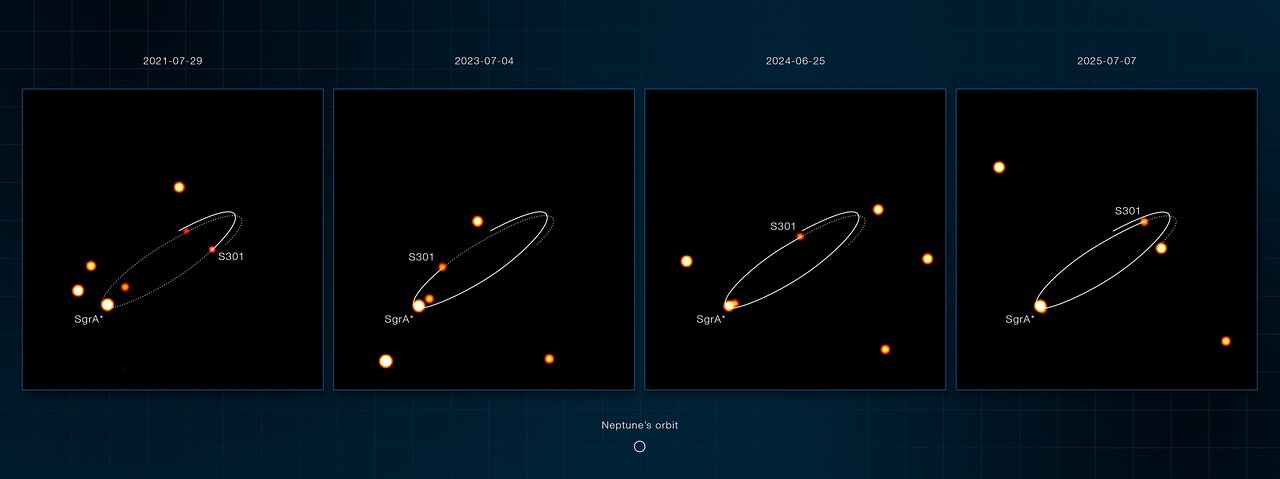
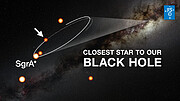
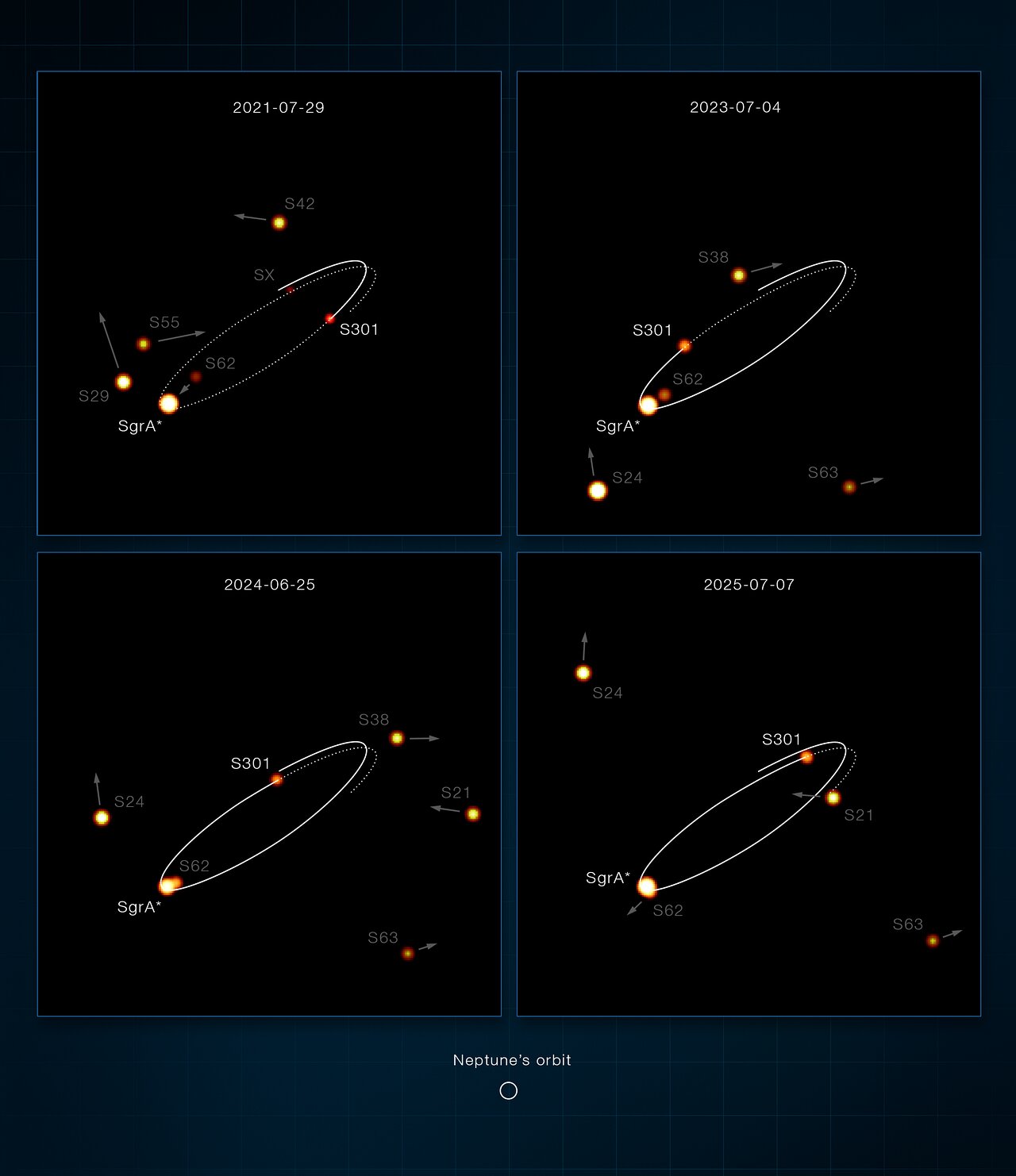
Astronomers have discovered the fastest known star in our galaxy, the Milky Way, orbiting the black hole at its centre. The star, named S301, was detected with the European Southern Observatory’s Very Large Telescope Interferometer (ESO’s VLTI) and reaches speeds of 25 000 km/s as it travels around the four-million-Solar-mass black hole. It comes closer to it than any other observed before, so close that it feels the effects of the black hole’s rotation.
“Decades carefully tracking stars orbiting our galaxy’s central black hole, Sagittarius A*, have led to this breakthrough discovery of a very promising star. Because it orbits so close to Sagittarius A*, S301 opens a new window to the fundamental properties of spacetime in this extreme black-hole environment,” says Nobel Prize winner Reinhard Genzel, Director at the Max Planck Institute for Extraterrestrial Physics (MPE) in Garching, Germany, and founding member of the collaboration that made the new observations.
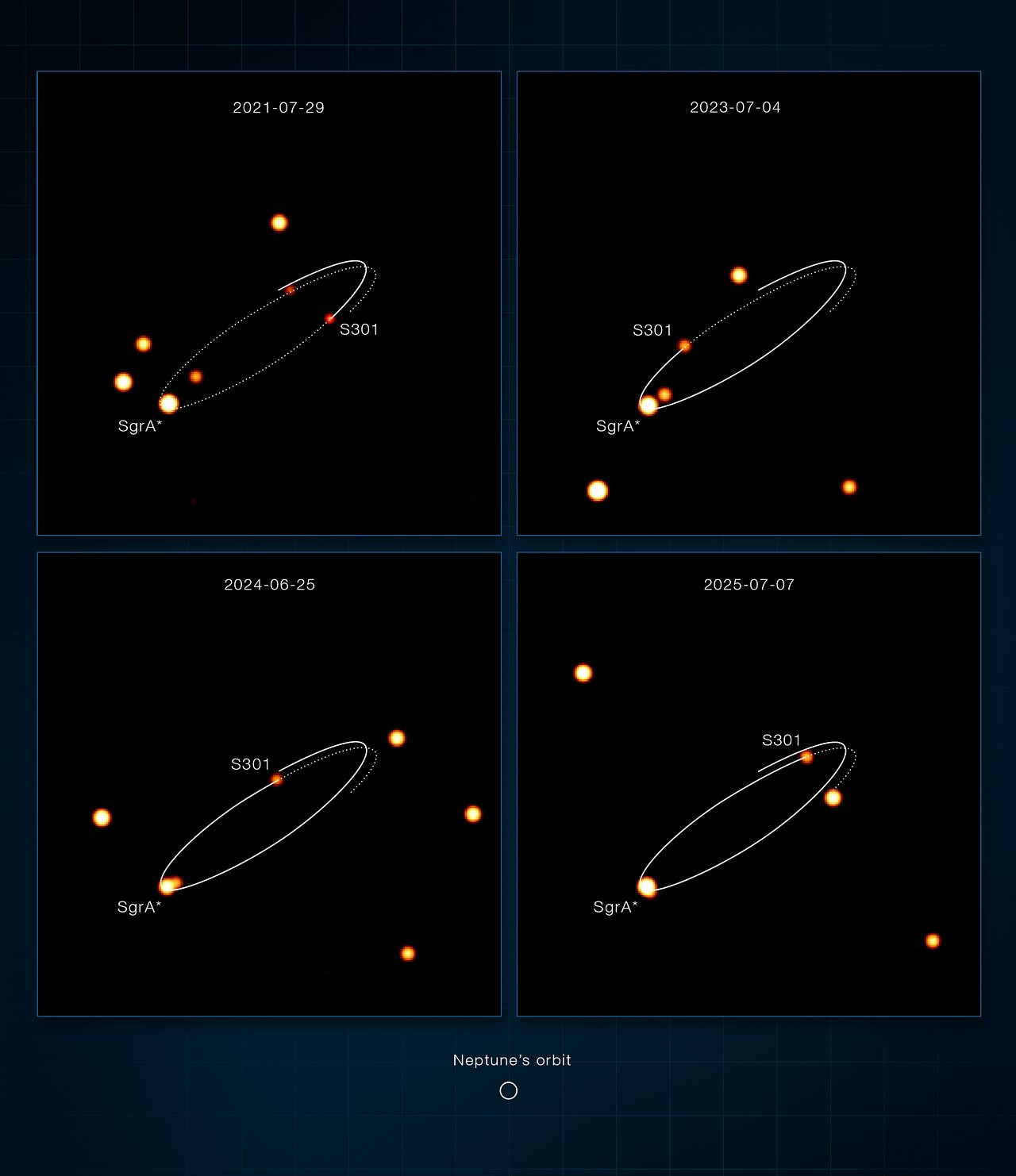
“What is special about this star is that it’s orbiting Sagittarius A* on a very tight orbit, taking just 8.7 years to complete it, and is approaching the black hole at a mere 12 times the distance of Earth to the Sun. That is unprecedented,” says Felix Mang, PhD student at MPE and author of the study published today in Nature.
During its closest passage to the black hole, the star travels at around 25 000 kilometres per second — 100 000 times faster than a commercial plane, or over 8% of the speed of light — making it the record holder for the fastest star in the Milky Way. S301 also comes closer to Sagittarius A* than any other star observed so far, approaching the black hole at around the distance of Saturn to the Sun. [1] Because S301 comes so close to Sagittarius A*, it is the first star known that could be used to directly measure the rotation of a black hole.
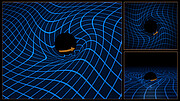
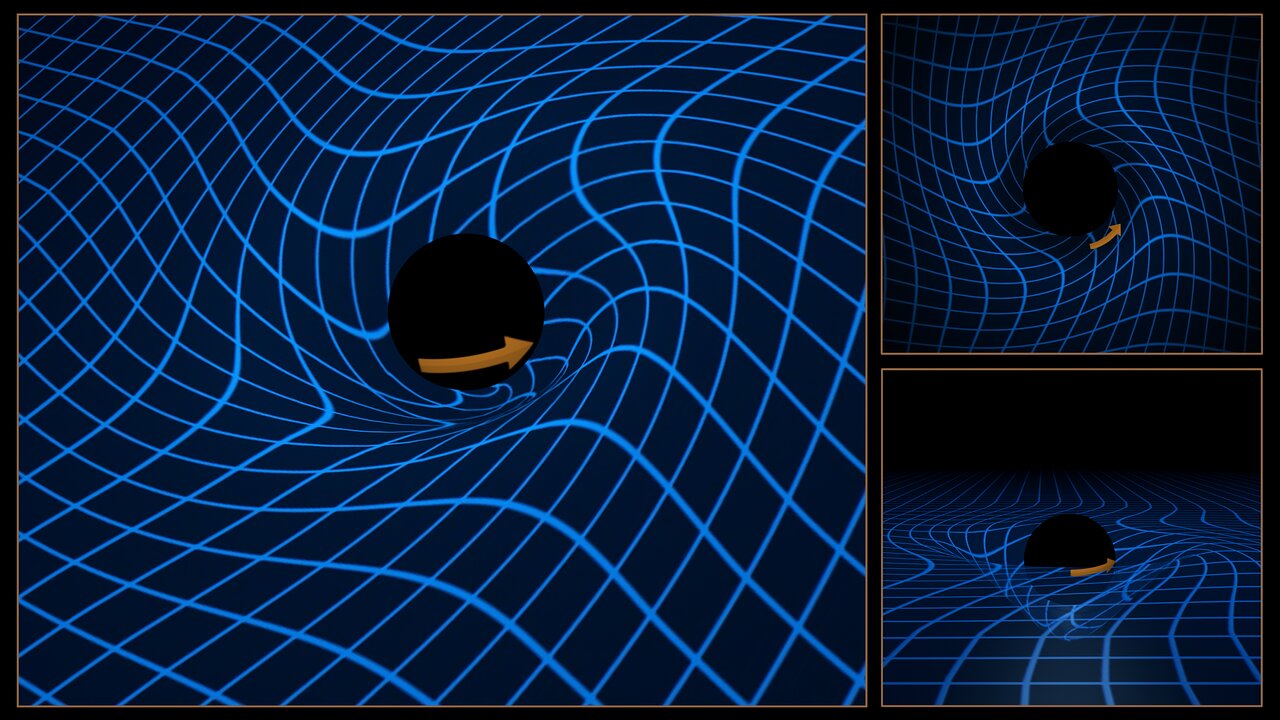
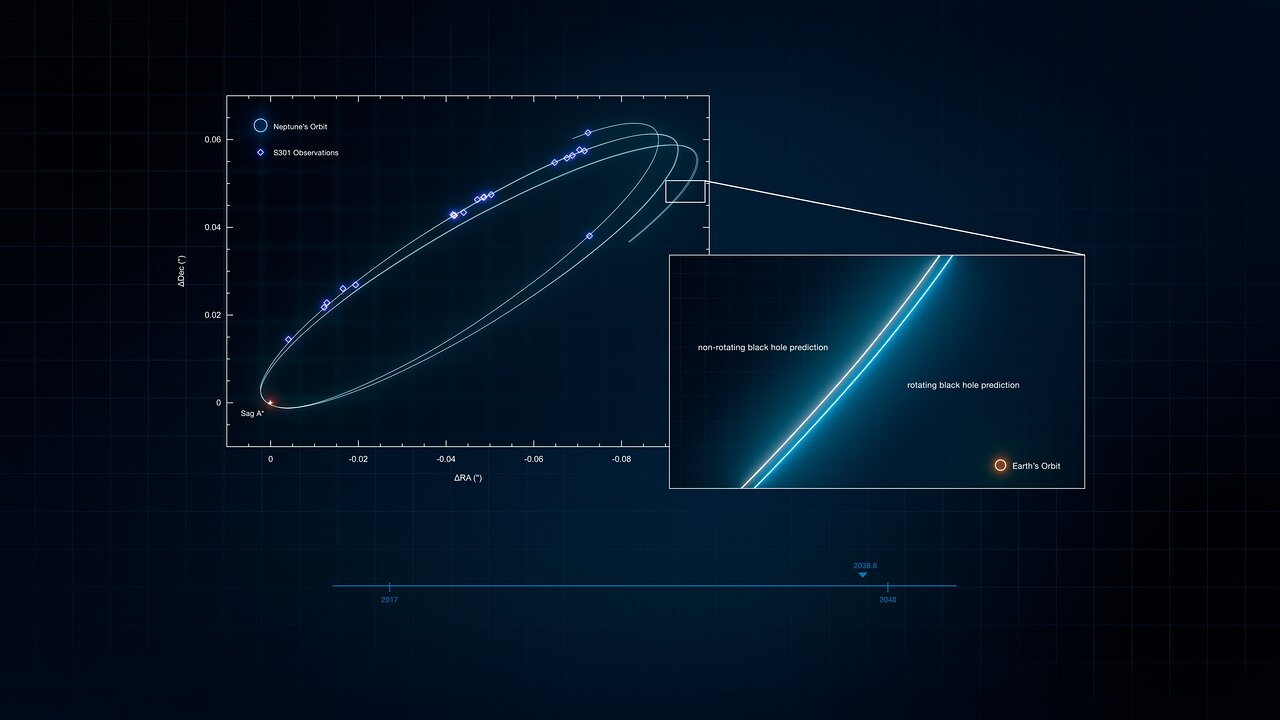
Like most things in our Universe, astronomers predict that Sagittarius A* spins. According to Einstein’s general theory of relativity, a spinning black hole drags spacetime along with it and twists it, which impacts the orbits of surrounding stars. The effect is felt more strongly for objects orbiting fast-rotating black holes at close range.
“With this star we hope to measure, within the next 10 years, the spin of the black hole," says Mang. MPE researcher Stefan Gillessen, who also had a leading role in the new study, adds: “For the first time, we would actually be able to measure very directly the spin of a massive black hole, which would be a key test of Einstein’s theory.” Juan Osorno, an astronomer at LIRA Observatoire de Paris–PSL, France, who also had a key role in the study adds: “Without this star, we would need to measure the motion of other stars for several more decades to get anywhere close to measuring the spin of the black hole.”
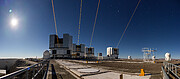
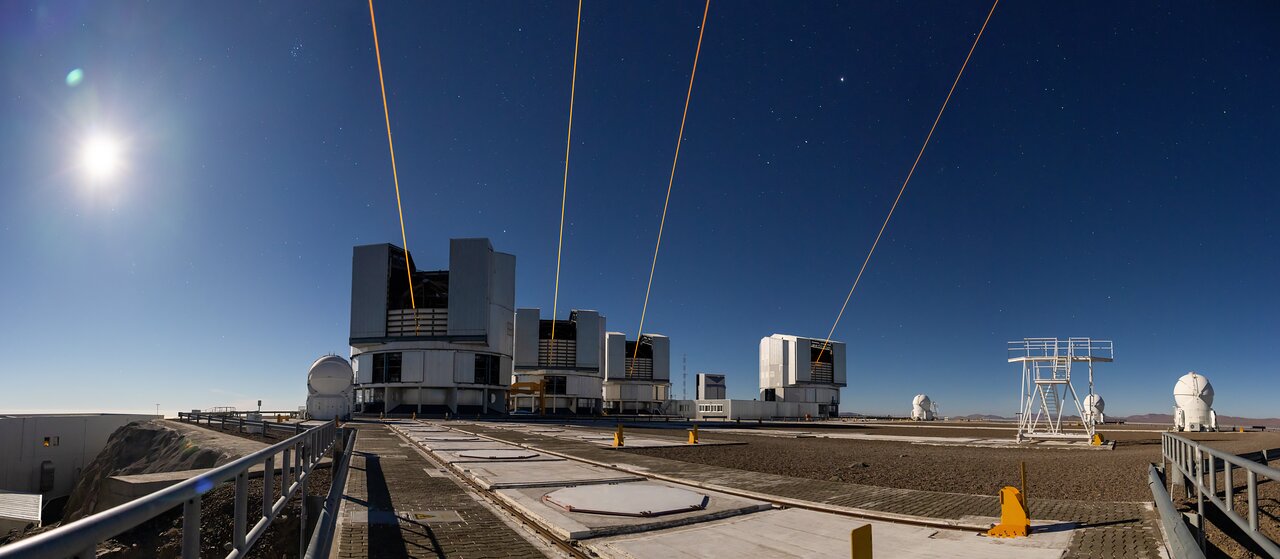
Finding S301, which appears two billion times fainter than Betelgeuse (the orange star in the constellation Orion) in the sky, was no easy feat. The team used the VLTI, a facility at ESO’s Paranal Observatory in Chile and its GRAVITY instrument, now known as GRAVITY+ following an infrastructure upgrade. [2] The VLTI’s superpower lies in its ability to combine the light from four 8-metre telescopes to create a ‘virtual’ telescope with 15 times the spatial resolution of a single 8-metre telescope.
“Worldwide, Paranal is the only place where you can do this type of observations because no other observatory in the world has four 8-metre telescopes that can act together as an interferometer,” says co-author Frank Eisenhauer, GRAVITY+ Principal Investigator and Director at MPE.
With GRAVITY, and later with GRAVITY+, the team managed to catch a first glimpse of the new star in spring 2023 and have followed it since to constrain its orbit. They could also trace S301’s orbital history back to 2017, finding that it last made its closest approach to the central black hole in early 2023. S301’s orbital properties, and the fact that stars cannot form so close to a massive black hole, indicate that the star was likely part of a binary pair that was torn apart by the tidal forces of Sagittarius A*. In the process, S301 became trapped by the black hole’s gravity while its companion star was kicked out with high velocity, most likely enough to leave the galaxy altogether.
Follow-up observations with GRAVITY+, and with the MICADO instrument on ESO’s upcoming Extremely Large Telescope (ELT), will be crucial for tracing S301’s path over the next decade, as it makes its next closest passage in 2031. Observing at least two complete orbits of S301 allows its trajectory to be constrained with high enough precision to enable the team to directly determine the spin of Sagittarius A* for the first time. “That would be a dream come true,” says Mang.
Notes
[1] At its closest approach, the star passes just 1.78 billion km from the black hole, around 12 times the Sun-Earth distance or just 20% larger than the Sun-Saturn distance.
[2] Following decades mapping stars orbiting the Milky Way’s centre using different ESO facilities, the team has been using the GRAVITY instrument on the VLTI for this purpose since 2017. A series of upgrades to both the instrument and the interferometer, called GRAVITY+, has been implemented gradually over the last few years, and has allowed them to find increasingly fainter objects.
More information
This research was presented in a GRAVITY+ Collaboration paper titled “Discovery of a star sensitive to the spin of Sgr A*” to appear in Nature (doi: 10.1038/s41586-026-10894-w).
The team is composed of: K. Abd El Dayem (LIRA, Observatoire de Paris, Universitê PSL, CNRS, Sorbonne Université, Université de Paris, France), R. Abuter (European Southern Observatory, Garching, Germany [ESO Germany]), N. Aimar (Faculdade de Engenharia, Universidade do Porto, Portugal [FEUP], and Centro de Astrofísica e Gravitação, IST, Universidade de Lisboa, Portugal [CENTRA]), P. Amaro-Seoane (Universitat Politècnica de València, Spain and Max Planck Institute for Extraterrestrial Physics, Garching, Germany [MPE]), A. Berdeu (ESO and LIRA), J. P. Berger (Univ. Grenoble Alpes, CNRS, Grenoble, France [IPAG]), G. Bourdarot (MPE), W. Brandner (Max Planck Institute for Astronomy, Heidelberg, Germany [MPIA]), A. Burkert (University Observatory, Faculty of Physics, Ludwig-Maximilians-Universität, Munich, Germany [LMU] and MPE), D. Calderon (Max Planck Institute for Astrophysics [MPA], Garching, Germany), C. Correia (FEUP and CENTRA), J. Cuadra (Universidad Adolfo Ibañez, Viña del Mar, Chile and Millennium Nucleus on Transversal Research and Technology to Explore Supermassive Black Holes [TITANS], Chile), R. Davies (MPE), D. Defrère (Institute of Astronomy, KU Leuven, Belgium [KU Leuven]), L. Delit (LIRA), A. Drescher (IPAG and MPE), F. Eisenhauer (MPE and Department of Physics, Technical University of Munich, Germany [TUM]), L. Esteras Otal (ESO Germany), M. Fabricius (MPE), H. Feuchtgruber (MPE), N. M. Förster Schreiber (MPE), A. Foschi (LIRA), P. Garcia (FEUP and CENTRA), R. Garcia Lopez (School of Physics, University College Dublin, Ireland), A. Generozov Astronomy Dept. and Oden Institute, University of Texas at Austin, USA), R. Genzel (MPE and Departments of Physics & Astronomy, Le Conte Hall, University of California, Berkeley, USA) S. Gillessen (MPE), F. Gonté (ESO Germany), X. Haubois (European Southern Observatory, Santiago, Chile [ESO Chile]), S. F. Hönig (School of Physics & Astronomy, University of Southampton, United Kingdom [Southampton]), M. Houllé (IPAG), S. Joharle (MPE), A. Kaufer (ESO Chile), J. Kammerer (ESO Germany), P. Kervella (LIRA), J. Kolb (ESO Germany), L. Kreidberg (MPIA), R. Laugier (KU Leuven), S. Lacour (LIRA), O. Lai (Université Côte d’Azur, Observatoire de la Côte d’Azur, CNRS, Laboratoire Lagrange [Lagrange]), J.-B. Le Bouquin (IPAG), J. Leftley (Southampton) B. Lopez (Lagrange), D. Lutz (MPE), F. Mang (MPE and TUM), A. Mérand (ESO Germany), F. Millour (Lagrange), M. Montargès (LIRA), N. Morujão (FEUP and CENTRA), H. Nowacki (Lagrange), M. Nowak (LIRA), S. Oberti (ESO Germany), J. Osorno (LIRA), T. Ott (MPE), T. Paumard (LIRA), C. Paladini (ESO Chile), H. B. Perets (Physics department, Technion - Israel Institute of Technology, Haifa, Israel), K. Perraut (IPAG), G. Perrin (LIRA), R. Petrov (Lagrange) P. O. Petrucci (IPAG), T. Piran (Racah Institute of Physics, The Hebrew University of Jerusalem, Israel [Racah]), N. Pourré (IPAG), S. Rabien (MPE), D. C. Ribeiro (MPE), S. Robbe-Dubois (Lagrange), M. Sadun Bordoni (MPE), J. Sánchez Bermúdez (Instituto de Astronomía, National Autonomous University of Mexico, Mexico), D. Santos (MPE), R. Sari (Racah) J. Sauter (MPIA), S. Scheithauer (MPIA), J. Scigliuto (Lagrange) J. Shangguan (MPE), T. T. Shimizu (MPE), F. Soulez (Univ. Lyon, Univ. Lyon 1, ENS de Lyon, CNRS, Centre de Recherche Astrophysique de Lyon, France), J. Stadler (LMU), C. Straubmeier (1st Institute of Physics, University of Cologne, Germany), E. Sturm (MPE), M. Subroweit (Cologne), C. Sykes (Southampton), L. J. Tacconi (MPE), P. Thévenet (LIRA), I. Urso (LIRA), F. Vincent (LIRA), J. Woillez (ESO Germany), G. Zins (ESO Chile).
The European Southern Observatory (ESO) enables scientists worldwide to discover the secrets of the Universe for the benefit of all. We design, build and operate world-class observatories on the ground — which astronomers use to tackle exciting questions and spread the fascination of astronomy — and promote international collaboration for astronomy. Established as an intergovernmental organisation in 1962, today ESO is supported by 16 Member States (Austria, Belgium, Czechia, Denmark, France, Finland, Germany, Ireland, Italy, the Netherlands, Poland, Portugal, Spain, Sweden, Switzerland and the United Kingdom), along with the host state of Chile and with Australia as a Strategic Partner. ESO’s headquarters and its visitor centre and planetarium, the ESO Supernova, are located close to Munich in Germany, while the Chilean Atacama Desert, a marvellous place with unique conditions to observe the sky, hosts our telescopes. ESO operates three observing sites: La Silla, Paranal and Chajnantor. At Paranal, ESO operates the Very Large Telescope and its Very Large Telescope Interferometer, as well as survey telescopes such as VISTA. Also at Paranal, ESO will host and operate the south array of the Cherenkov Telescope Array Observatory, the world’s largest and most sensitive gamma-ray observatory. Together with international partners, ESO operates ALMA on Chajnantor, a facility that observes the skies in the millimetre and submillimetre range. At Cerro Armazones, near Paranal, we are building “the world’s biggest eye on the sky” — ESO’s Extremely Large Telescope. From our offices in Santiago, Chile we support our operations in the country and engage with Chilean partners and society.
Links
- Research paper
- MPE press release, including a press kit with additional broadcaster material
- Photos of the VLT/I
- Find out more about ESO's Extremely Large Telescope on our dedicated website and press kit
- For journalists: subscribe to receive our releases under embargo in your language
- For scientists: got a story? Pitch your research
Contacts
Felix Mang
Max Planck Institute for Extraterrestrial Physics
Garching bei München, Germany
Tel: +49 89 30000-3713
Email: fmang@mpe.mpg.de
Stefan Gillessen
Max Planck Institute for Extraterrestrial Physics
Garching bei München, Germany
Tel: +49 89 30000 3839
Cell: +49 176 99 66 41 39
Email: ste@mpe.mpg.de
Juan Osorno
Laboratory for Instrumentation and Research in Astrophysics (LIRA), Observatoire de Paris, PSL University
Meudon, France
Email: Juan.Osorno@observatoiredeparis.psl.eu
Frank Eisenhauer
Director, Max Planck Institute for Extraterrestrial Physics
Garching bei München, Germany
Tel: +49 89 30000-3100
Email: eisenhau@mpe.mpg.de
Reinhard Genzel
Director, Max Planck Institute for Extraterrestrial Physics
Garching bei München, Germany
Tel: +49 89 30000 3281
Email: genzel@mpe.mpg.de
Xavier Haubois (for questions on VLTI)
European Southern Observatory
Paranal Observatory, Atacama Desert, Chile
Email: Xavier.Haubois@eso.org
Bárbara Ferreira
ESO Media Manager
Garching bei München, Germany
Tel: +49 89 3200 6670 (unavailable before 17 August)
Cell: +49 151 241 664 00 (unavailable before 17 August)
Email: press@eso.org
About the Release
| Release No.: | eso2612 |
| Name: | S301, Sagittarius A* |
| Type: | Milky Way : Galaxy : Component : Central Black Hole |
| Facility: | Very Large Telescope Interferometer |
| Instruments: | GRAVITY+ |
| Science data: | 2026Natur.657..359A |
Images



Videos



Our use of Cookies
We use cookies that are essential for accessing our websites and using our services. We also use cookies to analyse, measure and improve our websites’ performance, to enable content sharing via social media and to display media content hosted on third-party platforms.
ESO Cookies Policy
The European Organisation for Astronomical Research in the Southern Hemisphere (ESO) is the pre-eminent intergovernmental science and technology organisation in astronomy. It carries out an ambitious programme focused on the design, construction and operation of powerful ground-based observing facilities for astronomy.
This Cookies Policy is intended to provide clarity by outlining the cookies used on the ESO public websites, their functions, the options you have for controlling them, and the ways you can contact us for additional details.
What are cookies?
Cookies are small pieces of data stored on your device by websites you visit. They serve various purposes, such as remembering login credentials and preferences and enhance your browsing experience.
Categories of cookies we use
Essential cookies (always active): These cookies are strictly necessary for the proper functioning of our website. Without these cookies, the website cannot operate correctly, and certain services, such as logging in or accessing secure areas, may not be available; because they are essential for the website’s operation, they cannot be disabled.
Functional Cookies: These cookies enhance your browsing experience by enabling additional features and personalization, such as remembering your preferences and settings. While not strictly necessary for the website to function, they improve usability and convenience; these cookies are only placed if you provide your consent.
Analytics cookies: These cookies collect information about how visitors interact with our website, such as which pages are visited most often and how users navigate the site. This data helps us improve website performance, optimize content, and enhance the user experience; these cookies are only placed if you provide your consent. We use the following analytics cookies.
Matomo Cookies:
This website uses Matomo (formerly Piwik), an open source software which enables the statistical analysis of website visits. Matomo uses cookies (text files) which are saved on your computer and which allow us to analyze how you use our website. The website user information generated by the cookies will only be saved on the servers of our IT Department. We use this information to analyze www.eso.org visits and to prepare reports on website activities. These data will not be disclosed to third parties.
On behalf of ESO, Matomo will use this information for the purpose of evaluating your use of the website, compiling reports on website activity and providing other services relating to website activity and internet usage.
Matomo cookies settings:
Additional Third-party cookies on ESO websites: some of our pages display content from external providers, e.g. YouTube.
Such third-party services are outside of ESO control and may, at any time, change their terms of service, use of cookies, etc.
YouTube: Some videos on the ESO website are embedded from ESO’s official YouTube channel. We have enabled YouTube’s privacy-enhanced mode, meaning that no cookies are set unless the user actively clicks on the video to play it. Additionally, in this mode, YouTube does not store any personally identifiable cookie data for embedded video playbacks. For more details, please refer to YouTube’s embedding videos information page.
Cookies can also be classified based on the following elements.
Regarding the domain, there are:
- First-party cookies, set by the website you are currently visiting. They are stored by the same domain that you are browsing and are used to enhance your experience on that site;
- Third-party cookies, set by a domain other than the one you are currently visiting.
As for their duration, cookies can be:
- Browser-session cookies, which are deleted when the user closes the browser;
- Stored cookies, which stay on the user's device for a predetermined period of time.
How to manage cookies
Cookie settings: You can modify your cookie choices for the ESO webpages at any time by clicking on the link Cookie settings at the bottom of any page.
In your browser: If you wish to delete cookies or instruct your browser to delete or block cookies by default, please visit the help pages of your browser:
Please be aware that if you delete or decline cookies, certain functionalities of our website may be not be available and your browsing experience may be affected.
You can set most browsers to prevent any cookies being placed on your device, but you may then have to manually adjust some preferences every time you visit a site/page. And some services and functionalities may not work properly at all (e.g. profile logging-in, shop check out).
Updates to the ESO Cookies Policy
The ESO Cookies Policy may be subject to future updates, which will be made available on this page.
Additional information
For any queries related to cookies, please contact: pdprATesoDOTorg.
As ESO public webpages are managed by our Department of Communication, your questions will be dealt with the support of the said Department.