Mitteilung
Verborgene Sterne und Galaxien sichtbar gemacht: Neues Instrument MOONS am Very Large Telescope liefert erste Beobachtungen
3. September 2026
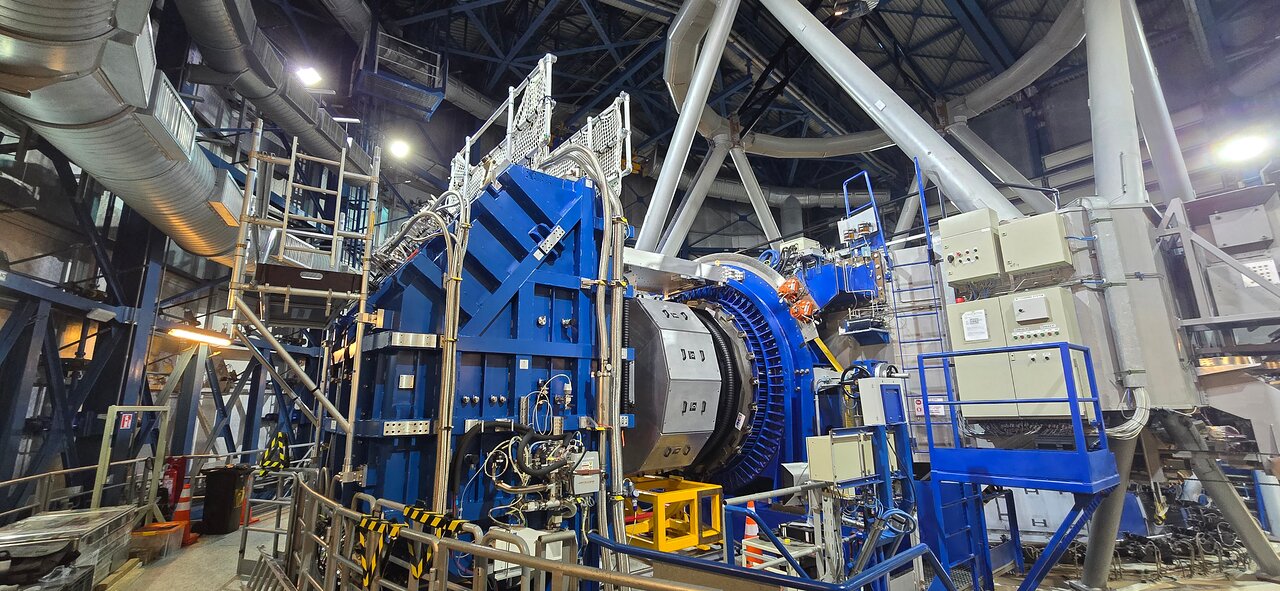
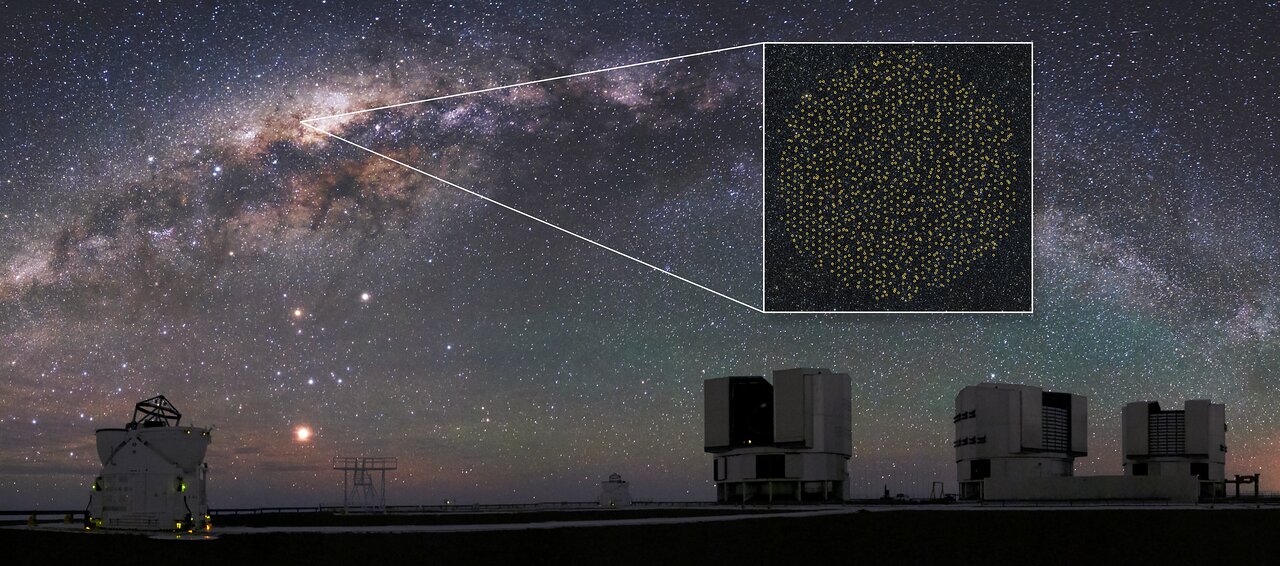
Das neueste wissenschaftliche Instrument der ESO, der Multi-Object Optical and Near-infrared Spectrograph (MOONS), hat erfolgreich seine ersten Beobachtungen durchgeführt und damit das sogenannte erste Licht gesehen. MOONS ist am Very Large Telescope (VLT) der ESO auf dem Cerro Paranal im Norden Chiles installiert und kann bis zu 1000 Objekte gleichzeitig untersuchen. Das Instrument beobachtet rotes und infrarotes Licht und ermöglicht es Astronom*innen damit, tief in das Zentrum unserer Galaxie zu blicken und zugleich zu erforschen, wie sich weit entfernte Galaxien gebildet haben.
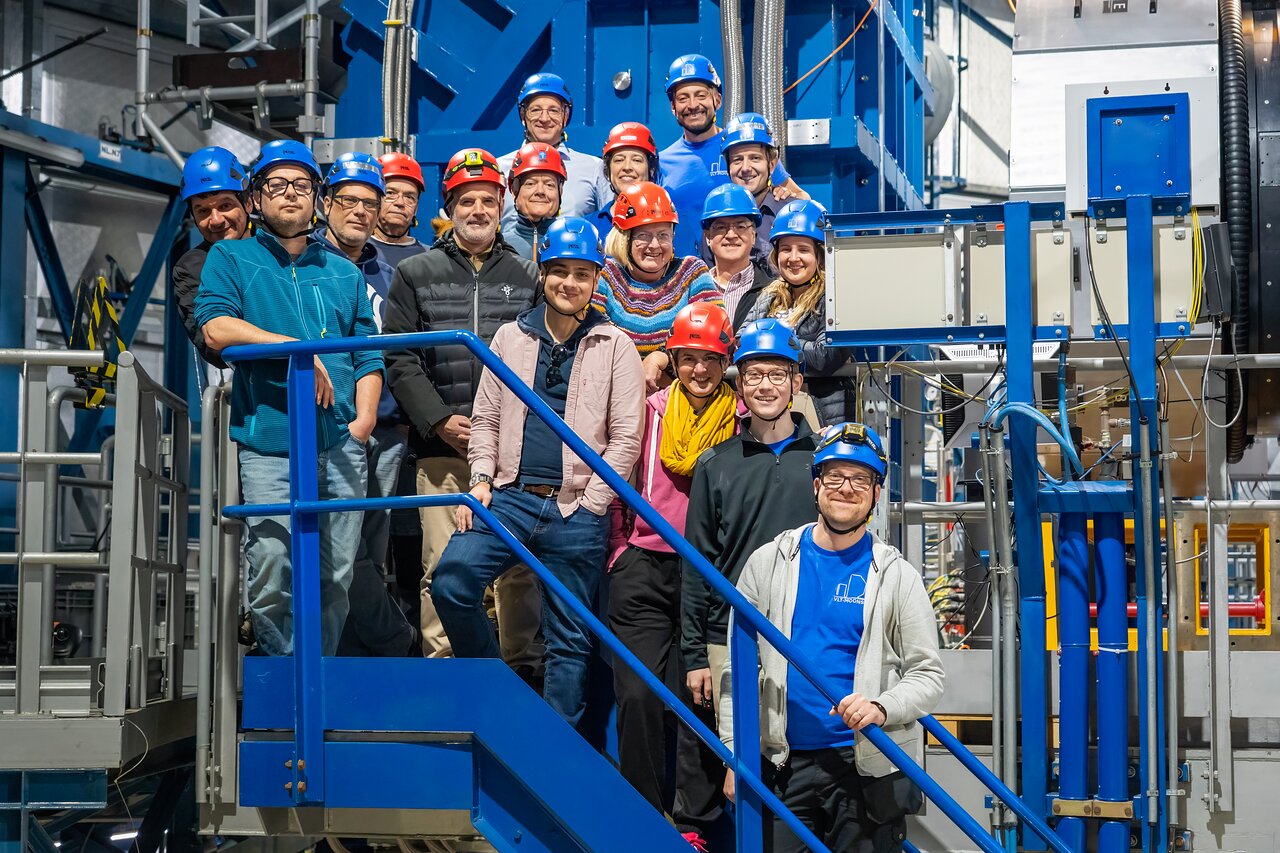
„Es ist wirklich bewegend, das First Light von MOONS zu erleben – ein bemerkenswerter Erfolg, der durch den außergewöhnlichen Einsatz und das große Können eines herausragenden Teams möglich wurde“, meint Michele Cirasuolo, leitender Wissenschaftler von MOONS und Programmleiter für Instrumentierung bei der ESO. „MOONS öffnet ein neues Fenster zum Universum und ermöglicht es uns, die physikalischen, chemischen und dynamischen Eigenschaften sowie die Umgebungsbedingungen von Millionen von Sternen und Galaxien über mehr als 13 Milliarden Jahre kosmischer Geschichte hinweg zu untersuchen. Damit werden wir neue Bereiche unseres Verständnisses davon erschließen, wie die Milchstraße und andere Galaxien entstanden sind und sich im Laufe der Zeit entwickelt haben. Ich bin unglaublich stolz auf das Team und sehr gespannt darauf, welche neuen Entdeckungen und Erkenntnisse über das Universum vor uns liegen.“
Ein außergewöhnliches Instrument
MOONS wurde von einem internationalen Konsortium unter der Leitung des UK Astronomy Technology Centre (UK ATC) gebaut, das zum britischen Science and Technology Facilities Council (STFC) gehört. Das Instrument ist darauf ausgelegt, mit der Lichtsammelleistung eines der 8-Meter-Spiegel des VLT eine Vielzahl einzelner Sterne und Galaxien zu beobachten. Rund 1000 Glasfasern, die jeweils auf einer robotischen Positioniereinheit montiert sind, können gleichzeitig auf die genauen Positionen von etwa 1000 astronomischen Zielen innerhalb eines großen Gesichtsfelds ausgerichtet werden.
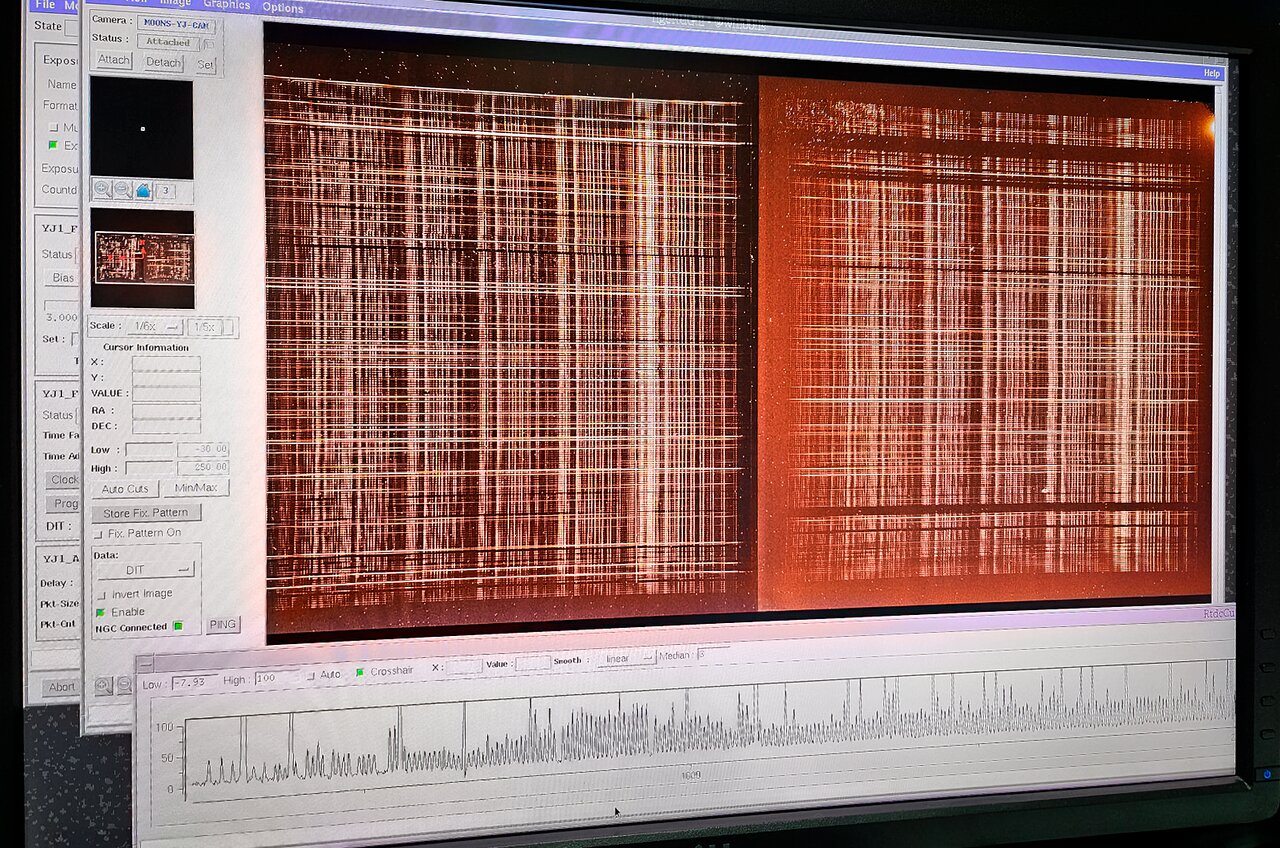
Das von den Fasern gesammelte Licht wird anschließend in zwei baugleiche Spektrografen mit jeweils 500 Fasern geleitet. Ähnlich wie ein Prisma zerlegen sie das Licht in seine verschiedenen Farben. Durch die Analyse dieser Farben beziehungsweise Wellenlängen können Astronom*innen zahlreiche Eigenschaften der untersuchten Himmelsobjekte bestimmen, darunter ihre chemische Zusammensetzung, Masse und Geschwindigkeit.
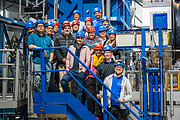
Oscar Gonzalez, leitender Wissenschaftler von MOONS im Vereinigten Königreich und Leiter für Projektwissenschaft und Strategie am UK ATC, sagt dazu: „MOONS ist das Ergebnis einer außergewöhnlichen internationalen Zusammenarbeit. Über viele Jahre hinweg haben unsere Wissenschaftlerinnen und Wissenschaftler, Ingenieurinnen und Ingenieure sowie Technikerinnen und Techniker gemeinsam daran gearbeitet, anspruchsvolle technische Herausforderungen zu bewältigen und ein Instrument mit außergewöhnlichen Fähigkeiten zu entwickeln. Für mich ist das erste Licht eine Würdigung ihres Fachwissens, ihres Einsatzes und ihrer Ausdauer. Es ist genau der Moment, in dem sich jahrelange Arbeit in Entdeckungen verwandelt. MOONS wird Astronom*innen eine völlig neue Möglichkeit eröffnen, das Universum zu erforschen, und Beobachtungen ermöglichen, die bisher schlicht außerhalb unserer Reichweite lagen.“
Eine besondere Stärke von MOONS wird darin liegen, zu entschlüsseln, wie Galaxien – einschließlich unserer eigenen – im Laufe der Geschichte des Universums entstanden sind und sich entwickelt haben. Das Zentrum der Milchstraße ist von kosmischem Staub verdeckt, der sichtbares Licht blockiert. Da MOONS infrarotes Licht auffängt, kann das Instrument durch diese Staubwolken hindurchblicken. Beobachtungen im Infrarotbereich ermöglichen es MOONS außerdem, weit entfernte Galaxien zu untersuchen. Unser Universum dehnt sich aus, und je weiter eine Galaxie von uns entfernt ist, desto schneller entfernt sie sich im Allgemeinen von uns. Dadurch wird das Licht, das uns von ihr erreicht, zu längeren, vorwiegend infraroten Wellenlängen verschoben. MOONS ist das erste Instrument, mit dem Astronom*innen so viele Objekte in diesem Wellenlängenbereich gleichzeitig im Detail untersuchen können.
Um störendes Infrarotlicht aus der Umgebung des Instruments möglichst gering zu halten, befinden sich die Spektrografen von MOONS in einem Kryostaten, der sie auf sehr niedrigen Temperaturen zwischen –143 und –233 Grad Celsius hält. Da das Instrument 4,5 Meter hoch ist und mehr als zehn Tonnen wiegt, werden für seine Kühlung 5000 Liter flüssiger Stickstoff benötigt. Damit gehört der Kryostat von MOONS zu den größten, die je für ein bodengebundenes Teleskop gebaut wurden.
Erste und künftige Beobachtungen
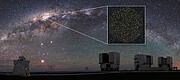
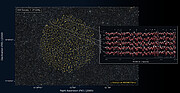
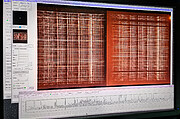
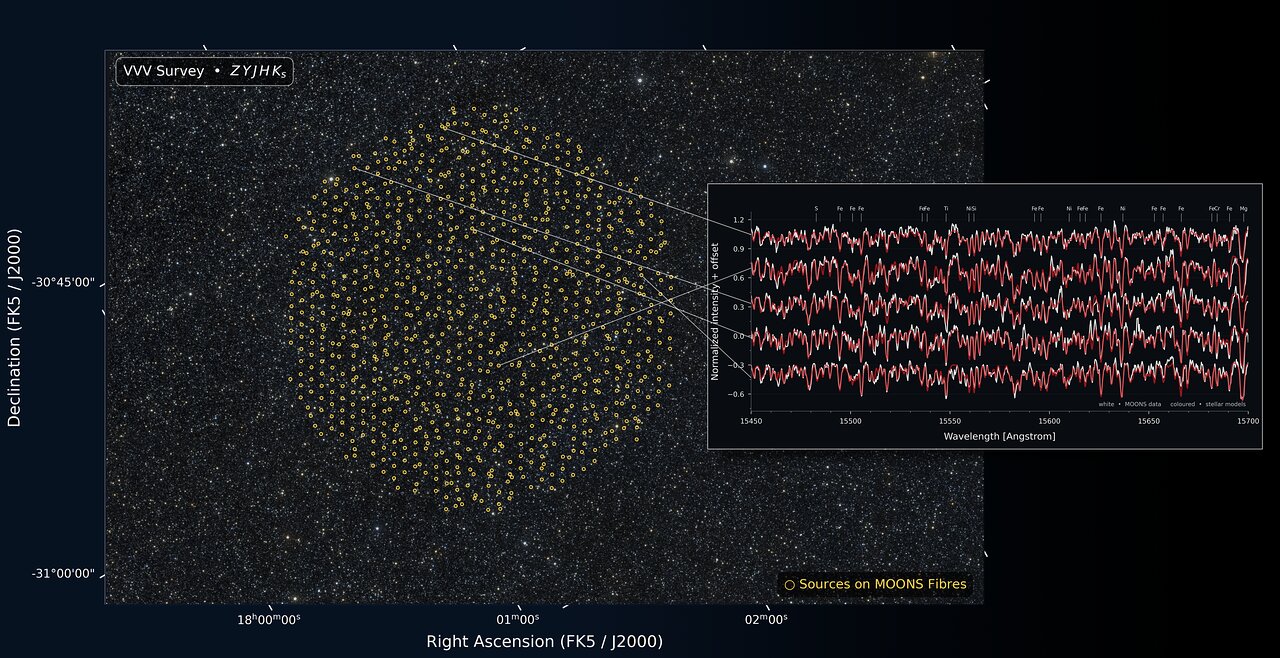
Mit seinen ersten Beobachtungen zeigte MOONS bereits, dass es durch Staub hindurchblicken kann. Dafür richtete sich das Instrument auf Sterne in der von Staub verdeckten Ebene der Milchstraße.
„Die ersten Beobachtungen zeigen eindrucksvoll die Stärke von MOONS: die große Zahl gleichzeitig beobachtbarer Objekte, seine Empfindlichkeit, die Qualität der Daten und die Abdeckung mehrerer Wellenlängenbereiche“, sagt Amelia Bayo, Projektwissenschaftlerin für MOONS bei der ESO. „Damit können wir Muster in ansonsten verdeckten Sternpopulationen untersuchen und gleichzeitig unter Tausenden von Sternen diejenigen finden, die aus der Reihe fallen und neue Fragen aufwerfen.“
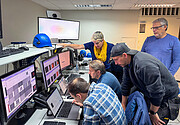
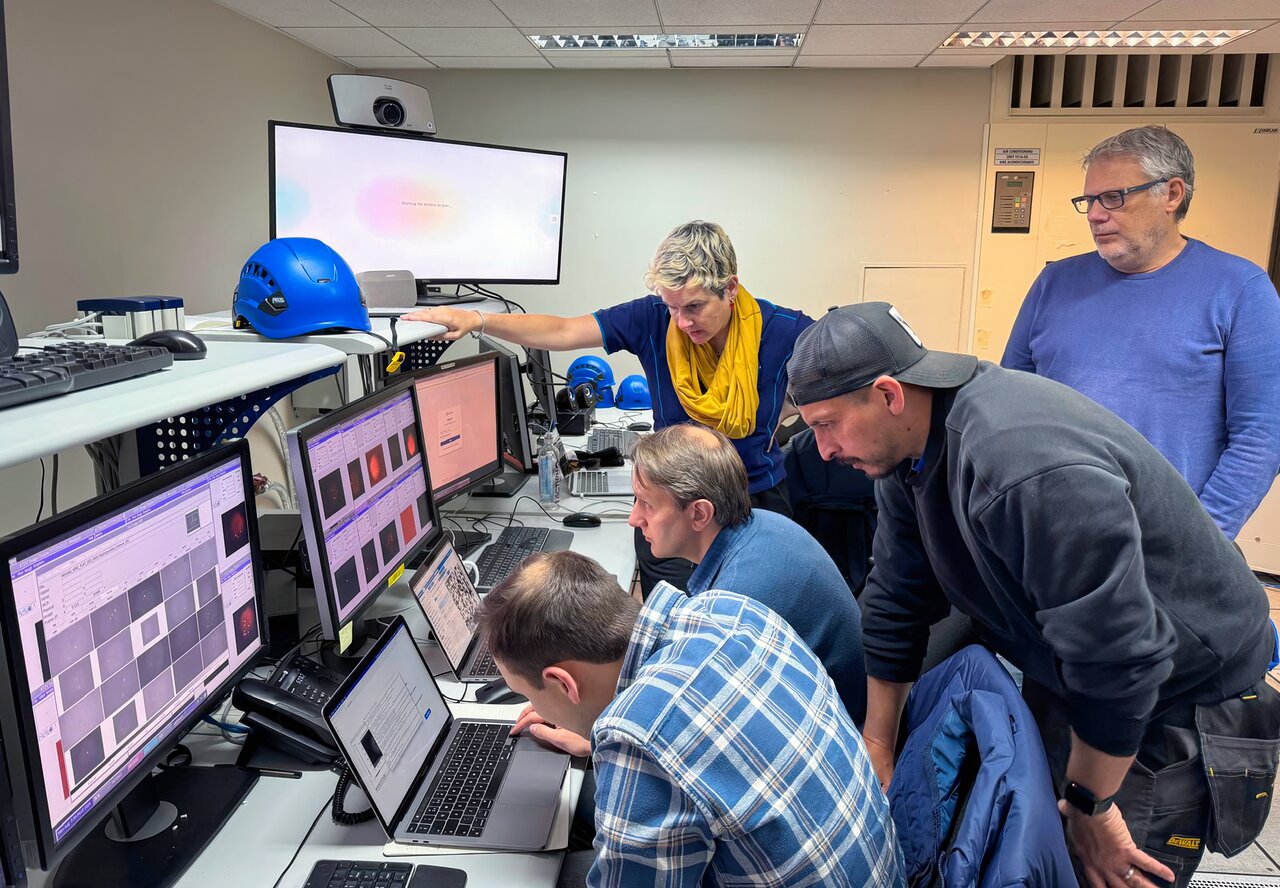
David Concar, britischer Botschafter in Chile, und Michele Dougherty, Astronomer Royal und Vorsitzende des STFC, waren gemeinsam mit dem ESO-Direktor für den Observatoriumsbetrieb und künftigen Generaldirektor Andreas Kaufer sowie weiteren Vertreter*innen der ESO und des UK ATC auf dem Paranal, um die ersten Beobachtungen mitzuerleben.
Dougherty sagt: „Zu sehen, wie MOONS sein erstes Licht erreicht, war außerordentlich spannend. Es ist ein Meilenstein – nicht nur für das internationale Team hinter diesem bemerkenswerten Instrument, sondern für die Astronomie insgesamt. Und es zeigt, welch tiefgreifende wissenschaftliche Fortschritte durch innovative Instrumente möglich werden.“
MOONS ist für eine Betriebsdauer von zehn Jahren ausgelegt und soll in dieser Zeit bis zu zehn Millionen Objekte beobachten und mehrere wissenschaftliche Projekte gleichzeitig unterstützen. Seine fortschrittliche Technik wird insbesondere zwei zentrale wissenschaftliche Ziele voranbringen: Zum einen soll MOONS wichtige spektroskopische Folgebeobachtungen von Galaxien liefern, darunter auch von extrem weit entfernten Galaxien. Zum anderen wird es für Millionen von Sternen in der Milchstraße präzise Messungen ihrer Geschwindigkeiten sowie ihrer chemischen Zusammensetzung und Elementhäufigkeiten ermöglichen.
In unserer Galaxie wird MOONS Sterne in Entfernungen von bis zu 40.000 Lichtjahren untersuchen können, auch in von Staub verhüllten Regionen. Dadurch wird sich eine genaue dreidimensionale Karte der Milchstraße erstellen lassen. Darüber hinaus wird MOONS neue Einblicke in die frühe Entwicklung von Galaxien ermöglichen. Damit schließt das Instrument eine wichtige Lücke bei den astronomischen Beobachtungsmöglichkeiten, insbesondere im nahen Infrarotbereich.
Weitere Informationen
Das Instrument MOONS wurde von einem Konsortium aus Universitäten und Forschungseinrichtungen in Europa und Chile entwickelt und gebaut:
- UK Astronomy Technology Centre (UK ATC) des Science and Technology Facilities Council (Vereinigtes Königreich) – Leitung des Konsortiums
- Centro de Astro-ingenieria UC (AIUC), Pontificia Universidad Católica de Chile (Chile)
- ETH Zürich (Schweiz)
- Galaxies, Étoiles, Physique et Instrumentation (GEPI), Observatoire de Paris-PSL CNRS (Frankreich)
- INAF (Italien)
- Institute of Astronomy (IoA), University of Cambridge (Vereinigtes Königreich)
- Instituto de Astrofísica e Ciências do Espaço (IA, Portugal)
- Université de Genève (Schweiz)
Die ESO ist assoziiertes Mitglied des Konsortiums und stellte die empfindlichen wissenschaftlichen Detektorsysteme bereit, die in MOONS zum Einsatz kommen.
Links
Links
- Pressemitteilung des UK ATC
- Website des MOONS-Konsortiums
- MOONS auf der öffentlichen ESO-Website
- Weitere Informationen zu MOONS im ESO-Blog
Kontaktinformationen
Kontakt
Bárbara Ferreira
ESO-Medienmanagerin
Garching bei München, Deutschland
Tel.: +49 89 3200 6670
E-Mail: press@eso.org
Über die Mitteilung
| ID: | ann26007 |
Bilder
Our use of Cookies
We use cookies that are essential for accessing our websites and using our services. We also use cookies to analyse, measure and improve our websites’ performance, to enable content sharing via social media and to display media content hosted on third-party platforms.
ESO Cookies Policy
The European Organisation for Astronomical Research in the Southern Hemisphere (ESO) is the pre-eminent intergovernmental science and technology organisation in astronomy. It carries out an ambitious programme focused on the design, construction and operation of powerful ground-based observing facilities for astronomy.
This Cookies Policy is intended to provide clarity by outlining the cookies used on the ESO public websites, their functions, the options you have for controlling them, and the ways you can contact us for additional details.
What are cookies?
Cookies are small pieces of data stored on your device by websites you visit. They serve various purposes, such as remembering login credentials and preferences and enhance your browsing experience.
Categories of cookies we use
Essential cookies (always active): These cookies are strictly necessary for the proper functioning of our website. Without these cookies, the website cannot operate correctly, and certain services, such as logging in or accessing secure areas, may not be available; because they are essential for the website’s operation, they cannot be disabled.
Functional Cookies: These cookies enhance your browsing experience by enabling additional features and personalization, such as remembering your preferences and settings. While not strictly necessary for the website to function, they improve usability and convenience; these cookies are only placed if you provide your consent.
Analytics cookies: These cookies collect information about how visitors interact with our website, such as which pages are visited most often and how users navigate the site. This data helps us improve website performance, optimize content, and enhance the user experience; these cookies are only placed if you provide your consent. We use the following analytics cookies.
Matomo Cookies:
This website uses Matomo (formerly Piwik), an open source software which enables the statistical analysis of website visits. Matomo uses cookies (text files) which are saved on your computer and which allow us to analyze how you use our website. The website user information generated by the cookies will only be saved on the servers of our IT Department. We use this information to analyze www.eso.org visits and to prepare reports on website activities. These data will not be disclosed to third parties.
On behalf of ESO, Matomo will use this information for the purpose of evaluating your use of the website, compiling reports on website activity and providing other services relating to website activity and internet usage.
Matomo cookies settings:
Additional Third-party cookies on ESO websites: some of our pages display content from external providers, e.g. YouTube.
Such third-party services are outside of ESO control and may, at any time, change their terms of service, use of cookies, etc.
YouTube: Some videos on the ESO website are embedded from ESO’s official YouTube channel. We have enabled YouTube’s privacy-enhanced mode, meaning that no cookies are set unless the user actively clicks on the video to play it. Additionally, in this mode, YouTube does not store any personally identifiable cookie data for embedded video playbacks. For more details, please refer to YouTube’s embedding videos information page.
Cookies can also be classified based on the following elements.
Regarding the domain, there are:
- First-party cookies, set by the website you are currently visiting. They are stored by the same domain that you are browsing and are used to enhance your experience on that site;
- Third-party cookies, set by a domain other than the one you are currently visiting.
As for their duration, cookies can be:
- Browser-session cookies, which are deleted when the user closes the browser;
- Stored cookies, which stay on the user's device for a predetermined period of time.
How to manage cookies
Cookie settings: You can modify your cookie choices for the ESO webpages at any time by clicking on the link Cookie settings at the bottom of any page.
In your browser: If you wish to delete cookies or instruct your browser to delete or block cookies by default, please visit the help pages of your browser:
Please be aware that if you delete or decline cookies, certain functionalities of our website may be not be available and your browsing experience may be affected.
You can set most browsers to prevent any cookies being placed on your device, but you may then have to manually adjust some preferences every time you visit a site/page. And some services and functionalities may not work properly at all (e.g. profile logging-in, shop check out).
Updates to the ESO Cookies Policy
The ESO Cookies Policy may be subject to future updates, which will be made available on this page.
Additional information
For any queries related to cookies, please contact: pdprATesoDOTorg.
As ESO public webpages are managed by our Department of Communication, your questions will be dealt with the support of the said Department.