Neuer Blick auf die Sterne rund um das Zentrum der Milchstraße
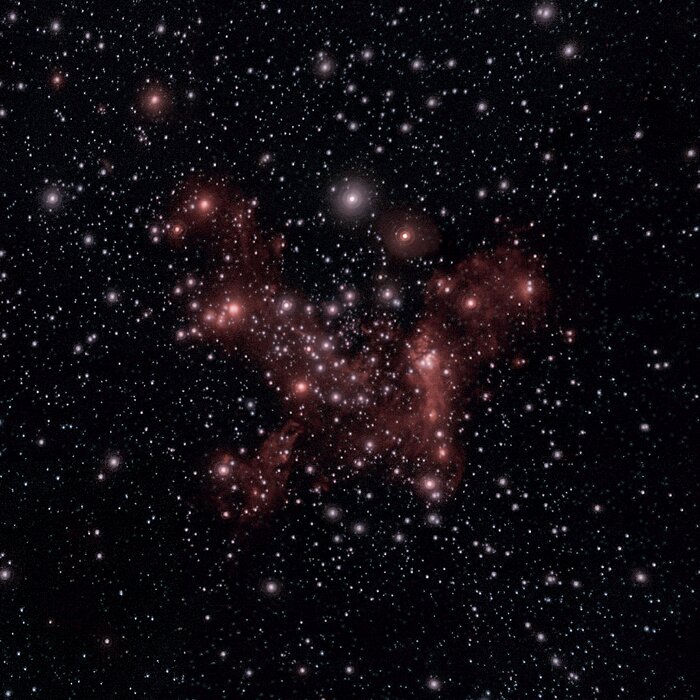
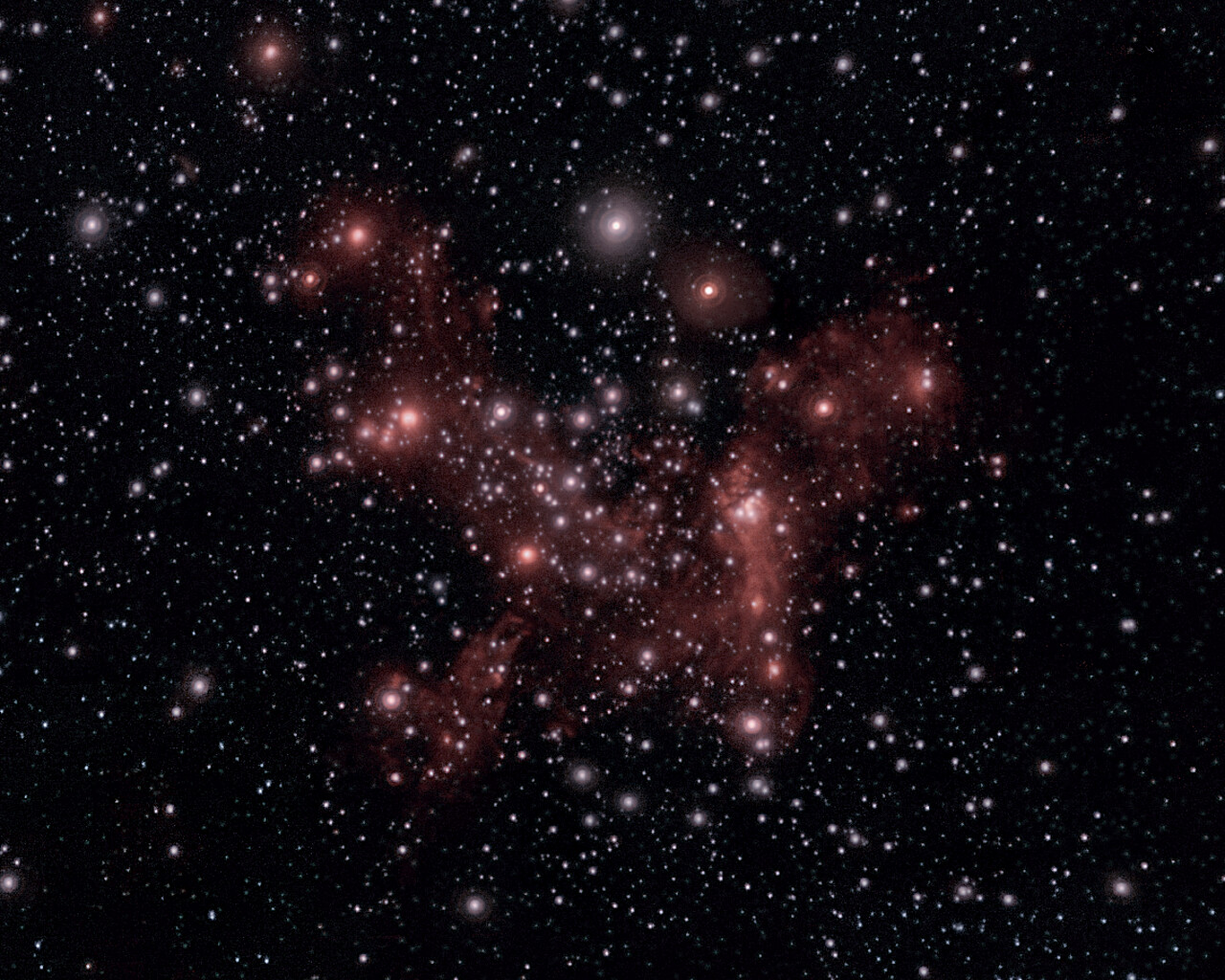
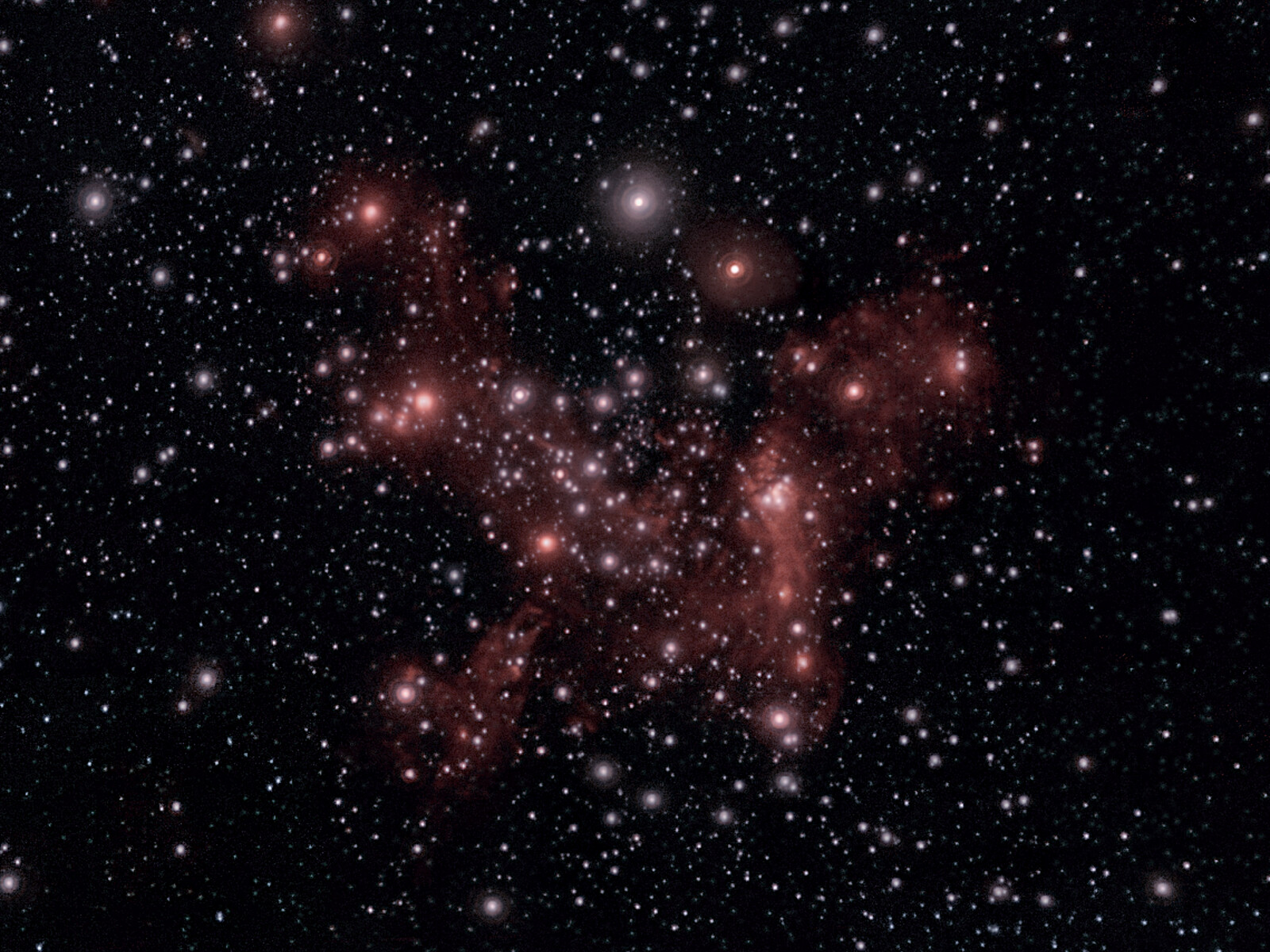
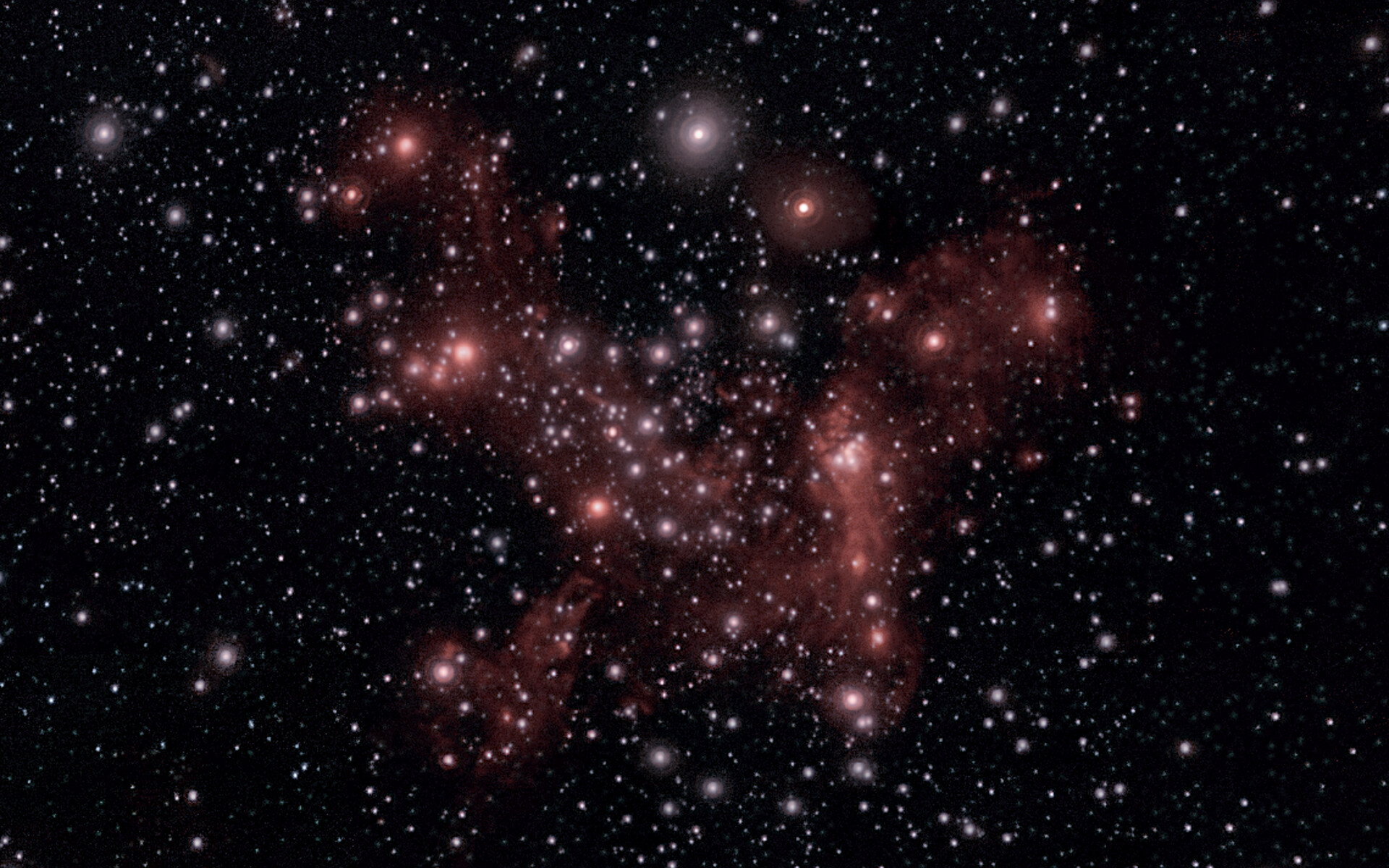
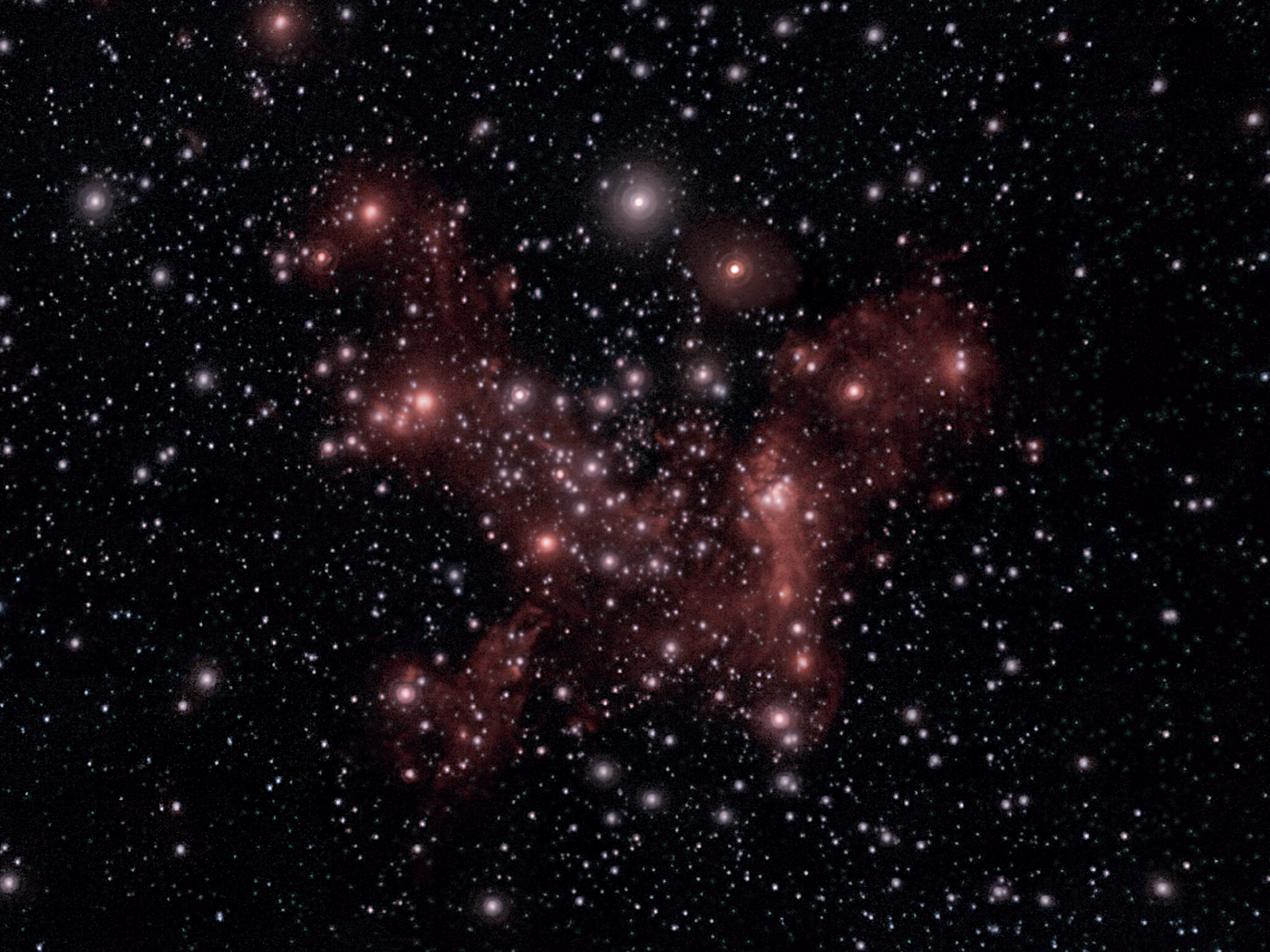
Das heutige Bild der Woche präsentiert einen neuen Blick auf das Herz unserer Milchstraße. Diese atemberaubende Aufnahme, die mit dem Very Large Telescope (VLT) der ESO aufgenommen wurde, zeigt die Sterne und das Gas, die einen unsichtbaren Riesen umgeben – ein supermassereiches Schwarzes Loch, das etwa 27.000 Lichtjahre entfernt ist. Es handelt sich um eine äußerst dynamische Umgebung, in der Sterne und Gaswolken mit dramatischer Geschwindigkeit am Schwarzen Loch vorbeirasen.
Ein Team von Astronom*innen am Max-Planck-Institut für extraterrestrische Physik in Deutschland hat eine neue Gaswolke namens G2t entdeckt, die das supermassereiche Schwarze Loch umkreist. Zwei Gaswolken, G1 und G2, waren bereits bekannt, aber ihre Beschaffenheit und Herkunft waren noch umstritten. Insbesondere war unklar, ob diese Wolken einen Stern in ihrem Inneren verbargen oder ausschließlich aus Gas bestanden. Die Entdeckung einer dritten Gaswolke hilft nun, diese Fragen zu beantworten.
Die Beobachtungen wurden mit dem Enhanced Resolution Imager and Spectrograph (ERIS) durchgeführt, einem Instrument am VLT der ESO, das nicht nur Bilder wie das in diesem Bild der Woche aufnehmen kann, sondern auch Spektren. Dank dieses Instruments konnten die Astronom*innen die 3D-Bahnen der Wolken um das Schwarze Loch herum messen. Die Wolken bewegen sich innerhalb eines sehr kleinen Bereichs in der Mitte dieses Weitwinkelbildes. Es zeigte sich, dass G1, G2 und G2t tatsächlich fast identische Umlaufbahnen haben, die nur geringfügig zueinander gedreht sind. Dies schließt die Möglichkeit aus, dass jede Wolke einen Stern in ihrem Kern verbirgt, da die Wahrscheinlichkeit, dass verschiedene Sterne fast identische Umlaufbahnen haben, sehr gering ist. Die Ähnlichkeit der Umlaufbahnen deutet darauf hin, dass die drei Wolken wahrscheinlich denselben Ursprung haben, höchstwahrscheinlich IRS16SW, ein Paar massereicher Sterne, die eine enorme Menge an Gas ausstoßen. Während sich IRS16SW um das Schwarze Loch bewegt, wird jede Gaswolke in einer leicht unterschiedlichen Umlaufbahn ausgestoßen, was die kleinen Unterschiede in den Flugbahnen des „G-Tripletts” erklärt.
Diese Entdeckung zeigt, dass trotz jahrzehntelanger Beobachtung des Zentrums unserer Milchstraße immer noch neue, unbeantwortete Fragen auftauchen. Aber was könnte spannender sein als Geheimnisse, die darauf warten, gelöst zu werden?
Links
Bildnachweis:ESO/D. Ribeiro for the MPE GC team
Über das Bild
| ID: | potw2610a |
| Sprache: | de-at |
| Typ: | Beobachtung |
| Veröffentlichungsdatum: | 9. März 2026 09:00 |
| Größe: | 1139 x 1139 px |
Über das Objekt
| Name: | G1, G2, G2t, GCIRS 16SW |
| Typ: | Milky Way : Star Milky Way : Galaxy : Component : Center/Core |


Our use of Cookies
We use cookies that are essential for accessing our websites and using our services. We also use cookies to analyse, measure and improve our websites’ performance, to enable content sharing via social media and to display media content hosted on third-party platforms.
ESO Cookies Policy
The European Organisation for Astronomical Research in the Southern Hemisphere (ESO) is the pre-eminent intergovernmental science and technology organisation in astronomy. It carries out an ambitious programme focused on the design, construction and operation of powerful ground-based observing facilities for astronomy.
This Cookies Policy is intended to provide clarity by outlining the cookies used on the ESO public websites, their functions, the options you have for controlling them, and the ways you can contact us for additional details.
What are cookies?
Cookies are small pieces of data stored on your device by websites you visit. They serve various purposes, such as remembering login credentials and preferences and enhance your browsing experience.
Categories of cookies we use
Essential cookies (always active): These cookies are strictly necessary for the proper functioning of our website. Without these cookies, the website cannot operate correctly, and certain services, such as logging in or accessing secure areas, may not be available; because they are essential for the website’s operation, they cannot be disabled.
Functional Cookies: These cookies enhance your browsing experience by enabling additional features and personalization, such as remembering your preferences and settings. While not strictly necessary for the website to function, they improve usability and convenience; these cookies are only placed if you provide your consent.
Analytics cookies: These cookies collect information about how visitors interact with our website, such as which pages are visited most often and how users navigate the site. This data helps us improve website performance, optimize content, and enhance the user experience; these cookies are only placed if you provide your consent. We use the following analytics cookies.
Matomo Cookies:
This website uses Matomo (formerly Piwik), an open source software which enables the statistical analysis of website visits. Matomo uses cookies (text files) which are saved on your computer and which allow us to analyze how you use our website. The website user information generated by the cookies will only be saved on the servers of our IT Department. We use this information to analyze www.eso.org visits and to prepare reports on website activities. These data will not be disclosed to third parties.
On behalf of ESO, Matomo will use this information for the purpose of evaluating your use of the website, compiling reports on website activity and providing other services relating to website activity and internet usage.
Matomo cookies settings:
Additional Third-party cookies on ESO websites: some of our pages display content from external providers, e.g. YouTube.
Such third-party services are outside of ESO control and may, at any time, change their terms of service, use of cookies, etc.
YouTube: Some videos on the ESO website are embedded from ESO’s official YouTube channel. We have enabled YouTube’s privacy-enhanced mode, meaning that no cookies are set unless the user actively clicks on the video to play it. Additionally, in this mode, YouTube does not store any personally identifiable cookie data for embedded video playbacks. For more details, please refer to YouTube’s embedding videos information page.
Cookies can also be classified based on the following elements.
Regarding the domain, there are:
- First-party cookies, set by the website you are currently visiting. They are stored by the same domain that you are browsing and are used to enhance your experience on that site;
- Third-party cookies, set by a domain other than the one you are currently visiting.
As for their duration, cookies can be:
- Browser-session cookies, which are deleted when the user closes the browser;
- Stored cookies, which stay on the user's device for a predetermined period of time.
How to manage cookies
Cookie settings: You can modify your cookie choices for the ESO webpages at any time by clicking on the link Cookie settings at the bottom of any page.
In your browser: If you wish to delete cookies or instruct your browser to delete or block cookies by default, please visit the help pages of your browser:
Please be aware that if you delete or decline cookies, certain functionalities of our website may be not be available and your browsing experience may be affected.
You can set most browsers to prevent any cookies being placed on your device, but you may then have to manually adjust some preferences every time you visit a site/page. And some services and functionalities may not work properly at all (e.g. profile logging-in, shop check out).
Updates to the ESO Cookies Policy
The ESO Cookies Policy may be subject to future updates, which will be made available on this page.
Additional information
For any queries related to cookies, please contact: pdprATesoDOTorg.
As ESO public webpages are managed by our Department of Communication, your questions will be dealt with the support of the said Department.