Mededeling
Ministra federal de Investigación, Tecnología y Espacio junto a otros dignatarios de Alemania visitan Observatorio Paranal de ESO
6 februari 2026
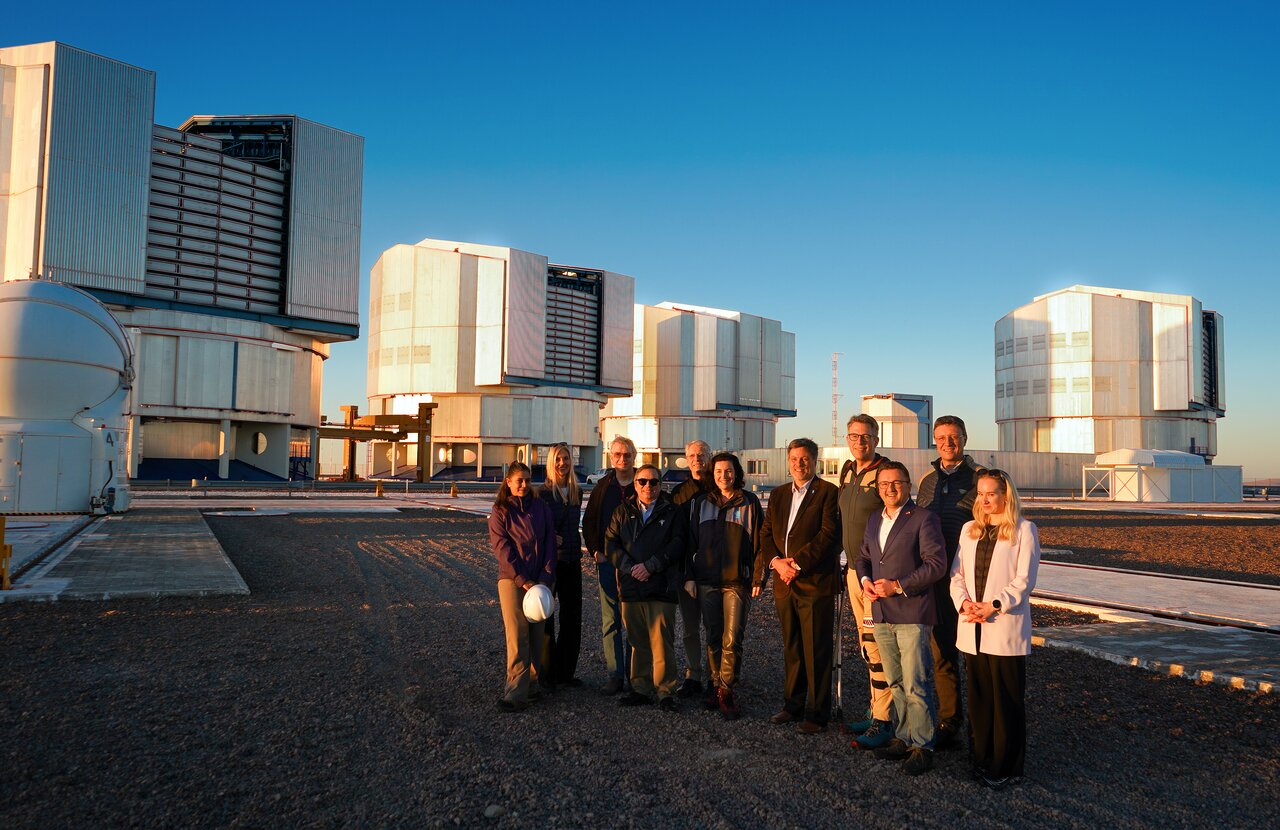
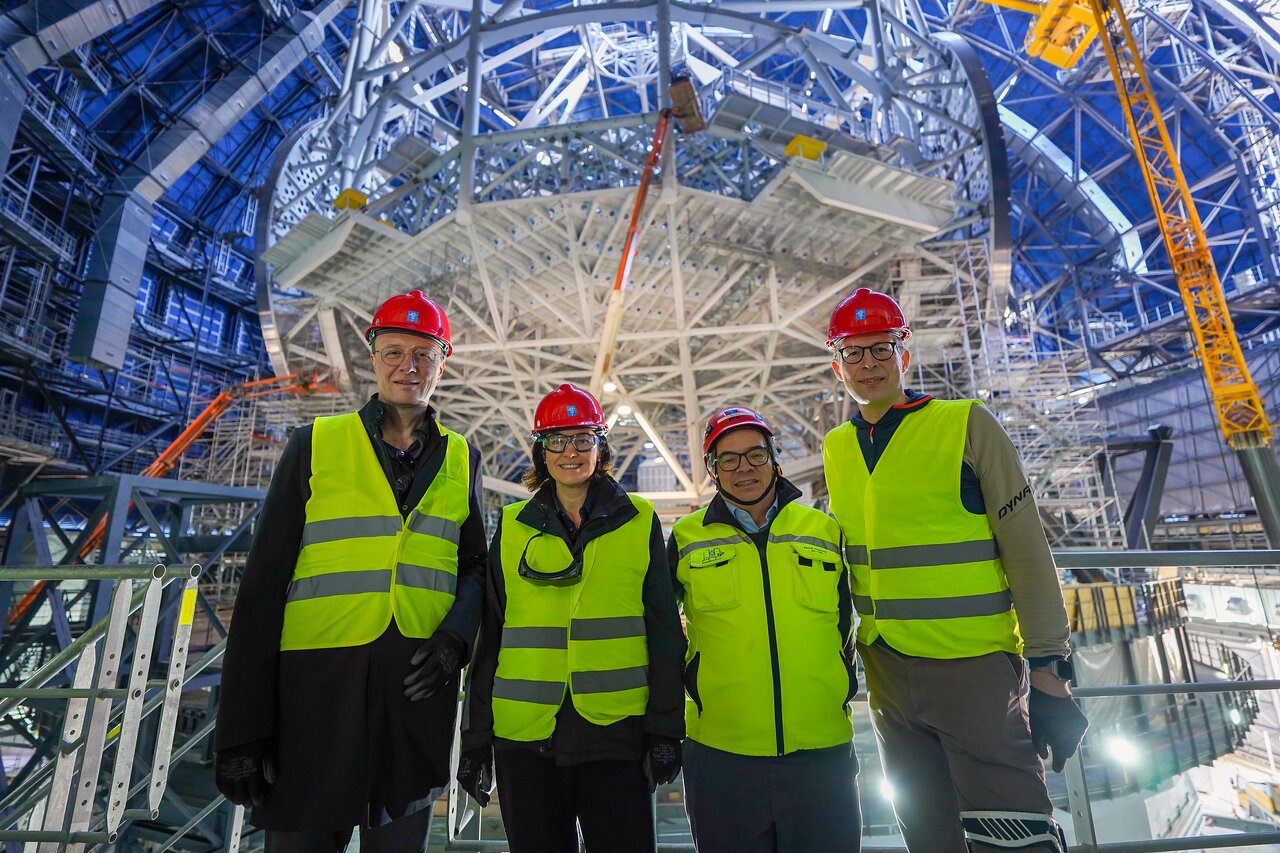
Dorothee Bär, ministra federal de Investigación, Tecnología y Espacio de Alemania; Markus Blume, ministro de Ciencia y Arte del Estado de Baviera; Thomas Reiter, director del Departamento de Espacio y Seguridad del Ministerio Federal de Investigación, Tecnología y Espacio de Alemania, junto a una delegación de alto perfil que incluyó a Patrick Cramer, presidente de la Sociedad Max Planck, han concluido una visita al Observatorio Paranal de ESO, en el norte de Chile, que alberga a algunos de los telescopios terrestres más avanzados del mundo. La visita brindó una excelente oportunidad para que los ministros y la delegación vivieran la experiencia del Observatorio Paranal, sus instalaciones y sus impresionantes cielos oscuros en persona, después de una visita a la sede central de ESO y al Planetario y Centro de Visitantes ESO Supernova, el año pasado.
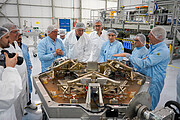
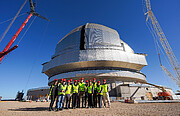
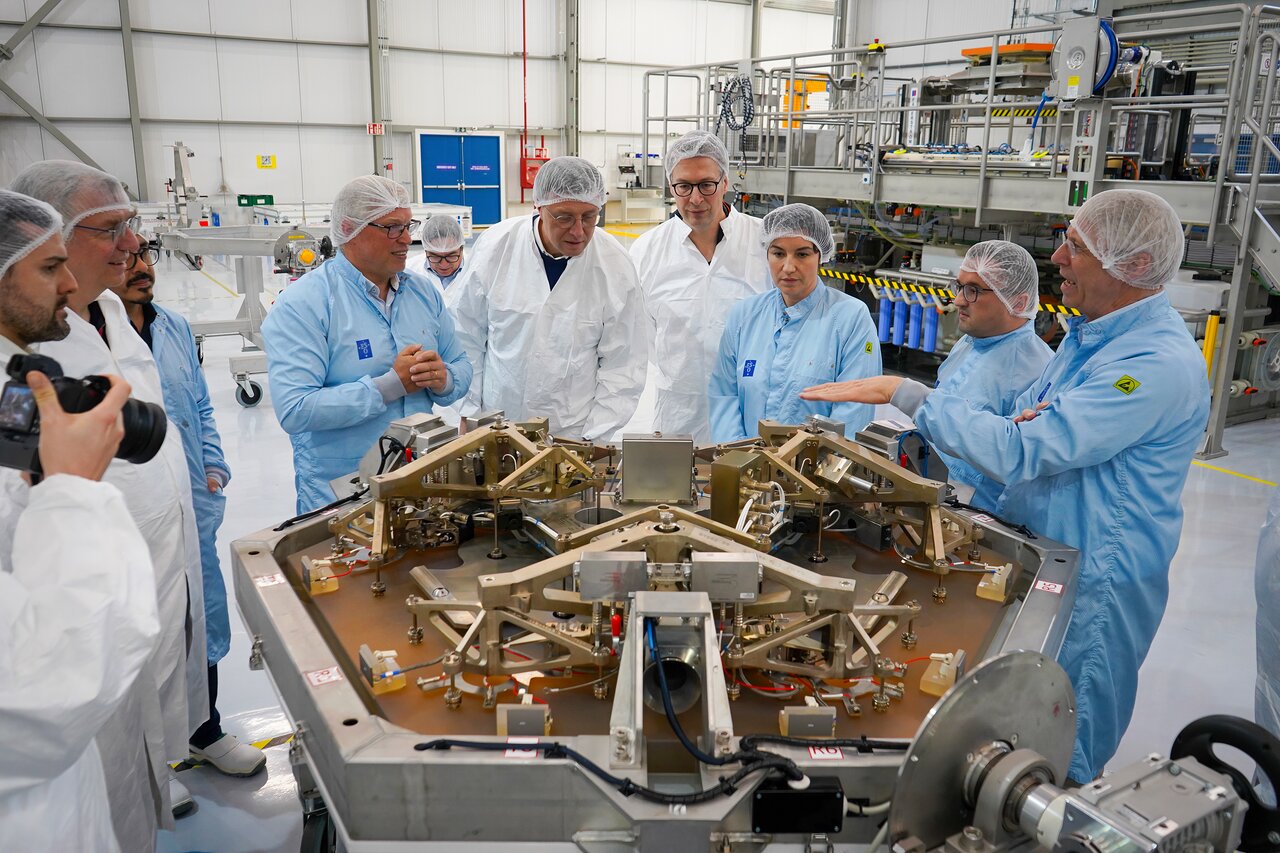
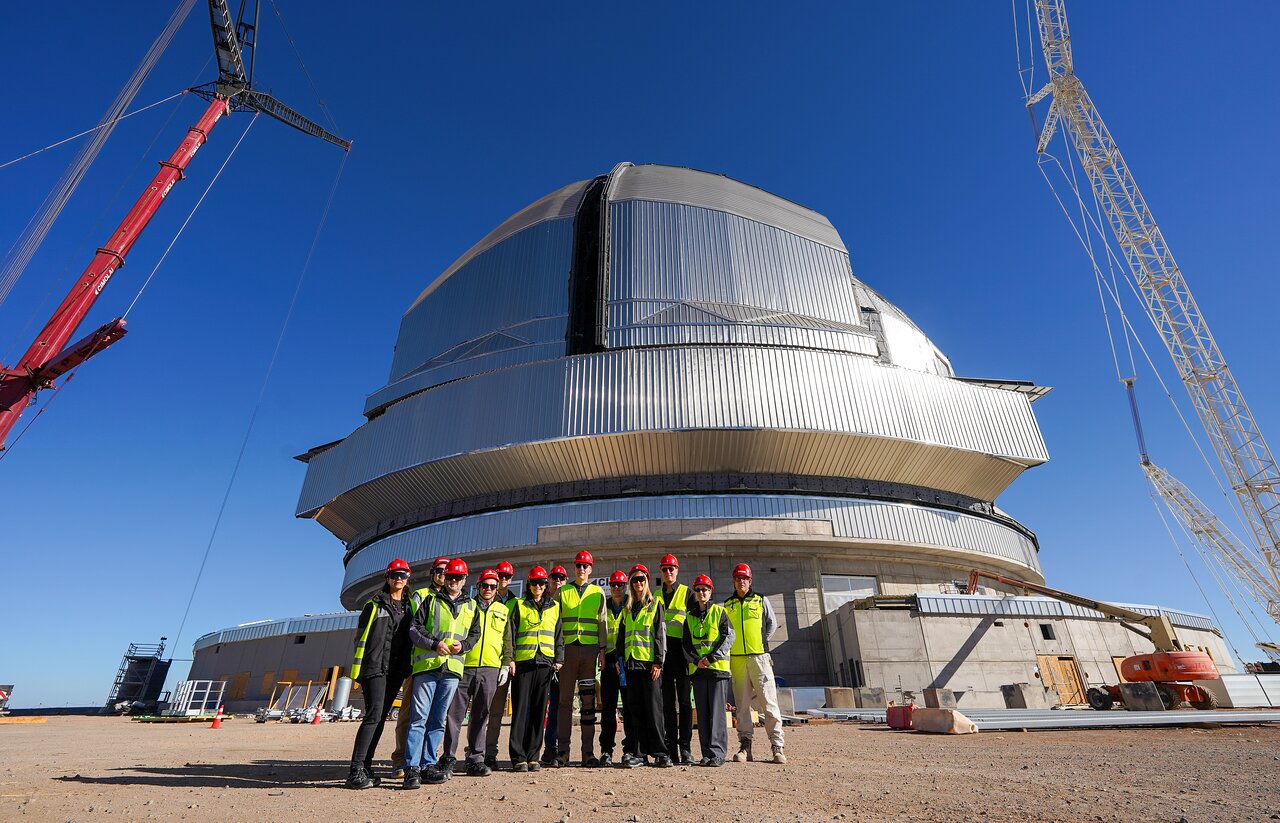
El 4 de febrero, Xavier Barcons, director general de ESO, junto con Andreas Kaufer, director de operaciones de ESO y director general designado, recibieron a la ministra federal Bär, al ministro estatal Blume y al resto de la delegación en el Observatorio Paranal. Los invitados visitaron la instalación técnica del ELT, un sitio de mantenimiento y montaje de componentes del Extremely Large Telescope (ELT) de ESO, para luego dirigirse al Very Large Telescope (VLT). Al día siguiente, visitaron el sitio de ELT, en el cercano Cerro Armazones, donde observaron los avances en el futuro “ojo más grande del mundo en el cielo”. Durante la visita de dos días, los visitantes de alto nivel vivieron la experiencia de los cielos oscuros prístinos y frágiles en Paranal, tuvieron la oportunidad de conocer de primera mano las operaciones de ESO en Chile, vieron el desarrollo de tecnología e ingeniería realizado en Alemania y en otros lugares de Europa en acción en el observatorio, y aprendieron sobre el potencial del ELT para revolucionar nuestra comprensión del universo.
Alemania ha desempeñado un papel importante en muchos de los logros tecnológicos y científicos de ESO, como la fabricación de bloques de espejo tanto para el VLT como el ELT, mientras que varios centros de investigación alemanes (incluidos los institutos de la Sociedad Max Planck y el Instituto Leibniz de Astrofísica de Potsdam) han liderado consorcios dedicados al diseño y la construcción de instrumentos para los telescopios de ESO. En su discurso, la ministra Bär enfatizó la necesidad de proteger el patrimonio natural, como los cielos oscuros y tranquilos, ya que inspiran a las generaciones más jóvenes en su curiosidad por la investigación STEM. Destacó la importancia de la astronomía terrestre, sus sinergias con la investigación espacial y la importancia de desarrollar e invertir en ambos campos, ya que impulsan la tecnología en Alemania y en toda Europa.
Contact
Bárbara Ferreira
ESO Media Manager
Garching bei München, Germany
Tel: +49 89 3200 6670
Email: press@eso.org
Over de Mededeling
| Id: | annlang26002-es-cl |
Afbeeldingen
Our use of Cookies
We use cookies that are essential for accessing our websites and using our services. We also use cookies to analyse, measure and improve our websites’ performance, to enable content sharing via social media and to display media content hosted on third-party platforms.
ESO Cookies Policy
The European Organisation for Astronomical Research in the Southern Hemisphere (ESO) is the pre-eminent intergovernmental science and technology organisation in astronomy. It carries out an ambitious programme focused on the design, construction and operation of powerful ground-based observing facilities for astronomy.
This Cookies Policy is intended to provide clarity by outlining the cookies used on the ESO public websites, their functions, the options you have for controlling them, and the ways you can contact us for additional details.
What are cookies?
Cookies are small pieces of data stored on your device by websites you visit. They serve various purposes, such as remembering login credentials and preferences and enhance your browsing experience.
Categories of cookies we use
Essential cookies (always active): These cookies are strictly necessary for the proper functioning of our website. Without these cookies, the website cannot operate correctly, and certain services, such as logging in or accessing secure areas, may not be available; because they are essential for the website’s operation, they cannot be disabled.
Functional Cookies: These cookies enhance your browsing experience by enabling additional features and personalization, such as remembering your preferences and settings. While not strictly necessary for the website to function, they improve usability and convenience; these cookies are only placed if you provide your consent.
Analytics cookies: These cookies collect information about how visitors interact with our website, such as which pages are visited most often and how users navigate the site. This data helps us improve website performance, optimize content, and enhance the user experience; these cookies are only placed if you provide your consent. We use the following analytics cookies.
Matomo Cookies:
This website uses Matomo (formerly Piwik), an open source software which enables the statistical analysis of website visits. Matomo uses cookies (text files) which are saved on your computer and which allow us to analyze how you use our website. The website user information generated by the cookies will only be saved on the servers of our IT Department. We use this information to analyze www.eso.org visits and to prepare reports on website activities. These data will not be disclosed to third parties.
On behalf of ESO, Matomo will use this information for the purpose of evaluating your use of the website, compiling reports on website activity and providing other services relating to website activity and internet usage.
Matomo cookies settings:
Additional Third-party cookies on ESO websites: some of our pages display content from external providers, e.g. YouTube.
Such third-party services are outside of ESO control and may, at any time, change their terms of service, use of cookies, etc.
YouTube: Some videos on the ESO website are embedded from ESO’s official YouTube channel. We have enabled YouTube’s privacy-enhanced mode, meaning that no cookies are set unless the user actively clicks on the video to play it. Additionally, in this mode, YouTube does not store any personally identifiable cookie data for embedded video playbacks. For more details, please refer to YouTube’s embedding videos information page.
Cookies can also be classified based on the following elements.
Regarding the domain, there are:
- First-party cookies, set by the website you are currently visiting. They are stored by the same domain that you are browsing and are used to enhance your experience on that site;
- Third-party cookies, set by a domain other than the one you are currently visiting.
As for their duration, cookies can be:
- Browser-session cookies, which are deleted when the user closes the browser;
- Stored cookies, which stay on the user's device for a predetermined period of time.
How to manage cookies
Cookie settings: You can modify your cookie choices for the ESO webpages at any time by clicking on the link Cookie settings at the bottom of any page.
In your browser: If you wish to delete cookies or instruct your browser to delete or block cookies by default, please visit the help pages of your browser:
Please be aware that if you delete or decline cookies, certain functionalities of our website may be not be available and your browsing experience may be affected.
You can set most browsers to prevent any cookies being placed on your device, but you may then have to manually adjust some preferences every time you visit a site/page. And some services and functionalities may not work properly at all (e.g. profile logging-in, shop check out).
Updates to the ESO Cookies Policy
The ESO Cookies Policy may be subject to future updates, which will be made available on this page.
Additional information
For any queries related to cookies, please contact: pdprATesoDOTorg.
As ESO public webpages are managed by our Department of Communication, your questions will be dealt with the support of the said Department.