
- The impact of satellite megaconstellations on astronomy
- How ESO and other organisations are working for a fair use of space
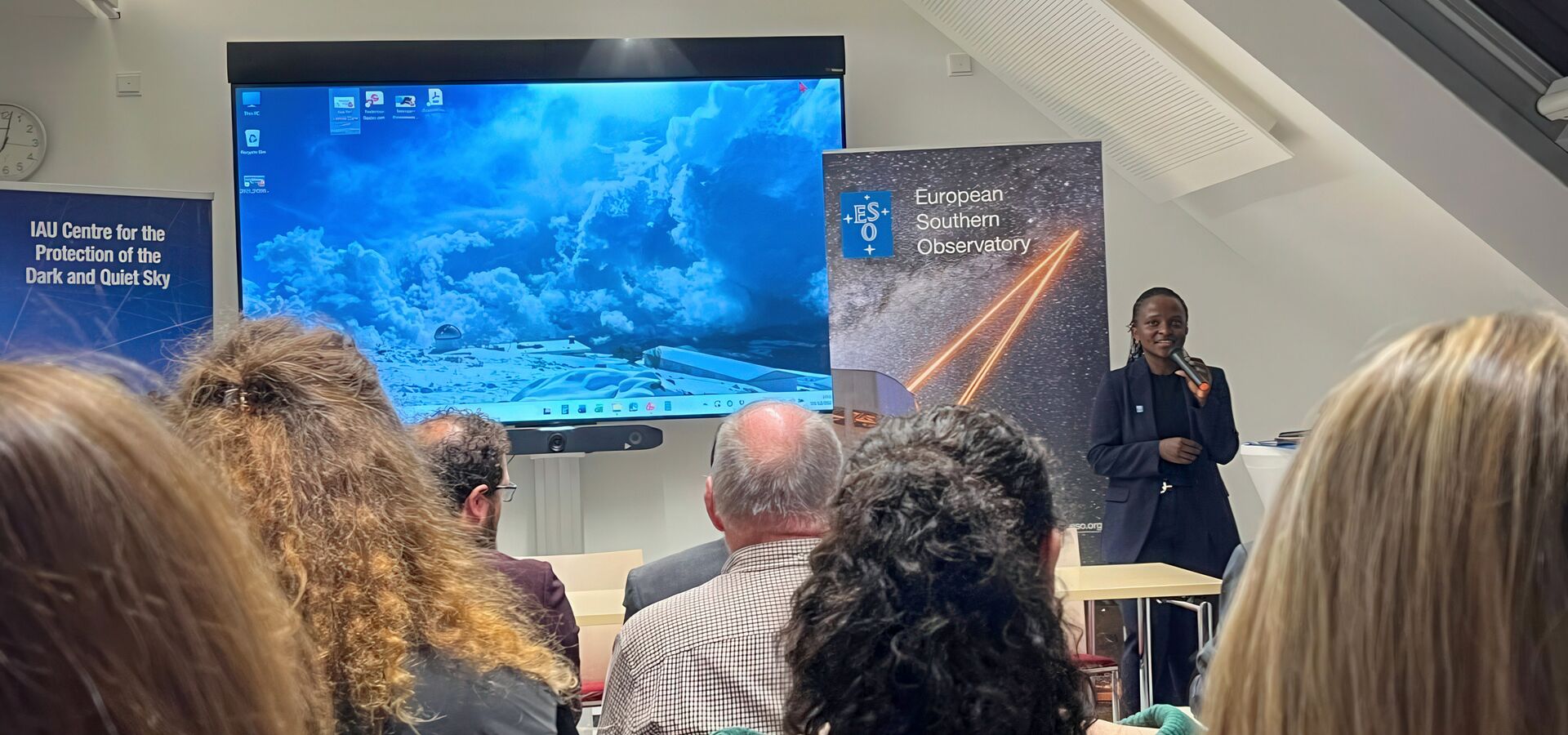
Looking up at the night sky and seeing an endless sea of stars is an experience fewer and fewer people get to witness. The sky gets brighter and noisier each day due to increasing light pollution, in no small part due to the growing number of satellites being launched into space. While the United Nations’ Outer Space Treaty states that “the exploration and use of outer space shall be carried out for the benefit and in the interests of all countries and shall be the province of all mankind,” not everyone is convinced space really is being used for humanity’s benefit. One of these people is Betty Kioko, the Institutional Affairs Officer at ESO. In this post we talk to Betty about her commitment to protect the dark and quiet skies in a just and sustainable way.
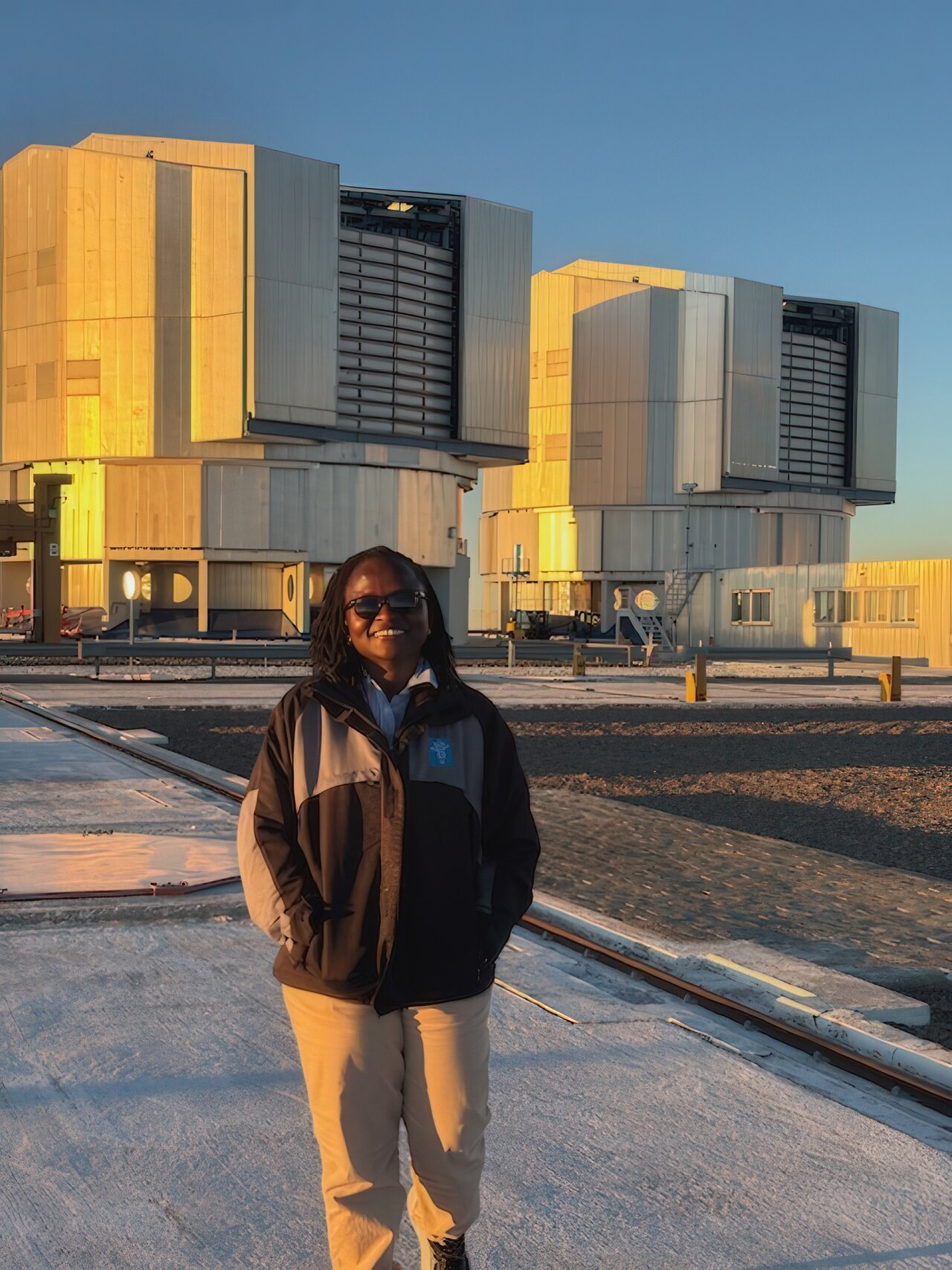
Not all people working at ESO are astronomers or engineers. Betty was doing her Master’s in Law in Manchester, UK and was not thinking of starting to work for an astronomical organisation. But then her professor advertised an intern position in treaty law at the Square Kilometer Array Observatory. “My only understanding of astronomy at that point was the pretty pictures that you see every once in a while.”
Now, almost 7 years later Betty coordinates ESO’s Institutional Affairs. As such, she is responsible for ESO’s engagements with its Member States and external partners. “So my role involves policymaking and advocacy for policy within our member governments and relevant institutions such as the EU Commission, to make sure that the interests of astronomy are well represented.”
Too many satellites in low earth orbit?
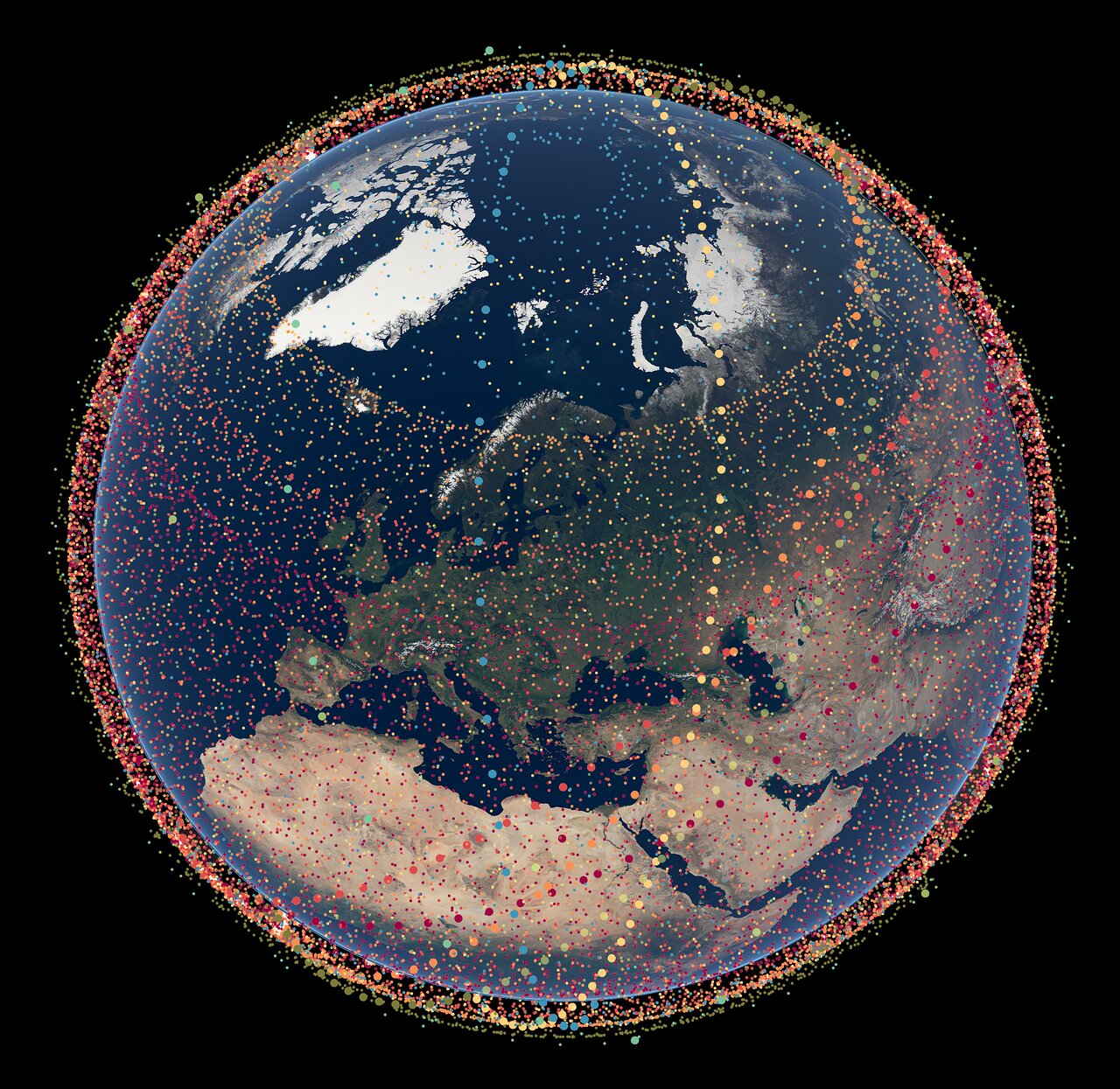
Over the past years, the number of satellites launched into low Earth orbit has increased immensely, raising alarm bells for astronomers: as satellites reflect sunlight, they produce artefacts in astronomical observations. What’s more, their cumulative effect results in an overall brighter night sky, hampering astronomer’s ability to capture the light of faint targets — not to mention the effects of light pollution on wildlife, cultural heritage and human health (but we’ll stick to our expertise in this post).
The increasing brightness is not the only problem: the sky is also getting noisier. Satellites communicate via radio waves that can interfere with the weak radio signals coming from the depths of the cosmos that we currently detect with radio telescopes on Earth. Hence the need to raise awareness about how they can become a problem. “If nobody tells the decision makers the impact this has on astronomy, they're just going to continue licensing satellite companies because they have a good economic business case and positive impacts on internet connectivity,” argues Betty.
Moreover, it’s not only active satellites that are an issue. Once a satellite mission ends, its dead body usually remains in an orbit, where it might collide with other space junk or eventually fall down to Earth. While re-entering the atmosphere, the satellite burns up, but not always completely. This can lead to parts of the satellite falling onto Earth’s surface! “From a space sustainability point of view, which is my other area of interest, one of the biggest concerns is uncontrolled re-entries of satellites into Earth once they've been to orbit. That's why we are starting to see recorded incidences of things just falling from the sky and worrying about orbital collisions as well.”
These developments demonstrate why it is crucial for ESO to engage with governments and other relevant bodies to support discussions on the consequences of thoughtless satellite usage, if they keep licensing satellite megaconstellations with no clear regulations.
These satellites can be beneficial for humanity by, for example, bringing internet access to remote areas. But as Betty explains: "We do not need as many satellites as companies plan to deploy. We could do the exact same thing we're doing with far fewer satellites, but like many things under capitalism, it's become another avenue for the rich to get richer.” She hits the nail on the head: over the past years, the number of satellites launched into orbit increased immensely. In 2020 there were about 2000 active satellites in orbit; as of 2026 there are 15 000, and well over 30 000 if we also include dead satellites and other debris.
Betty also has a personal interest in supporting a sustainable and fair usage of outer space, driving her motivation to fight for better regulations which she made a formal part of her job. “I spend a lot of time thinking about social justice more generally, and I see aspects of these discussions as being a social justice issue,” she adds.
ESO’s efforts to protect the night sky
While Betty joined ESO just a year ago, she can already count some victories in the organisation’s fight for darker and quieter skies. For example, largely thanks to Betty’s work, in December 2025 ESO became an official partner of the International Astronomical Union Centre for the Protection of the Dark and Quiet Sky (IAU CPS). This partnership enables ESO to engage more closely with the important parties that have interests in satellite constellation interference, like astronomers, satellite operators but also policy makers, unifying the efforts of the global astronomical community to protect the dark and quiet sky. Since January, Betty has been Associate Director for the CPS Policy Hub, which coordinates international efforts to study and develop regulations that protect the night sky from satellite constellation interference.
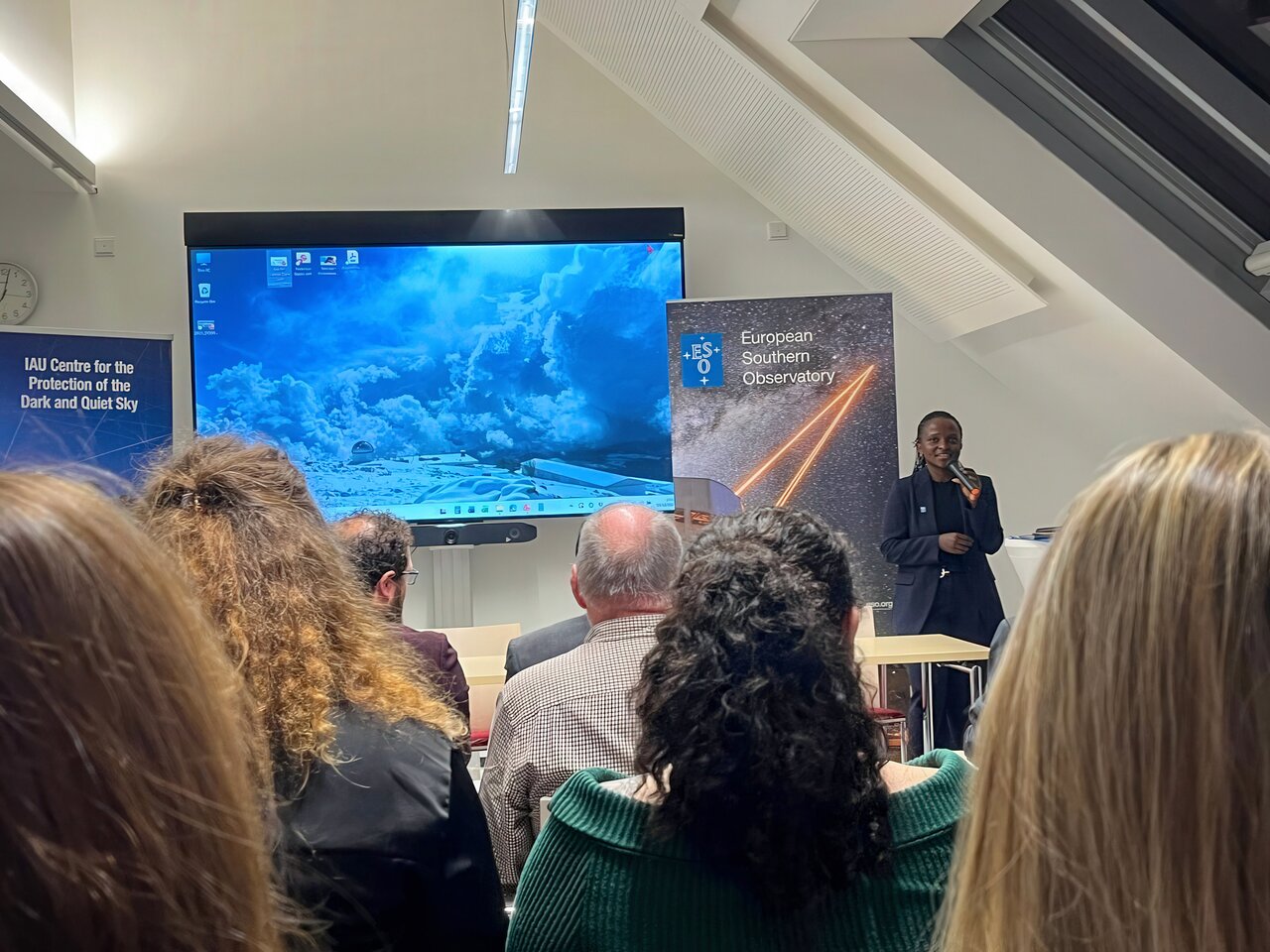
Another big responsibility is Betty's role as ESO’s representative at the United Nations Committee on the Peaceful Uses of Outer Space (COPUOS), a branch of the UN that cares about peaceful issues of outer space. Since 2008 ESO has been a permanent observer, meaning that it can advocate for astronomy to policy makers, without a right to vote. “Being a part of that allows us to see what's coming, to engage with governments and other licensing bodies, to also make sure that astronomical considerations are clearly represented when people are making decisions on use of space.”
A huge milestone was the 59th session of COPUOS’ Science and Technical Subcommittee, where the protection of dark and quiet skies was tabled for the first time as a formal agenda item by the United Nations. Since February 2025 it has been officially a five-year agenda item, in which they emphasise the need for “coordinated action and cooperation of governments, satellite owner-operators or manufacturers, and astronomers from around the world” as its not only affecting astronomers, but also “amateur astronomers, and the general connection between humanity and the night sky, including for Indigenous communities” as they state in their paper.
Being a part of collaborations like these enhances ESO’s sphere of influence at the highest levels, to spread awareness for a fair and regulated usage of outer space, which will hopefully be taken notice of by policymakers. In this manner, Betty hopes “that countries can introduce national licensing requirements that require the satellites companies to factor in their impact on the night sky from the early design stages.”
Law evolves slower than life
A major issue, according to Betty, is that “the law evolves very slowly, governments are really slow and bureaucratic with many competing interests,” so making fast progress is challenging.
Just recently, Space X and Reflect Orbital submitted proposals to the US Federal Communications Commission that would increase the number of satellites orbiting Earth by a factor of 100. Space X plans to launch one million satellites to act as data centres. Besides the fundamental scientific limitations of such a project, the consequences to astronomy would be devastating. If these satellites are as bright as current estimates, about 5000–10 000 of them would be visible to the naked eye at the beginning and end of the night –– many more than visible natural stars. On average, each image taken with ESO’s Very Large Telescope (VLT) would contain 10% of unusable data due to the many trails left by these satellites.
Reflect Orbital on the other hand intends to launch 50 000 satellites to reflect sunlight down to Earth at night, which would also be disastrous for astronomy. Within their beam, the satellites would be four times brighter than the full Moon. But even if they never point towards astronomical observatories they would still appear as bright as Venus outside of their beam. Only 5000 of these satellites would increase the sky brightness by 20-30%, and their full constellation would make the sky three to four times brighter. This would turn ESO’s Paranal Observatory –– home to the darkest skies among major observatories –– into a semi-suburban site.
While the law slowly but surely catches up, Betty emphasises how important it is to also engage directly with the satellite companies. In this way they have the input and knowledge right from the beginning of how to design their satellites before they manufacture them, in particular to make them less reflective.
“We have a good technical relationship with satellite manufacturing companies," which want to offer broadband satellite internet services, "and they have shown positive interest in implementing mitigation strategies.”
In this way, rather than addressing technical problems herself, Betty plays a crucial behind-the-scenes role by helping her colleagues frame their work in appropriate legal and policy terms. Metaphorically, she explains that “for scientists, one plus one is two. For a lawyer, one plus one is often: it depends,” highlighting the gap between these worlds. So, her daily work places her alongside colleagues who are, as she describes, “very logical and who work with numbers or who build things that either work or don't work.” Over the years, she has gained extensive experience in navigating these contrasting mindsets and developed an understanding of how to bridge them. As she reflects, “working in this environment for me has been a lesson in finding a language to communicate legal and policy things to non-legal and policy audiences.”
All in all, according to Betty, there are two crucial ways of advocating for the protection of the dark and quiet sky in regard to satellite constellations: “working with operators and working directly with countries.” She continues: “I think if we do just legal, if we do just technical, it's not enough. We've got to get an approach that allows the technical and the legal to merge. And so for me that's sort of like my sweet spot.”
Working for a better future
To the question of what the biggest threat to the night sky is, Betty stressed immediately that it's the uncoordinated use of the night sky. But the underlying issue connected to that, according to her, is that “we're living in a world where people don't trust each other. People don't trust each other to have the same satellite constellations.” This leads to the elemental problem of having more satellites than we actually need, “because we live in a fundamentally broken system where trust just doesn't exist.”
Despite the complexity of the situation, Betty is not losing hope. Looking towards the future, she has a clear vision of what she wishes for: “I hope that globally the geopolitical situation improves because I think that's going to have a direct positive impact in the work we're doing.” Astronomy, in particular, fuels her hope and trust that this fragmented society can change.
Collaboration in astronomy is inherently unifying, as she realised from her experience. “ESO has collaborated with many companies in industry, many institutions and different consortiums — this is nothing a single person can achieve on their own — and I quite like that. I like the idea that humanity needs each other. That brings out the best in us, because we have to pull together to achieve these things — that's partly why I stayed in astronomy, when I fell into it.”
This idea becomes especially visible in projects like ESO’s Extremely Large Telescope (ELT): “When you see the ELT, the many different parts of it that fit, the many different people who had to make the many different parts to do the thing and talk to each other. I think that it represents the best of human beings in many ways and actually it's probably also the thing that gives me hope, that it's actually possible for people to root together and achieve things. We don't always have to be deeply destructive and just break things.”
Links
Biography Kira-Marie Mikosch
.