Annuncio
Revealing hidden stars and galaxies: new MOONS instrument at the Very Large Telescope makes first observations
03 Settembre 2026
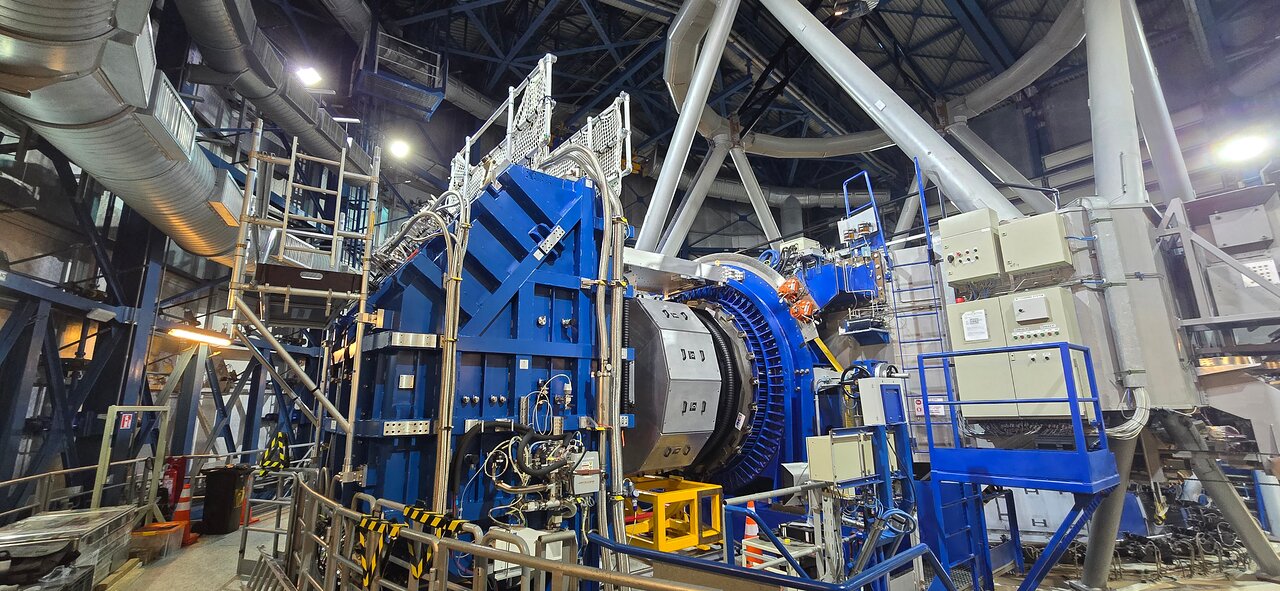
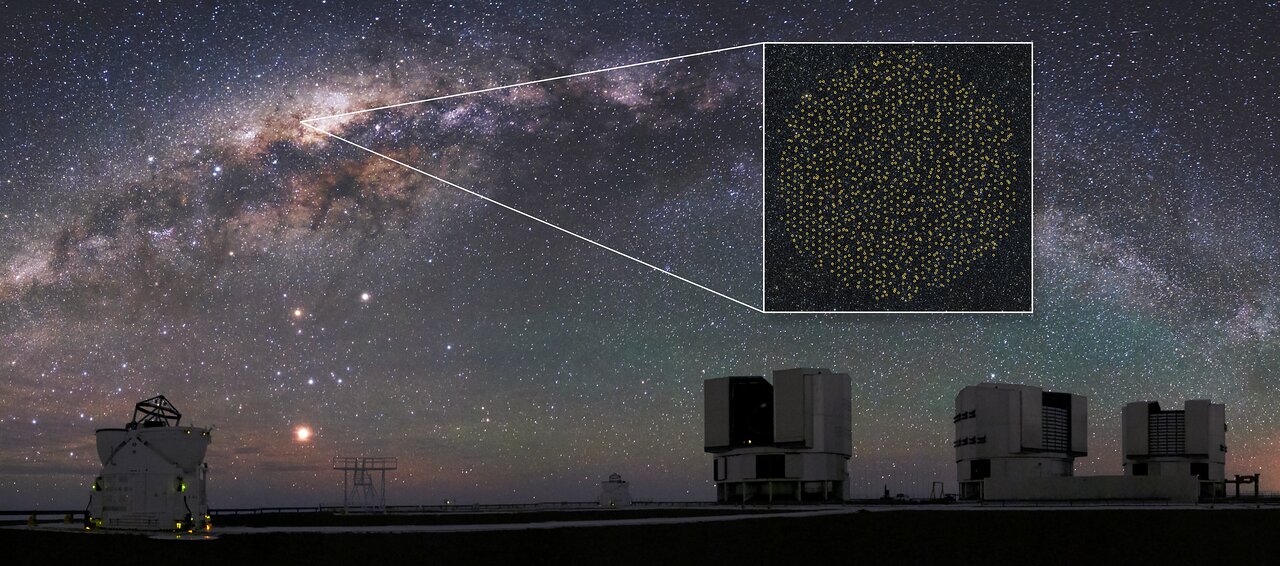
ESO’s newest scientific instrument, the Multi-Object Optical and Near-infrared Spectrograph (MOONS) has successfully made its first observations, achieving what astronomers call First Light. Mounted on ESO’s Very Large Telescope (VLT) at Cerro Paranal in northern Chile, MOONS will be able to study 1000 objects at once. It will observe red and infrared light, allowing astronomers to peer into the heart of our galaxy as well as study how distant galaxies formed.
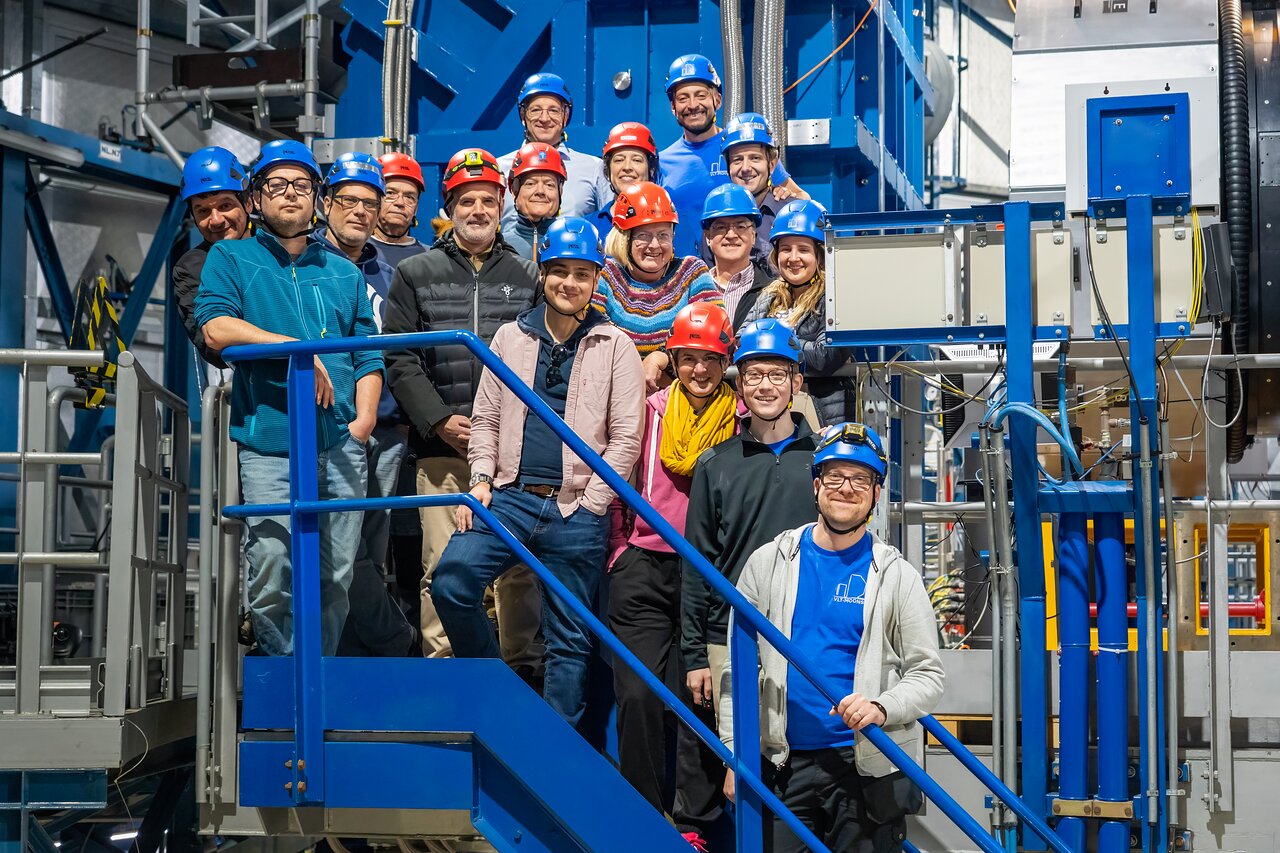
“It is truly emotional to see the First Light of MOONS, a remarkable achievement born from the extraordinary dedication and talent of an exceptional team,” said Michele Cirasuolo, MOONS Principal Investigator and ESO Instrumentation Programme Manager. “MOONS opens a new window onto the Universe, allowing us to explore the physical, chemical, dynamical and environmental properties of millions of stars and galaxies across more than 13 billion years of cosmic history. It will take us to new frontiers in our understanding of how the Milky Way and galaxies have formed and evolved with time. I am incredibly proud of the team and hugely excited to see what new discoveries and new horizons in our understanding of the Universe lie ahead.”
An extraordinary instrument
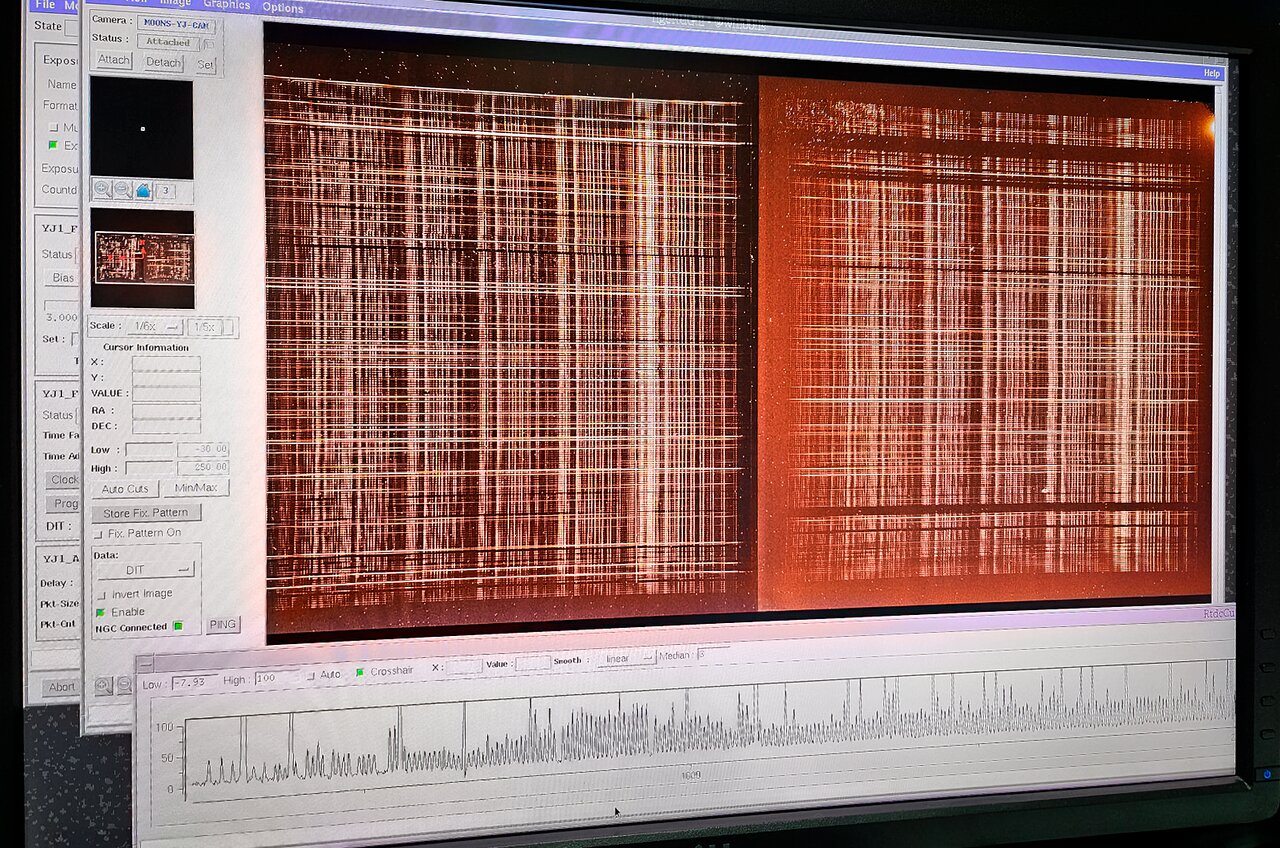
MOONS — which was built by an international consortium led by the UK Astronomy Technology Centre (UK ATC), part of the Science and Technology Facilities Council (STFC) — is designed to leverage the light-gathering power of one of the VLT’s 8-metre mirrors to observe a multitude of individual stars and galaxies. Using around 1000 optical fibres, each mounted on a robotic positioner, the instrument can point to the exact locations of about 1000 astronomical targets simultaneously and over a large field-of-view. The light collected by the fibres is then fed into two identical spectrographs (with 500 fibres each), which work like a prism creating a rainbow, splitting light into different colours. By analysing the different colours or wavelengths, astronomers are able to reveal many of the cosmic objects’ properties, such as their chemical composition, mass and velocity.
Oscar Gonzalez, MOONS UK Principal Investigator and Head of Project Science and Strategy at UK ATC, said: "MOONS is the result of an extraordinary international effort. For years our scientists, engineers and technicians have worked together to overcome remarkable technological challenges and create an instrument of exceptional capability. For me, First Light is a celebration of their expertise, dedication and perseverance. It marks the exact moment in which years of work are transformed into discovery. MOONS will give astronomers an entirely new way of exploring the Universe, enabling observations that were simply beyond our reach… until now."
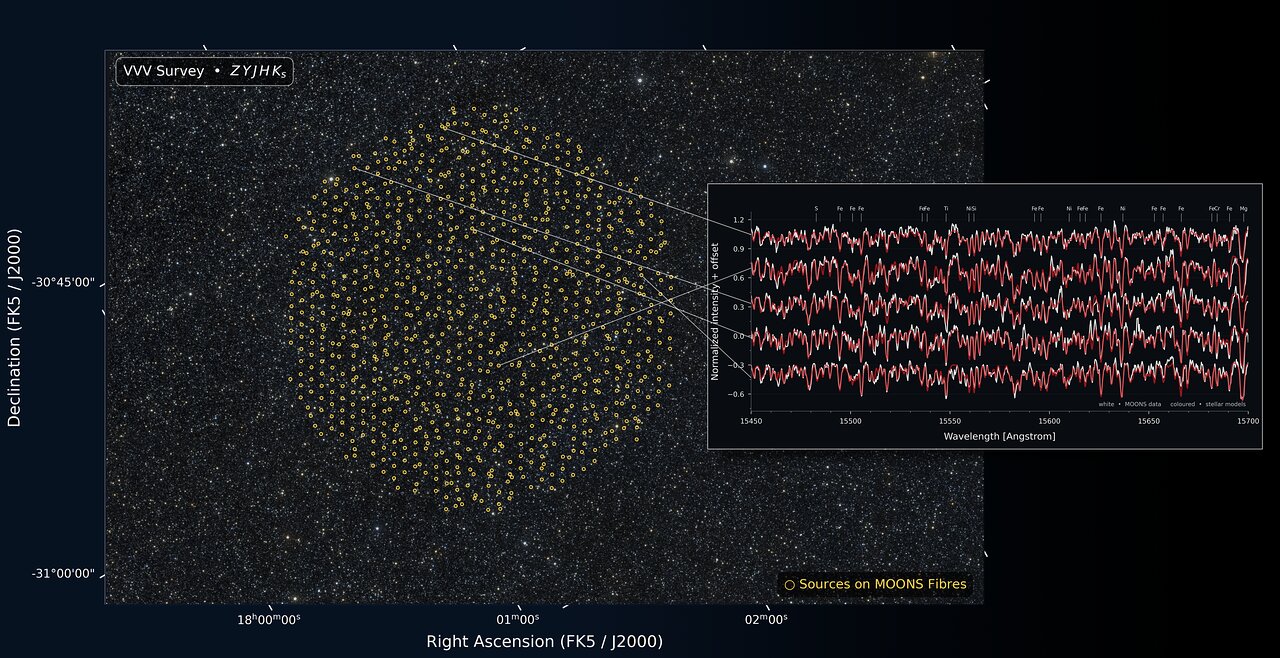
MOONS will particularly excel at disentangling how galaxies, including our own, formed and evolved over the history of the universe. The centre of our Milky Way galaxy is ‘hidden’ by cosmic dust, which blocks visible light. By collecting infrared light, MOONS enables astronomers to see through these clouds of dust. Observing in infrared also allows MOONS to monitor distant galaxies. Our Universe is expanding, which means further galaxies are moving faster away from us, which shifts the light we receive from them to longer, predominantly infrared wavelengths. MOONS is the first instrument to allow astronomers to analyse in detail so many objects in this wavelength range at the same time.
To minimise contamination from sources of infrared light around the instrument, the spectrographs of MOONS are housed in a cryostat which keeps them very cold (between –143 and –233 degrees Celsius). As the instrument is 4.5 metres tall, and weighs more than 10 tonnes, this requires 5000 litres of liquid nitrogen to cool it, making the MOONS cryostat one of the largest ever for a ground-based telescope.
First and future observations
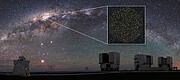
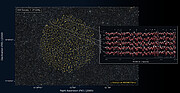
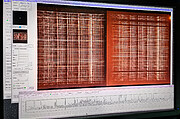
MOONS’ first-light observations demonstrated its ability to peer through dust, by targeting stars in the obscured galactic plane. “The first observations highlight the power of MOONS in numbers, sensitivity, quality and multi-wavelength. It allows us to study patterns in otherwise obscured populations, and at the same time, find the ‘odd ones out’ from thousands of stars that will pose new questions to investigate,” says Amelia Bayo, the MOONS Project Scientist at ESO
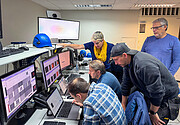
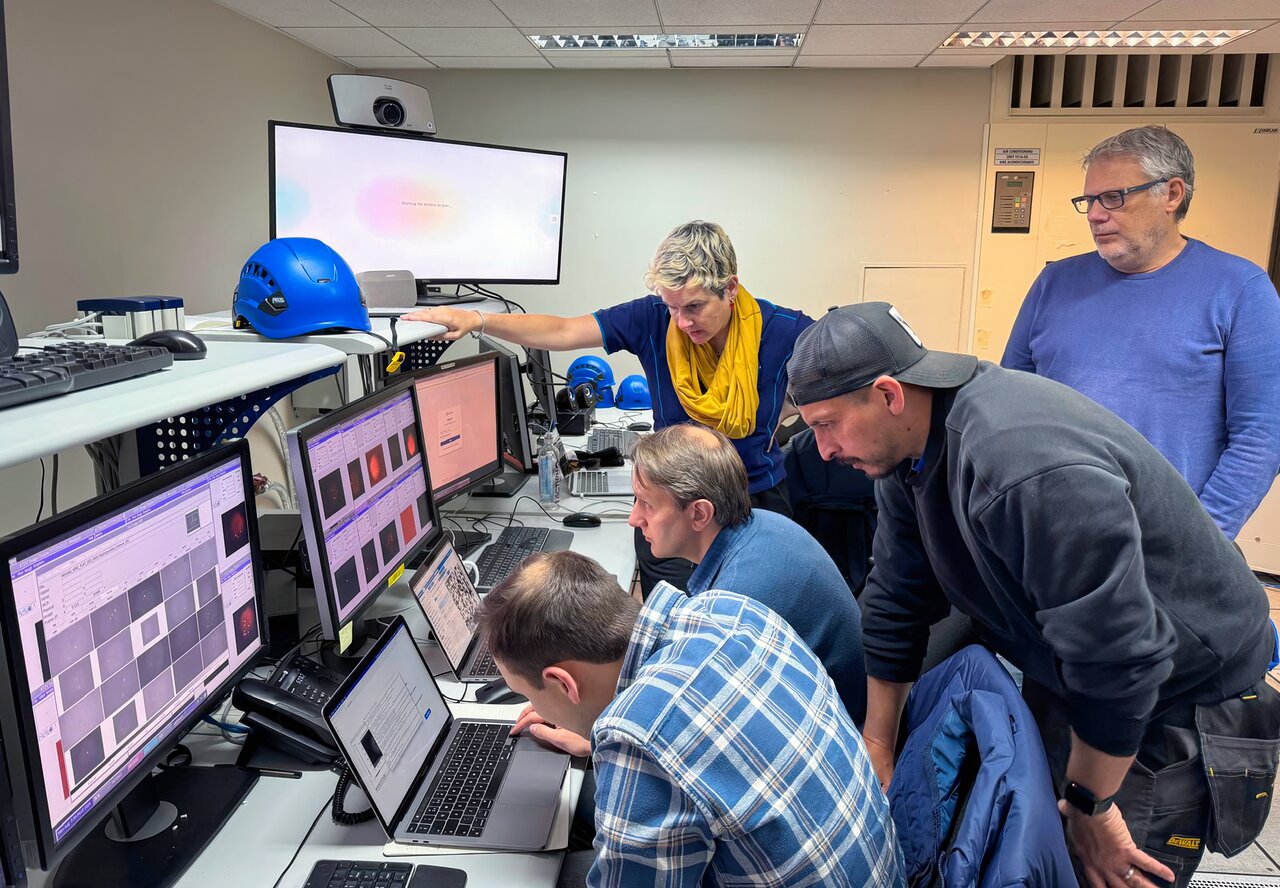
David Concar, the British Ambassador to Chile and Michele Dougherty, the Astronomer Royal and STFC Executive Chair were at Paranal to witness the first observations, together with ESO’s Director of Operations and future Director General Andreas Kaufer and other ESO and UK ATC representatives. Dougherty said: "Seeing MOONS achieve First Light was tremendously exciting. A landmark moment, not only for the international team behind this remarkable instrument, but for astronomy as a whole. And demonstrates the transformational science that innovative instrumentation can deliver.”
During its ten-year design lifetime, MOONS is expected to observe up to ten million objects, and cover multiple scientific projects at a time. Its advanced technology will benefit two core science aims: to provide crucial spectroscopic follow-up on observations of galaxies, including extremely distant ones, and to deliver precise measurements of velocities and chemical compositions and abundances for millions of stars in the Milky Way. In our galaxy, MOONS will be able to investigate stars up to 40 000 light-years away, including those in dust-shrouded areas, enabling the construction of an accurate 3D map of the Milky Way. MOONS will also unveil the mysteries of early galaxy evolution. As such, it will fill a critical gap in the astronomical toolkit, particularly in the near-infrared.
More Information
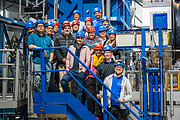
The MOONS instrument was designed and built by a consortium of universities and research institutes in Europe and Chile, namely:
- Science and Technology Facilities Council's UK Astronomy Technology Centre (UK ATC), United Kingdom (consortium lead)
- Centro de Astro-ingenieria UC (AIUC), Pontificia Universidad Catolica de Chile, Chile
- ETH Zürich, Switzerland
- Galaxies, Etoiles, Physique et Instrumentation (GEPI), Observatoire de Paris-PSL CNRS, France
- INAF, Italy
- Institute of Astronomy (IoA), University of Cambridge, United Kingdom
- Instituto de Astrofísica e Ciências do Espaço (IA), Portugal
- Université de Genève, Switzerland
ESO is an associate member of the consortium and provided the sensitive scientific detector systems used by MOONS.
Links
- UK ATC press release
- MOONS consortium website
- MOONS page on the ESO public website
- Further information on MOONS on the ESO Blog
Contatti
Bárbara Ferreira
ESO Media Manager
Garching bei München, Germany
Tel: +49 89 3200 6670
Email: press@eso.org
A proposito dell'annuncio
| Identificazione: | ann26007 |
Immagini
Our use of Cookies
We use cookies that are essential for accessing our websites and using our services. We also use cookies to analyse, measure and improve our websites’ performance, to enable content sharing via social media and to display media content hosted on third-party platforms.
ESO Cookies Policy
The European Organisation for Astronomical Research in the Southern Hemisphere (ESO) is the pre-eminent intergovernmental science and technology organisation in astronomy. It carries out an ambitious programme focused on the design, construction and operation of powerful ground-based observing facilities for astronomy.
This Cookies Policy is intended to provide clarity by outlining the cookies used on the ESO public websites, their functions, the options you have for controlling them, and the ways you can contact us for additional details.
What are cookies?
Cookies are small pieces of data stored on your device by websites you visit. They serve various purposes, such as remembering login credentials and preferences and enhance your browsing experience.
Categories of cookies we use
Essential cookies (always active): These cookies are strictly necessary for the proper functioning of our website. Without these cookies, the website cannot operate correctly, and certain services, such as logging in or accessing secure areas, may not be available; because they are essential for the website’s operation, they cannot be disabled.
Functional Cookies: These cookies enhance your browsing experience by enabling additional features and personalization, such as remembering your preferences and settings. While not strictly necessary for the website to function, they improve usability and convenience; these cookies are only placed if you provide your consent.
Analytics cookies: These cookies collect information about how visitors interact with our website, such as which pages are visited most often and how users navigate the site. This data helps us improve website performance, optimize content, and enhance the user experience; these cookies are only placed if you provide your consent. We use the following analytics cookies.
Matomo Cookies:
This website uses Matomo (formerly Piwik), an open source software which enables the statistical analysis of website visits. Matomo uses cookies (text files) which are saved on your computer and which allow us to analyze how you use our website. The website user information generated by the cookies will only be saved on the servers of our IT Department. We use this information to analyze www.eso.org visits and to prepare reports on website activities. These data will not be disclosed to third parties.
On behalf of ESO, Matomo will use this information for the purpose of evaluating your use of the website, compiling reports on website activity and providing other services relating to website activity and internet usage.
Matomo cookies settings:
Additional Third-party cookies on ESO websites: some of our pages display content from external providers, e.g. YouTube.
Such third-party services are outside of ESO control and may, at any time, change their terms of service, use of cookies, etc.
YouTube: Some videos on the ESO website are embedded from ESO’s official YouTube channel. We have enabled YouTube’s privacy-enhanced mode, meaning that no cookies are set unless the user actively clicks on the video to play it. Additionally, in this mode, YouTube does not store any personally identifiable cookie data for embedded video playbacks. For more details, please refer to YouTube’s embedding videos information page.
Cookies can also be classified based on the following elements.
Regarding the domain, there are:
- First-party cookies, set by the website you are currently visiting. They are stored by the same domain that you are browsing and are used to enhance your experience on that site;
- Third-party cookies, set by a domain other than the one you are currently visiting.
As for their duration, cookies can be:
- Browser-session cookies, which are deleted when the user closes the browser;
- Stored cookies, which stay on the user's device for a predetermined period of time.
How to manage cookies
Cookie settings: You can modify your cookie choices for the ESO webpages at any time by clicking on the link Cookie settings at the bottom of any page.
In your browser: If you wish to delete cookies or instruct your browser to delete or block cookies by default, please visit the help pages of your browser:
Please be aware that if you delete or decline cookies, certain functionalities of our website may be not be available and your browsing experience may be affected.
You can set most browsers to prevent any cookies being placed on your device, but you may then have to manually adjust some preferences every time you visit a site/page. And some services and functionalities may not work properly at all (e.g. profile logging-in, shop check out).
Updates to the ESO Cookies Policy
The ESO Cookies Policy may be subject to future updates, which will be made available on this page.
Additional information
For any queries related to cookies, please contact: pdprATesoDOTorg.
As ESO public webpages are managed by our Department of Communication, your questions will be dealt with the support of the said Department.