Comunicato Stampa
Astronomi sorpresi per la misteriosa onda d'urto che circonda una stella morta
12 Gennaio 2026

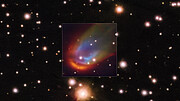
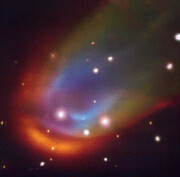
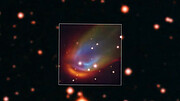
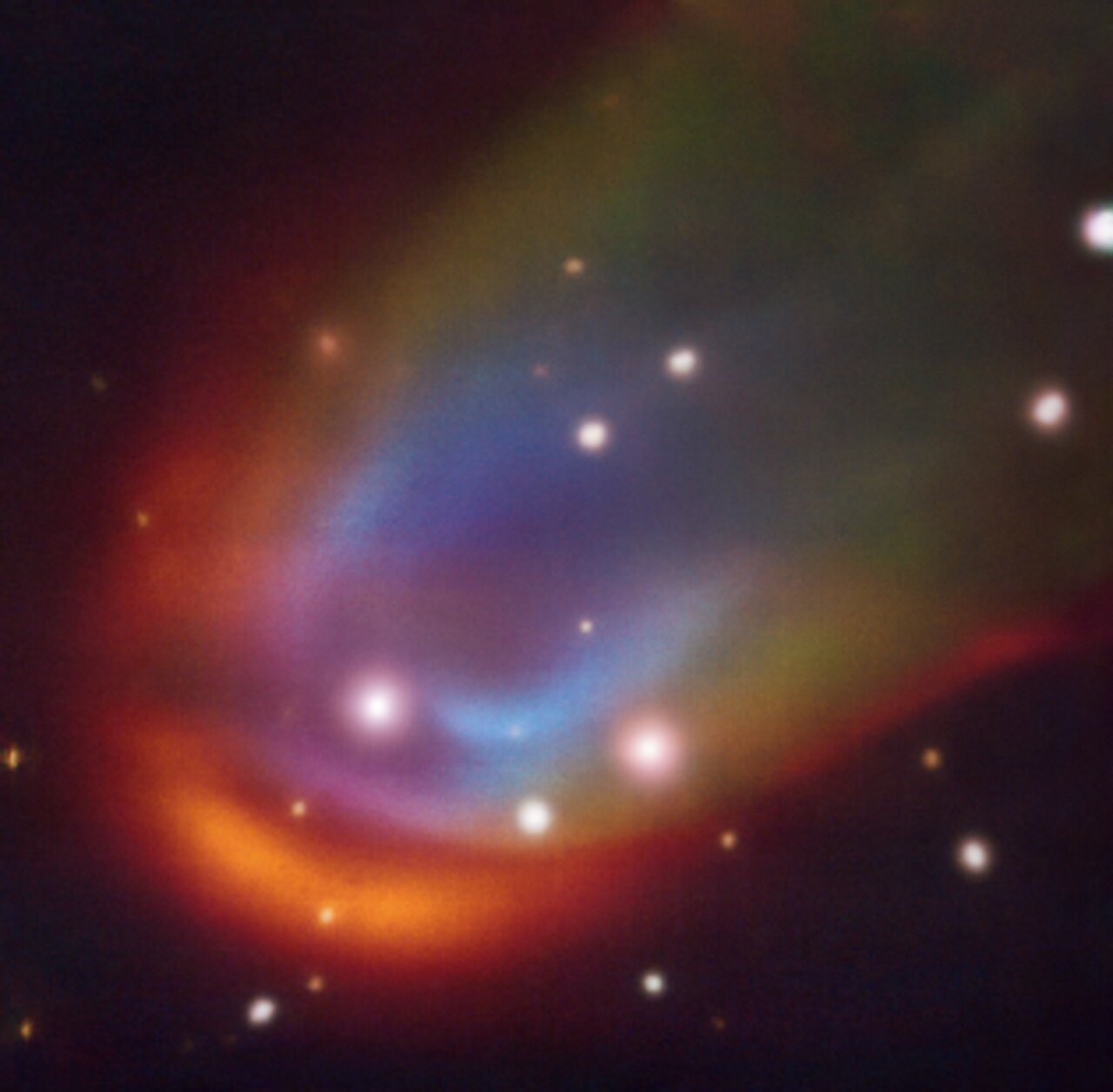
Gas e polveri che fluiscono dalle stelle possono, nelle giuste condizioni, scontrarsi con l'ambiente circostante e creare un'onda d'urto. Ora, alcuni astronomi hanno sfruttato il VLT (Very Large Telescope) dell'ESO (Osservatorio Europeo Australe) per riprendere una splendida onda d'urto che circonda una stella morta, una scoperta che li ha lasciati perplessi. Secondo tutti i meccanismi noti, la piccola stella morta RXJ0528+2838 non dovrebbe avere attorno a sé una struttura di questo tipo. Questa scoperta, tanto enigmatica quanto sorprendente, mette alla prova la nostra comprensione di come le stelle morte interagiscono con l'ambiente circostante.
"Abbiamo trovato qualcosa di mai visto prima e, cosa ancora più importante, del tutto inaspettato", afferma Simone Scaringi, professore associato presso la Durham University, Regno Unito e co-autore principale dello studio pubblicato oggi su Nature Astronomy. "Le nostre osservazioni rivelano un potente efflusso che, secondo le nostre attuali conoscenze, non dovrebbe esserci", aggiunge Krystian Ilkiewicz, ricercatore post-dottorato presso il Centro Astronomico Nicolaus Copernicus di Varsavia, Polonia, e co-responsabile dello studio. "Efflusso" (outflow in inglese) è il termine usato dagli astronomi per descrivere il materiale espulso dagli oggetti celesti.
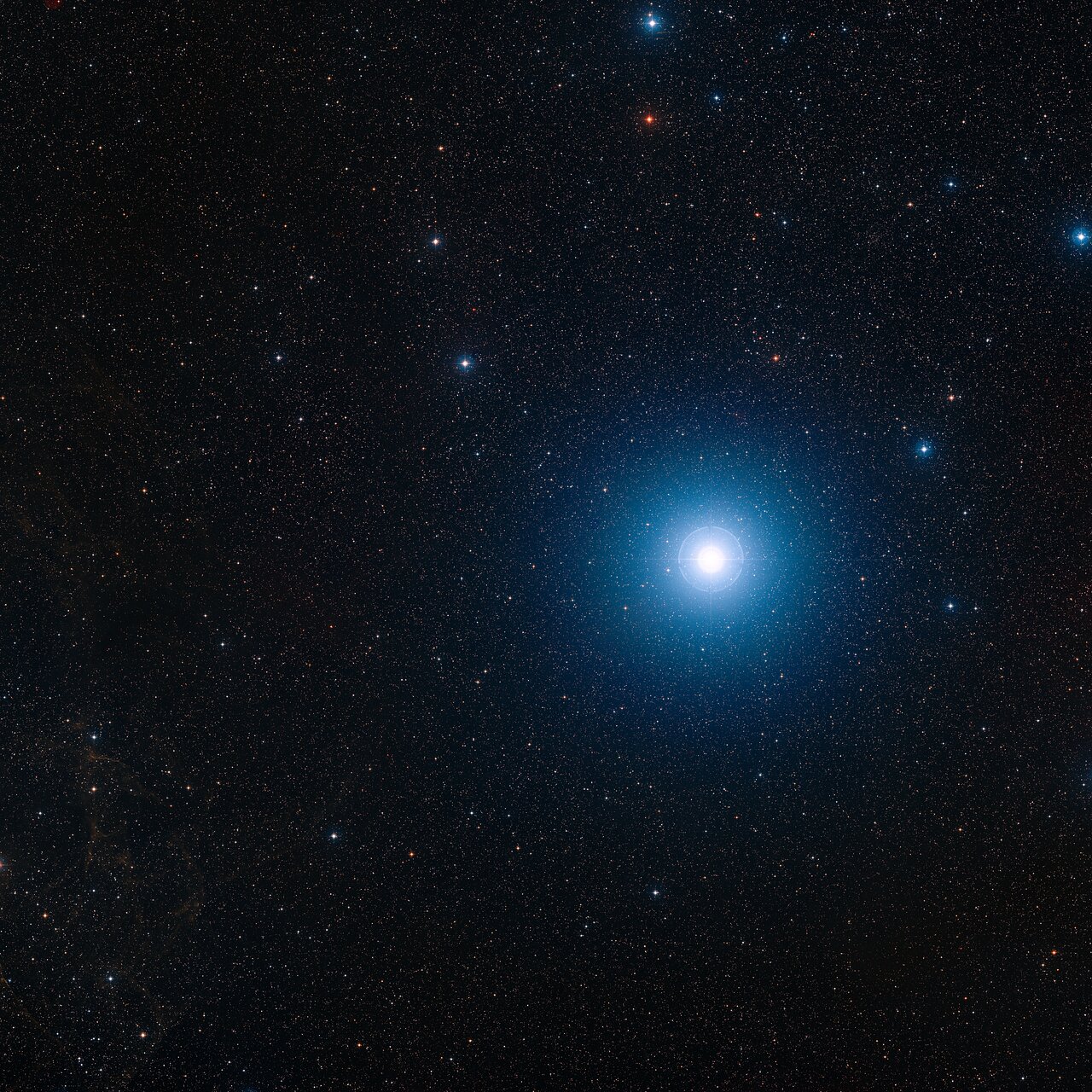
La stella RXJ0528+2838 si trova a 730 anni luce di distanza da noi e, come il Sole e altre stelle, ruota intorno al centro della nostra galassia. Durante questo moto, interagisce con il gas che permea lo spazio tra le stelle, creando un tipo di onda d'urto particolare (la cosiddetta onda di prua, o bow shock in inglese), "un arco curvo di materia, simile all'onda che si forma davanti a una nave", spiega Noel Castro Segura, ricercatore presso l'Università di Warwick nel Regno Unito e collaboratore di questo studio. Queste onde di prua sono create di solito dalla materia che fuoriesce dalla stella centrale, ma nel caso di RXJ0528+2838, nessuno dei meccanismi noti può spiegare completamente le osservazioni.
RXJ0528+2838 è una nana bianca, il nucleo residuo di una stella di piccola massa morente, e ha una compagna simile al Sole che le orbita intorno. In questi sistemi binari, la materia della stella compagna viene trasferita alla nana bianca, attraverso la formazione di un disco. Il disco alimenta la stella morta, ma parte della materia viene espulsa nello spazio, creando potenti efflussi. Ma RXJ0528+2838 non mostra segni della presenza di un disco, rendendo un mistero l'origine dell'efflusso e della nebulosa che ne risulta intorno alla stella.
"La sorpresa che un sistema apparentemente tranquillo e privo di disco potesse generare una nebulosa così spettacolare è stata uno di quei rari momenti 'wow'", assicura Scaringi.
Il gruppo di lavoro ha individuato per la prima volta una strana nebulosità intorno a RXJ0528+2838 nelle immagini del telescopio Isaac Newton in Spagna. Notandone la forma insolita, l'hanno osservata più in dettaglio con lo strumento MUSE installato sul VLT dell'ESO. "Le osservazioni con lo strumento MUSE dell'ESO ci hanno permesso di mappare in dettaglio l'onda d'urto e di analizzarne la composizione. Questo è stato fondamentale per confermare che la struttura provenga effettivamente dal sistema binario e non da una nebulosa o una nube interstellare non correlata", spiega Ilkiewicz.
La forma e le dimensioni dell'onda d'urto implicano che la nana bianca stia emettendo un potente efflusso da almeno 1000 anni. Gli scienziati non sanno esattamente come una stella morta e senza disco possa alimentare un efflusso così duraturo, ma hanno un'ipotesi.
È noto che questa nana bianca ospita un forte campo magnetico, come confermato dai dati MUSE. Il campo incanala il materiale sottratto alla stella compagna direttamente sulla nana bianca, senza formare il disco intorno ad essa. "La nostra scoperta mostra che, anche senza disco, questi sistemi possono generare potenti efflussi, rivelando un meccanismo che ancora non comprendiamo. Questa scoperta sfida l'idea corrente di come la materia si muove e interagisce in questi sistemi binari estremi", aggiunge Ilkiewicz.
I risultati suggeriscono una fonte di energia nascosta, probabilmente il forte campo magnetico, ma questo "motore misterioso", come lo definisce Scaringi, deve ancora essere studiato. I dati mostrano che la forza dell'attuale campo magnetico è sufficiente solo per alimentare un'onda d'urto della durata di poche centinaia di anni, quindi spiega solo in parte ciò che gli astronomi stanno osservando.
Per comprendere meglio la natura di questi efflussi senza disco, è necessario studiare molti altri sistemi binari. Il futuro Extremely Large Telescope (ELT) dell'ESO aiuterà gli astronomi "a mappare un numero maggiore di questi sistemi, ma anche alcuni più deboli, in dettaglio e a rivelarne di simili, contribuendo in ultima analisi a comprendere la misteriosa fonte di energia che rimane oggi inspiegata", come prevede Scaringi.
Ulteriori Informazioni
Questo risultato è stato presentato in un articolo dal titolo “A persistent bow shock in a diskless magnetised accreting white dwarf” pubblicato da Nature Astronomy (doi: 10.1038/s41550-025-02748-8).
L'equipe è composta da Krystian Ilkiewicz (Nicolaus Copernicus Astronomical Center, Polish Academy of Sciences, Warsaw, Polonia e Centre for Extragalactic Astronomy, Department of Physics, Durham University, Durham, Regno Unito [CEA Durham]), Simone Scaringi (CEA Durham e INAF-Osservatorio Astronomico di Capodimonte, Napoli, Italia [Capodimonte]), Domitilla de Martino (Capodimonte), Christian Knigge (Department of Physics & Astronomy, University of Southampton, Southampton, Regno Unito, Sara E. Motta (INAF-Osservatorio Astronomico di Brera, Merate, Italia e University of Oxford, Department of Physics, Oxford, Regno Unito [Oxford]), Nanda Rea (Institute of Space Sciences (ICE, CSIC), Barcelona, Spagna e Institut d’Estudis Espacials de Catalunya (IEEC), Castelldefels, Spagna), David Buckley (South African Astronomical Observatory, Sudafrica [SAAO] e Department of Astronomy & IDIA, University of Cape Town, Rondebosh, Sudafrica [Cape Town] e Department of Physics, University of the Free State, Bloemfontein, Sudafrica), Noel Castro Segura (Department of Physics, University of Warwick, Coventry, Regno Unito), Paul J. Groot (SAAO e Cape Town e Department of Astrophysics/IMAPP, Radboud University, Nijmegen, Paesi Bassi), Anna F. McLeod (CEA Durham e Institute for Computational Cosmology, Department of Physics, University of Durham, Durham, Regno Unito), Luke T. Parker (Oxford), e Martina Veresvarska (CEA Durham).
L'ESO (European Southern Observatory o Osservatorio Europeo Australe) consente agli scienziati di tutto il mondo di scoprire i segreti dell'Universo a beneficio di tutti. Progettiamo, costruiamo e gestiamo da terra osservatori di livello mondiale - che gli astronomi utilizzano per affrontare temi interessanti e diffondere il fascino dell'astronomia - e promuoviamo la collaborazione internazionale per l'astronomia. Fondato come organizzazione intergovernativa nel 1962, oggi l'ESO è sostenuto da 16 Stati membri (Austria, Belgio, Danimarca, Francia, Finlandia, Germania, Irlanda, Italia, Paesi Bassi, Polonia, Portogallo, Regno Unito, Repubblica Ceca, Spagna, Svezia e Svizzera), insime con il paese che ospita l'ESO, il Cile, e l'Australia come partner strategico. Il quartier generale dell'ESO e il Planetario e Centro Visite Supernova dell'ESO si trovano vicino a Monaco, in Germania, mentre il deserto cileno di Atacama, un luogo meraviglioso con condizioni uniche per osservare il cielo, ospita i nostri telescopi. L'ESO gestisce tre siti osservativi: La Silla, Paranal e Chajnantor. Sul Paranal, l’ESO gestisce il VLT (Very Large Telescope) e il VLTI (Very Large Telescope Interferometer), così come due telescopi per survey, VISTA, che lavora nell'infrarosso, e VST (VLT Survey Telescope) in luce visibile. Sempre a Paranal l'ESO ospiterà e gestirà la schiera meridionale di telescopi di CTA, il Cherenkov Telescope Array Sud, il più grande e sensibile osservatorio di raggi gamma del mondo. Insieme con partner internazionali, l’ESO gestisce APEX e ALMA a Chajnantor, due strutture che osservano il cielo nella banda millimetrica e submillimetrica. A Cerro Armazones, vicino a Paranal, stiamo costruendo "il più grande occhio del mondo rivolto al cielo" - l'ELT (Extremely Large Telescope, che significa Telescopio Estremamente Grande) dell'ESO. Dai nostri uffici di Santiago, in Cile, sosteniamo le operazioni nel paese e collaboriamo con i nostri partner e la società cileni.
La traduzione dall'inglese dei comunicati stampa dell'ESO è un servizio dalla Rete di Divulgazione Scientifica dell'ESO (ESON: ESO Science Outreach Network) composta da ricercatori e divulgatori scientifici da tutti gli Stati Membri dell'ESO e altri paesi. Il nodo italiano della rete ESON è gestito da Anna Wolter.
Links
- Articolo scientifico
- Fotografie del VLT
- Per i giornalisti: iscrivetevi per ricevere i nostri comunicati sotto embargo nella vostra lingua
- Per i ricercatori: avete una storia da raccontare? Promuovete il vostro articolo scientifico
- Una nuova analisi dell'ESO conferma che gravi danni sarebbero causati dal complesso industriale pianificato vicino al Paranal
Contatti
Krystian Iłkiewicz
Nicolaus Copernicus Astronomical Center
Warsaw, Poland
Tel.: +48 223296134
E-mail: ilkiewicz@camk.edu.pl
Simone Scaringi
Centre for Extragalactic Astronomy, Department of Physics, Durham University
Durham, UK
Cell.: +44 7737 980235
E-mail: simone.scaringi@durham.ac.uk
Noel Castro Segura
Department of Physics, University of Warwick
Coventry, UK
Tel.: +44 7859 761377
E-mail: noel.castro-segura@warwick.ac.uk
Bárbara Ferreira
ESO Media Manager
Garching bei München, Germany
Tel.: +49 89 3200 6670
Cell.: +49 151 241 664 00
E-mail: press@eso.org
Anna Wolter (press contact Italia)
Rete di divulgazione scientifica dell'ESO
e INAF-Osservatorio Astronomico di Brera
Milano, Italy
Tel.: +39 02 72320321
E-mail: eson-italy@eso.org
Sul Comunicato Stampa
| Comunicato Stampa N": | eso2601it |
| Nome: | 1RXS J052832.5+283824 |
| Tipo: | Milky Way : Star : Circumstellar Material : Outflow |
| Facility: | Very Large Telescope |
| Instruments: | MUSE |
| Science data: | 2026NatAs..10..391I |
Immagini
Video
Our use of Cookies
We use cookies that are essential for accessing our websites and using our services. We also use cookies to analyse, measure and improve our websites’ performance, to enable content sharing via social media and to display media content hosted on third-party platforms.
ESO Cookies Policy
The European Organisation for Astronomical Research in the Southern Hemisphere (ESO) is the pre-eminent intergovernmental science and technology organisation in astronomy. It carries out an ambitious programme focused on the design, construction and operation of powerful ground-based observing facilities for astronomy.
This Cookies Policy is intended to provide clarity by outlining the cookies used on the ESO public websites, their functions, the options you have for controlling them, and the ways you can contact us for additional details.
What are cookies?
Cookies are small pieces of data stored on your device by websites you visit. They serve various purposes, such as remembering login credentials and preferences and enhance your browsing experience.
Categories of cookies we use
Essential cookies (always active): These cookies are strictly necessary for the proper functioning of our website. Without these cookies, the website cannot operate correctly, and certain services, such as logging in or accessing secure areas, may not be available; because they are essential for the website’s operation, they cannot be disabled.
Functional Cookies: These cookies enhance your browsing experience by enabling additional features and personalization, such as remembering your preferences and settings. While not strictly necessary for the website to function, they improve usability and convenience; these cookies are only placed if you provide your consent.
Analytics cookies: These cookies collect information about how visitors interact with our website, such as which pages are visited most often and how users navigate the site. This data helps us improve website performance, optimize content, and enhance the user experience; these cookies are only placed if you provide your consent. We use the following analytics cookies.
Matomo Cookies:
This website uses Matomo (formerly Piwik), an open source software which enables the statistical analysis of website visits. Matomo uses cookies (text files) which are saved on your computer and which allow us to analyze how you use our website. The website user information generated by the cookies will only be saved on the servers of our IT Department. We use this information to analyze www.eso.org visits and to prepare reports on website activities. These data will not be disclosed to third parties.
On behalf of ESO, Matomo will use this information for the purpose of evaluating your use of the website, compiling reports on website activity and providing other services relating to website activity and internet usage.
Matomo cookies settings:
Additional Third-party cookies on ESO websites: some of our pages display content from external providers, e.g. YouTube.
Such third-party services are outside of ESO control and may, at any time, change their terms of service, use of cookies, etc.
YouTube: Some videos on the ESO website are embedded from ESO’s official YouTube channel. We have enabled YouTube’s privacy-enhanced mode, meaning that no cookies are set unless the user actively clicks on the video to play it. Additionally, in this mode, YouTube does not store any personally identifiable cookie data for embedded video playbacks. For more details, please refer to YouTube’s embedding videos information page.
Cookies can also be classified based on the following elements.
Regarding the domain, there are:
- First-party cookies, set by the website you are currently visiting. They are stored by the same domain that you are browsing and are used to enhance your experience on that site;
- Third-party cookies, set by a domain other than the one you are currently visiting.
As for their duration, cookies can be:
- Browser-session cookies, which are deleted when the user closes the browser;
- Stored cookies, which stay on the user's device for a predetermined period of time.
How to manage cookies
Cookie settings: You can modify your cookie choices for the ESO webpages at any time by clicking on the link Cookie settings at the bottom of any page.
In your browser: If you wish to delete cookies or instruct your browser to delete or block cookies by default, please visit the help pages of your browser:
Please be aware that if you delete or decline cookies, certain functionalities of our website may be not be available and your browsing experience may be affected.
You can set most browsers to prevent any cookies being placed on your device, but you may then have to manually adjust some preferences every time you visit a site/page. And some services and functionalities may not work properly at all (e.g. profile logging-in, shop check out).
Updates to the ESO Cookies Policy
The ESO Cookies Policy may be subject to future updates, which will be made available on this page.
Additional information
For any queries related to cookies, please contact: pdprATesoDOTorg.
As ESO public webpages are managed by our Department of Communication, your questions will be dealt with the support of the said Department.