
Comunicato Stampa
Alcuni astronomi hanno trovato la prova che Betelgeuse ha una compagna più convincente finora
"La conclusione di una ricerca lunga un secolo"
28 Luglio 2026
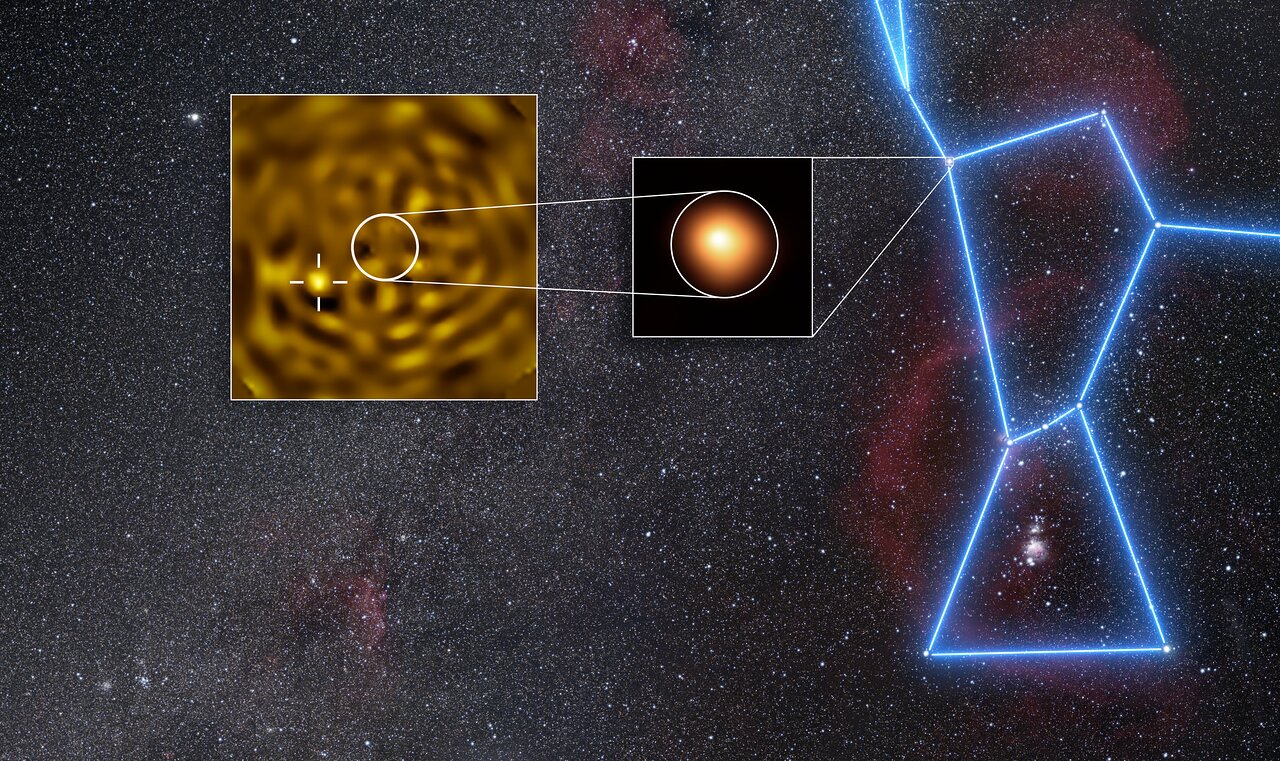
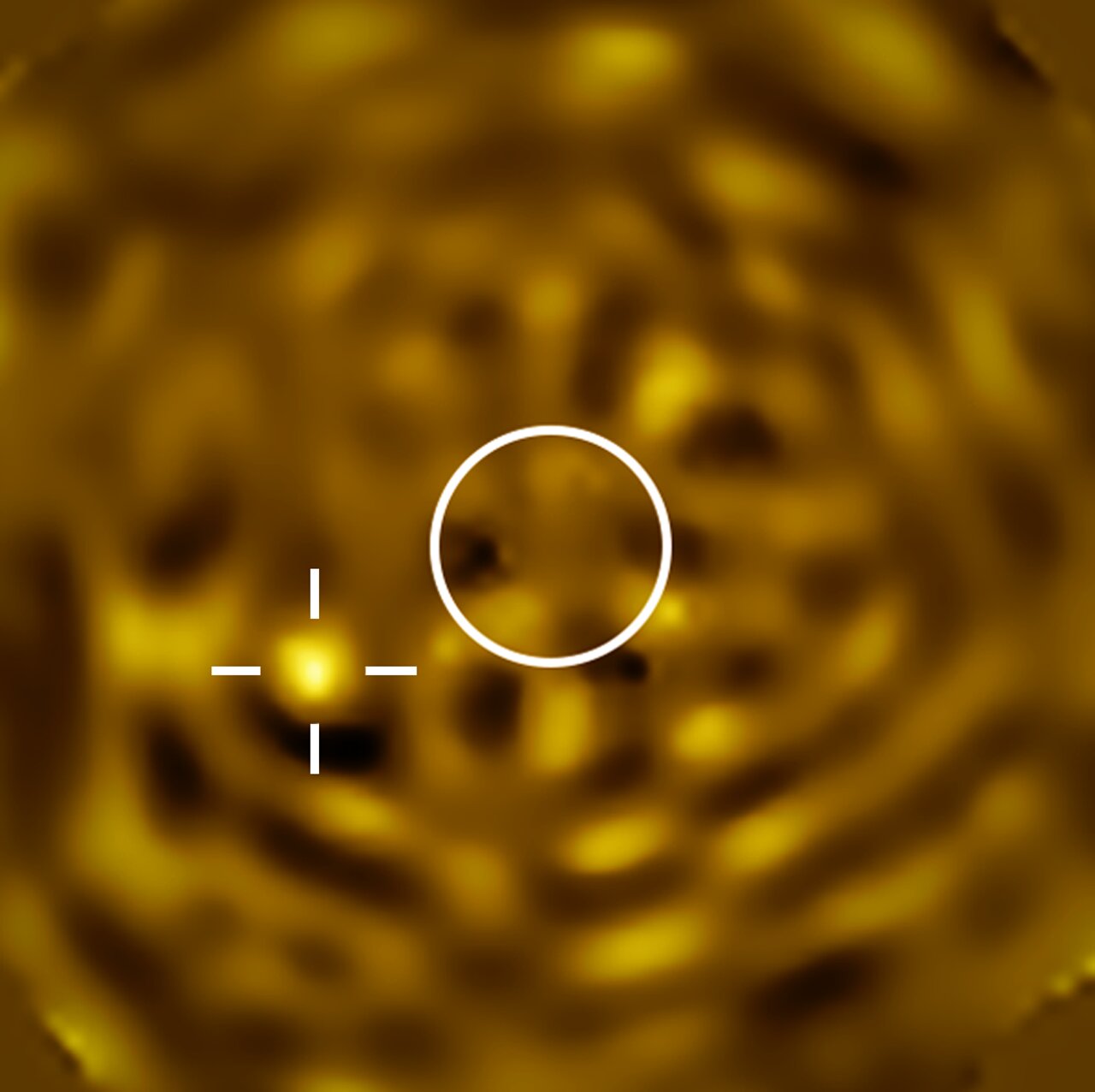
Finalmente, gli astronomi hanno prove concrete che Betelgeuse, una delle stelle più famose del cielo notturno, non è sola. Utilizzando il VLT (Very Large Telescope) dell'ESO (Osservatorio Europeo Australe), un'equipe guidata dal ricercatore francese Miguel Montargès ha ottenuto l'immagine più nitida di sempre di quella che probabilmente è Betelgeuse B, la stella in orbita intorno a Betelgeuse. "Questa è la conclusione di una ricerca lunga un secolo", afferma Montargès.
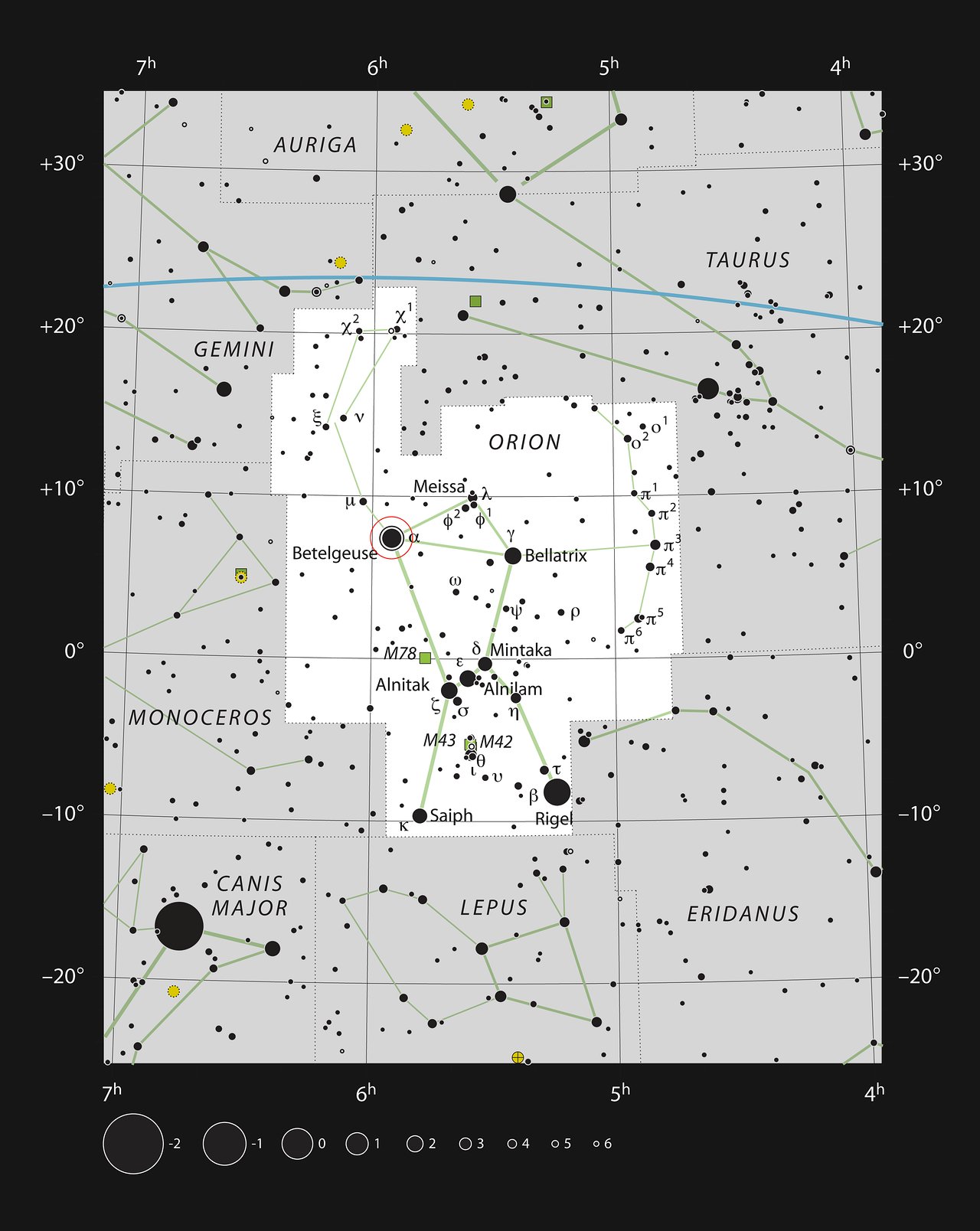
"Abbiamo dimostrato che Betelgeuse non è una stella singola, ma è accompagnata da una debole compagna", racconta Montargès, astronomo dell'Osservatorio di Parigi - PSL, in Francia, e primo autore dello studio pubblicato oggi su Astronomy & Astrophysics. Betelgeuse, una stella rossastra nella costellazione di Orione facilmente visibile a occhio nudo e nota per le sue variazioni di luminosità, è stata osservata da millenni. Eppure continua a sorprendere gli astronomi.
"Sono saltato su dalla sedia quando ho visto le immagini elaborate", ricorda Montargès. Gli astronomi hanno cercato la potenziale compagna, originariamente proposta per spiegare le variazioni di luminosità di Betelgeuse, per circa un secolo, ma senza successo. Due studi pubblicati nel 2024 avevano previsto con precisione che nel dicembre di quell'anno la compagna sarebbe stata alla maggior distanza da Betelgeuse e quindi più facile da individuare. Montargès e il suo gruppo si sono messi al lavoro, osservando la stella con il VLT dell'ESO nel dicembre 2024 e dedicando diversi mesi all'elaborazione dei dati.
"Onestamente, non pensavo che avessimo la sensibilità necessaria per rivelare Betelgeuse B come previsto", spiega Montargès. "Invece, poichè è più massiccia del previsto, l'abbiamo vista!" Inizialmente si pensava avesse una massa simile a quella del Sole, ma le nuove osservazioni rivelano che Betelgeuse B ha invece una massa pari a circa due o tre volte quella del Sole. "Il fatto che siamo riusciti a scoprire una compagna vicina, più massiccia e luminosa del Sole, intorno a una stella così ben studiata è straordinario", afferma Montargès. "Questi sono tra i migliori momenti nella scienza: vedere qualcosa di nuovo, di inaspettato."
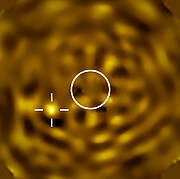
Betelgeuse B è stata ripresa direttamente, ovvero è stata rivelata la luce emessa dalla stella stessa, utilizzando lo strumento SPHERE del VLT dell'ESO nel deserto di Atacama, in Cile. Nonostante esistessero già alcune indizi dell'esistenza di questa stella compagna, tra cui una possibile osservazione diretta con il telescopio Gemini North alle Hawaii (USA), questa è la prova più convincente e l'immagine più nitida finora ottenuta di Betelgeuse B. "È straordinario vedere come SPHERE e le tecniche avanzate di post-elaborazione, originariamente sviluppate per individuare gli esopianeti, eccellano anche nel trovare la compagna di una stella massiccia ed evoluta come Betelgeuse", commenta il coautore Anthony Boccaletti, anch'egli astronomo presso l'Osservatorio di Parigi.
"Per essere certi che la compagna sia effettivamente presente, dobbiamo osservarla ancora tra un anno, dall'altro lato della stella, ma ormai c'è poco spazio per i dubbi", aggiunge Montargès.
Qualche anno fa, Betelgeuse è stata oggetto di attenzione da parte di astronomi e non solo, quando ha iniziato a mostrare un evidente affievolimento della luminosità. Essendo una stella supergigante evoluta, Betelgeuse dovrebbe morire con un'esplosione di supernova, e il diminuire della sua intensità aveva portato alcuni a ipotizzare che l'evento potesse essere imminente. Un gruppo di astronomi guidato da Montargès aveva studiato la stella con il VLT dell'ESO, scoprendo che era invece oscurata da una nube di polvere.
La potenziale scoperta di Betelgeuse B spingerà gli astronomi a indagare su come la compagna potrebbe influenzare l'attesa esplosione di supernova di Betelgeuse. "La questione è davvero aperta: questa compagna avrà veramente un impatto sull'evoluzione della supergigante rossa?", conclude Montargès.
Ulteriori Informazioni
Questo risultato è stato presentato in un articolo intitolato “VLT/SPHERE images the candidate companion of Betelgeuse” pubblicato su Astronomy & Astrophysics.
L'equipe è composta da M. Montargès (Laboratoire d'Instrumentation et de Recherche en Astrophysique, Observatoire de Paris, Université PSL, Sorbonne Université, Université Paris Cité, CY Cergy Paris Université, CNRS, Francia [LIRA]), A. Boccaletti (LIRA), O. Flasseur (Universite Claude Bernard Lyon 1, Centre de Recherche Astrophysique de Lyon UMR5574, ENS de Lyon, CNRS, Francia), A. de Koter (University of Amsterdam, Anton Pannekoek Institute for Astronomy, Paesi Bassi), J. Milli (Univ. Grenoble Alpes, CNRS, IPAG, Francia), P. Kervella (French-Chilean Laboratory for Astronomy, IRL 3386, CNRS e U. de Chile, Cile and LIRA), S. Ridgway (National Optical Astronomy Observatory, USA), E. Bordier (I. Physikalisches Institut der Universität zu Köln, Germania), E. Lagadec (Université Côte dAzur, Observatoire de la Côte dAzur, CNRS, Laboratoire Lagrange, Francia), A. K. Dupree (Center for Astrophysics-Harvard & Smithsonian, USA), F. Backs (Institute of Astronomy, KU Leuven, Belgio), T. Calderwood (American Association of Variable Star Observers, USA [AAVSO]), e P. Morgan (AAVSO).
L'ESO (European Southern Observatory o Osservatorio Europeo Australe) consente agli scienziati di tutto il mondo di scoprire i segreti dell'Universo a beneficio di tutti. Progettiamo, costruiamo e gestiamo da terra osservatori di livello mondiale - che gli astronomi utilizzano per affrontare temi interessanti e diffondere il fascino dell'astronomia - e promuoviamo la collaborazione internazionale per l'astronomia. Fondato come organizzazione intergovernativa nel 1962, oggi l'ESO è sostenuto da 16 Stati membri (Austria, Belgio, Danimarca, Francia, Finlandia, Germania, Irlanda, Italia, Paesi Bassi, Polonia, Portogallo, Regno Unito, Repubblica Ceca, Spagna, Svezia e Svizzera), insime con il paese che ospita l'ESO, il Cile, e l'Australia come partner strategico. Il quartier generale dell'ESO e il Planetario e Centro Visite Supernova dell'ESO si trovano vicino a Monaco, in Germania, mentre il deserto cileno di Atacama, un luogo meraviglioso con condizioni uniche per osservare il cielo, ospita i nostri telescopi. L'ESO gestisce tre siti osservativi: La Silla, Paranal e Chajnantor. Sul Paranal, l’ESO gestisce il VLT (Very Large Telescope) e il VLTI (Very Large Telescope Interferometer), così come due telescopi per survey, VISTA, che lavora nell'infrarosso, e VST (VLT Survey Telescope) in luce visibile. Sempre a Paranal l'ESO ospiterà e gestirà la schiera meridionale di telescopi di CTA, il Cherenkov Telescope Array Sud, il più grande e sensibile osservatorio di raggi gamma del mondo. Insieme con partner internazionali, l’ESO gestisce APEX e ALMA a Chajnantor, due strutture che osservano il cielo nella banda millimetrica e submillimetrica. A Cerro Armazones, vicino a Paranal, stiamo costruendo "il più grande occhio del mondo rivolto al cielo" - l'ELT (Extremely Large Telescope, che significa Telescopio Estremamente Grande) dell'ESO. Dai nostri uffici di Santiago, in Cile, sosteniamo le operazioni nel paese e collaboriamo con i nostri partner e la società cileni.
La traduzione dall'inglese dei comunicati stampa dell'ESO è un servizio dalla Rete di Divulgazione Scientifica dell'ESO (ESON: ESO Science Outreach Network) composta da ricercatori e divulgatori scientifici da tutti gli Stati Membri dell'ESO e altri paesi. Il nodo italiano della rete ESON è gestito da Anna Wolter.
Links
- Articolo scientifico
- Fotografie del VLT
- Per i giornalisti: iscrivetevi per ricevere i nostri comunicati sotto embargo nella vostra lingua
- Per i ricercatori: avete una storia da raccontare? Promuovete il vostro articolo scientifico
Contatti
Miguel Montargès
LIRA, Observatoire de Paris, PSL University
Paris, France
Tel.: +33 (0)1 45 07 76 95
E-mail: miguel.montarges@observatoiredeparis.psl.eu
Anthony Boccaletti
LIRA, Observatoire de Paris, PSL University
Paris, France
E-mail: anthony.boccaletti@observatoiredeparis.psl.eu
Bárbara Ferreira
ESO Media Manager
Garching bei München, Germany
Tel.: +49 89 3200 6670
Cell.: +49 151 241 664 00
E-mail: press@eso.org
Anna Wolter (press contact Italia)
Rete di divulgazione scientifica dell'ESO
e INAF-Osservatorio Astronomico di Brera
Milano, Italy
Tel.: +39 02 72320321
E-mail: eson-italy@eso.org
Sul Comunicato Stampa
| Comunicato Stampa N": | eso2611it |
| Nome: | Betelgeuse, Betelgeuse B |
| Tipo: | Milky Way : Star : Grouping : Binary |
| Facility: | Very Large Telescope |
| Instruments: | SPHERE |
| Science data: | 2026A&A...711L..12M |
Immagini

soltanto in inglese

Video


Our use of Cookies
We use cookies that are essential for accessing our websites and using our services. We also use cookies to analyse, measure and improve our websites’ performance, to enable content sharing via social media and to display media content hosted on third-party platforms.
ESO Cookies Policy
The European Organisation for Astronomical Research in the Southern Hemisphere (ESO) is the pre-eminent intergovernmental science and technology organisation in astronomy. It carries out an ambitious programme focused on the design, construction and operation of powerful ground-based observing facilities for astronomy.
This Cookies Policy is intended to provide clarity by outlining the cookies used on the ESO public websites, their functions, the options you have for controlling them, and the ways you can contact us for additional details.
What are cookies?
Cookies are small pieces of data stored on your device by websites you visit. They serve various purposes, such as remembering login credentials and preferences and enhance your browsing experience.
Categories of cookies we use
Essential cookies (always active): These cookies are strictly necessary for the proper functioning of our website. Without these cookies, the website cannot operate correctly, and certain services, such as logging in or accessing secure areas, may not be available; because they are essential for the website’s operation, they cannot be disabled.
Functional Cookies: These cookies enhance your browsing experience by enabling additional features and personalization, such as remembering your preferences and settings. While not strictly necessary for the website to function, they improve usability and convenience; these cookies are only placed if you provide your consent.
Analytics cookies: These cookies collect information about how visitors interact with our website, such as which pages are visited most often and how users navigate the site. This data helps us improve website performance, optimize content, and enhance the user experience; these cookies are only placed if you provide your consent. We use the following analytics cookies.
Matomo Cookies:
This website uses Matomo (formerly Piwik), an open source software which enables the statistical analysis of website visits. Matomo uses cookies (text files) which are saved on your computer and which allow us to analyze how you use our website. The website user information generated by the cookies will only be saved on the servers of our IT Department. We use this information to analyze www.eso.org visits and to prepare reports on website activities. These data will not be disclosed to third parties.
On behalf of ESO, Matomo will use this information for the purpose of evaluating your use of the website, compiling reports on website activity and providing other services relating to website activity and internet usage.
Matomo cookies settings:
Additional Third-party cookies on ESO websites: some of our pages display content from external providers, e.g. YouTube.
Such third-party services are outside of ESO control and may, at any time, change their terms of service, use of cookies, etc.
YouTube: Some videos on the ESO website are embedded from ESO’s official YouTube channel. We have enabled YouTube’s privacy-enhanced mode, meaning that no cookies are set unless the user actively clicks on the video to play it. Additionally, in this mode, YouTube does not store any personally identifiable cookie data for embedded video playbacks. For more details, please refer to YouTube’s embedding videos information page.
Cookies can also be classified based on the following elements.
Regarding the domain, there are:
- First-party cookies, set by the website you are currently visiting. They are stored by the same domain that you are browsing and are used to enhance your experience on that site;
- Third-party cookies, set by a domain other than the one you are currently visiting.
As for their duration, cookies can be:
- Browser-session cookies, which are deleted when the user closes the browser;
- Stored cookies, which stay on the user's device for a predetermined period of time.
How to manage cookies
Cookie settings: You can modify your cookie choices for the ESO webpages at any time by clicking on the link Cookie settings at the bottom of any page.
In your browser: If you wish to delete cookies or instruct your browser to delete or block cookies by default, please visit the help pages of your browser:
Please be aware that if you delete or decline cookies, certain functionalities of our website may be not be available and your browsing experience may be affected.
You can set most browsers to prevent any cookies being placed on your device, but you may then have to manually adjust some preferences every time you visit a site/page. And some services and functionalities may not work properly at all (e.g. profile logging-in, shop check out).
Updates to the ESO Cookies Policy
The ESO Cookies Policy may be subject to future updates, which will be made available on this page.
Additional information
For any queries related to cookies, please contact: pdprATesoDOTorg.
As ESO public webpages are managed by our Department of Communication, your questions will be dealt with the support of the said Department.