Press Release
Construction begins on the first and largest gamma-ray observatory in Chile
18 December 2025
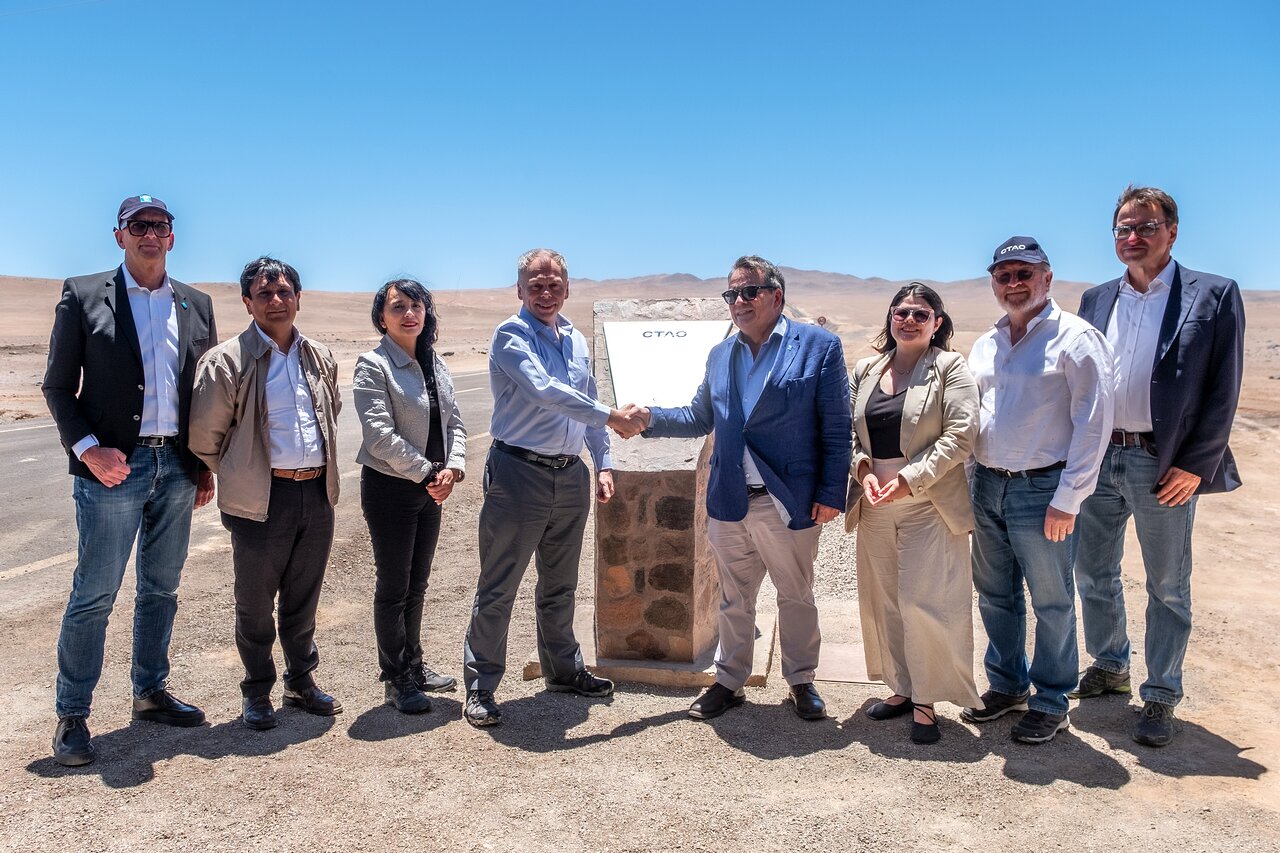
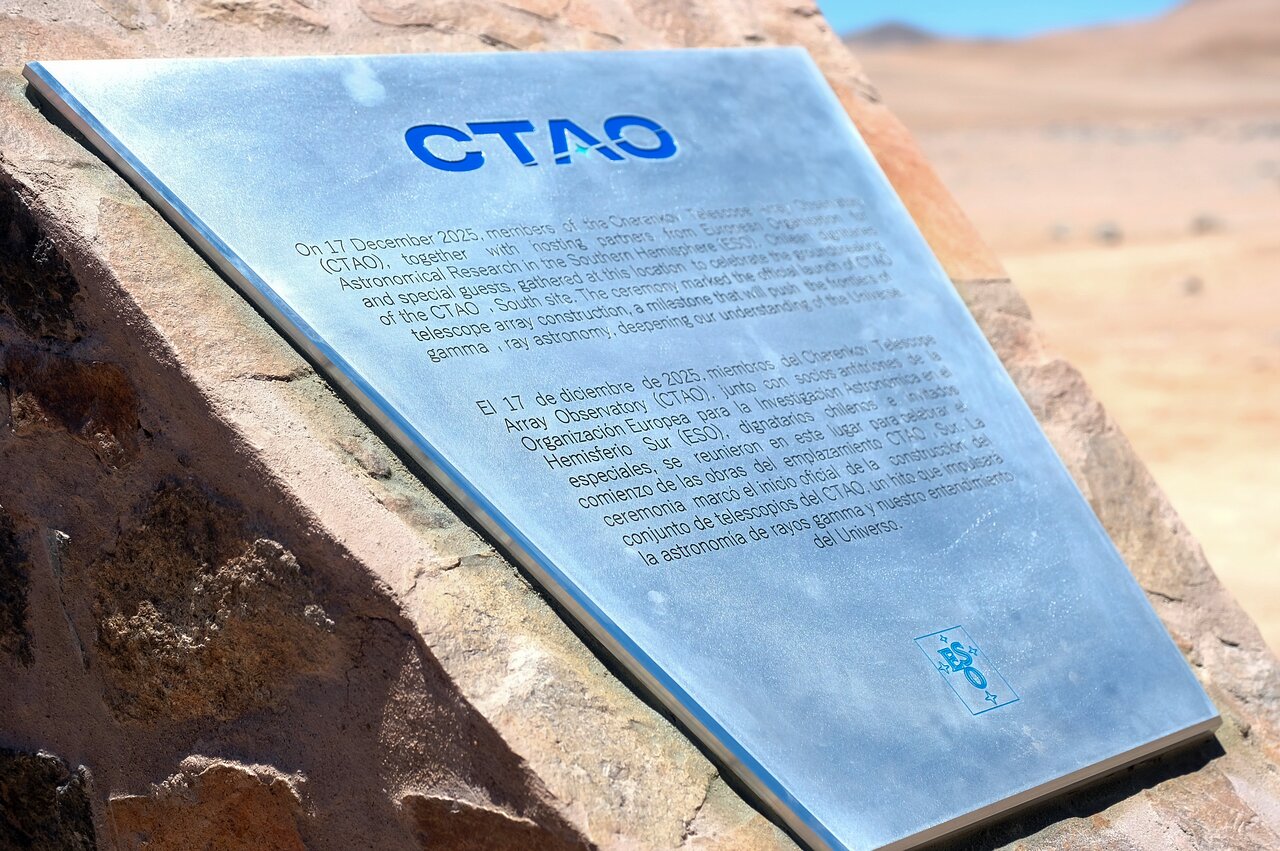
Yesterday, a groundbreaking ceremony for the CTAO’s southern array facility took place at the European Southern Observatory’s (ESO’s) Paranal site in Chile, marking the beginning of construction of the telescope foundations. The CTAO, or Cherenkov Telescope Array Observatory, will be the world’s largest and most powerful gamma-ray observatory, providing new insights into the high-energy Universe. Its southern array will be the first gamma-ray observatory to be built in Chile.
“We are happy to welcome this innovative facility to ESO’s family. It’s our pleasure to see the start of construction of the southern site of this powerful observatory here at Paranal in Chile’s Atacama Desert — a place with the most pristine skies on Earth. This groundbreaking is a huge milestone for both the CTAO and ESO, but also for Chile as this new facility will strengthen the country’s position as a global hub for astronomy,” said ESO Director General Xavier Barcons in his welcoming speech during the groundbreaking ceremony.
The CTAO is an international project, in which ESO is a founding partner and host to its southern array; several ESO Member States are also involved in the project and scientific teams around the world, including in Chile, are preparing to observe with this facility in the coming years. The start of the construction of the foundations, work being led by a consortium of Chilean companies, paves the way for the first telescopes to be deployed at Paranal by the end of 2026.
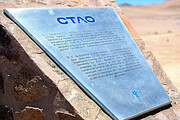
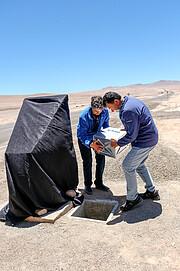
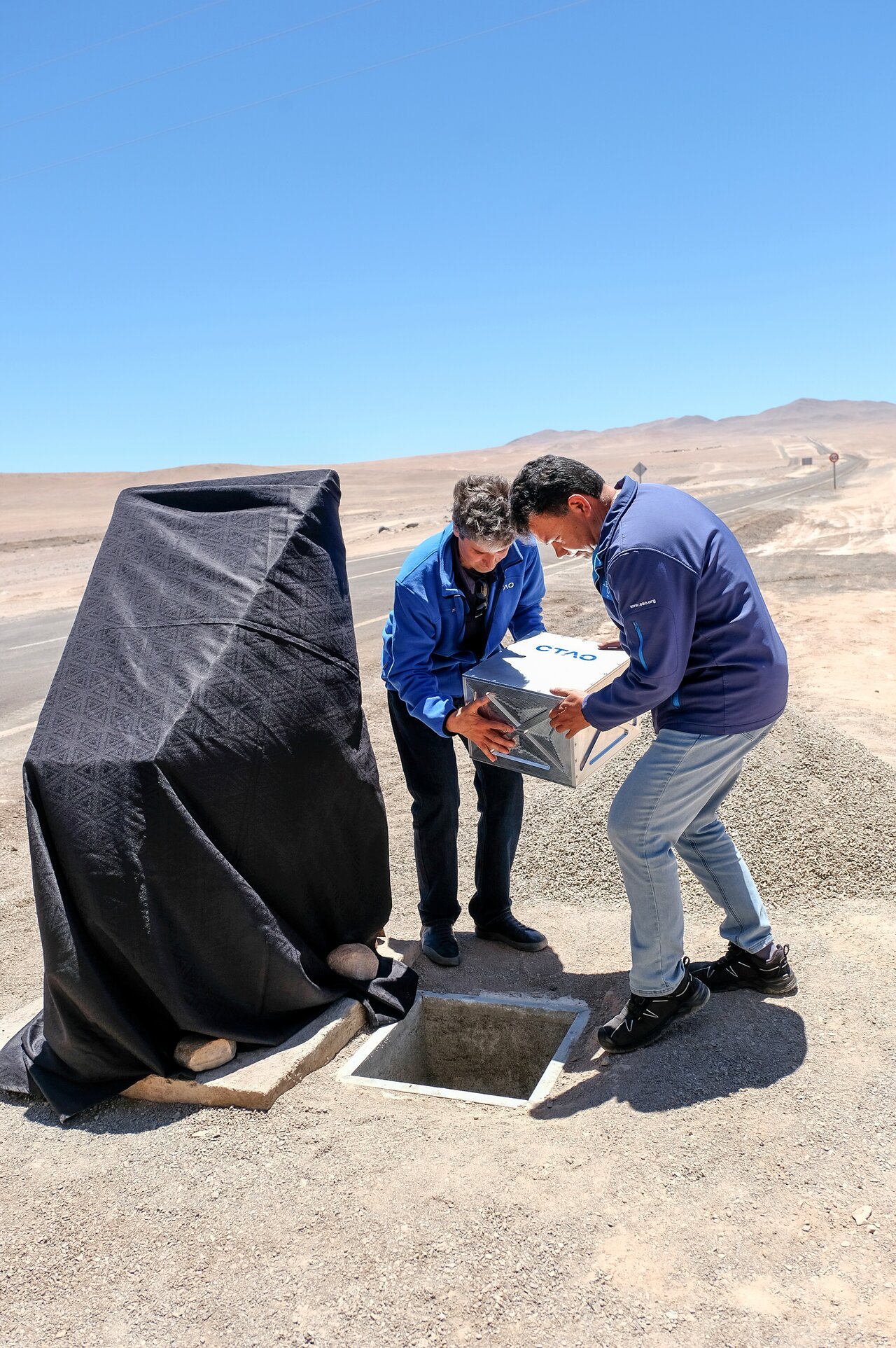
For the celebration, representatives of CTAO, ESO, the Chilean government and local authorities gathered at ESO’s Paranal Observatory. In addition to ESO’s Director General, participants at the ceremony included Andreas Kaufer, ESO Director of Operations; Thomas Klein, ESO Director of La Silla Paranal Observatory; Volker Heinz, CTAO Construction Programme Manager; Stuart McMuldroch, CTAO Director General; Francisco Colomer, Chair of the CTAO ERIC Council; Ricardo Díaz, Governor of the Antofagasta Region; Valeska Molina, Regional Secretary of the Ministry of Science, Technology and Innovation for Antofagasta Region; and Alejandra Pizarro, Director of the Chilean National Agency for Research and Development (ANID). Following a welcome and speeches, a time capsule was buried next to the future array area. It was filled with elements from Chile and CTAO partners, as well as scientific items, representing good wishes and goals for the telescopes now under construction.
“Thanks to the commitment of our partners from around the world and the support of ESO as our hosts here in Chile, we are now turning a vision into reality as construction begins on what will be the most advanced gamma-ray observatory on Earth,” said McMuldroch.
“We are proud to host the CTAO’s southern array and operate it right here at ESO’s Paranal Observatory, together with ESO’s Very Large Telescope and ESO’s Extremely Large Telescope,” said Klein. “This revolutionary facility will transform our understanding of the Universe, opening a new window onto the most energetic phenomena in the cosmos”.
The CTAO is designed to detect very high-energy gamma-rays emitted by the most violent and powerful events in the Universe. It will comprise over 60 telescopes at two sites: CTAO-South and CTAO-North [1] — one in each hemisphere — with a total collection area of over 1 million square metres. The southern site alone will have more than 50 telescopes, designed to capture a broad energy range — from 20 GeV to 300 TeV, billions of times more energetic than visible light [2].
The CTAO will detect high-energy radiation with unprecedented accuracy and precision, far outstripping current gamma-ray telescopes. When an energetic gamma photon hits Earth’s atmosphere, it produces a cascade of particles that cause the emission of what is known as Cherenkov radiation — a characteristic faint blue visible-light flash. This flash lasts only a few billionths of a second so it must be imaged with super-fast and sensitive cameras, with telescopes of enormous light-gathering power operating under pristine dark skies.
By pinpointing the sources of these gamma-rays, CTAO will provide deeper insights than ever before into the most extreme events and objects in our Universe, focusing on key areas like: understanding the origin and role of relativistic cosmic particles; probing extreme environments such as black holes and neutron stars; and exploring the frontiers of physics by searching for dark matter and testing the limits of Einstein’s theory of relativity.
In 2018 the CTAO, ESO and Chilean authorities signed agreements to have the CTAO southern array hosted at ESO’s Paranal Observatory, less than ten kilometres southeast of the location of ESO’s Very Large Telescope. This region in the Chilean Atacama Desert provides the clearest and darkest skies of any astronomical observatory on Earth, thanks to Chile’s geography and the country’s commitment to the preservation of its night skies.
“By building such a powerful and important facility in this area, ESO and CTAO hold deep trust that Chilean authorities will safeguard this extraordinary site for generations to come, and secure the huge value that astronomical facilities like CTAO generate locally and globally,” says Barcons.
“Paranal is a unique place in the world to study the Universe,” highlighted Heinz. "The Atacama Desert now welcomes another world-leading facility, and, in just one year, we expect to have here CTAO telescopes providing the first-ever observations of the gamma-ray sky from Chile.”
Notes
[1] The northern hemisphere site is located at the Instituto Astrofísica de Canarias Observatorio del Roque de los Muchachos on the island of La Palma, Spain.
[2] GeV and TeV stand for giga-electronvolts and tera-electronvolts, respectively. For comparison, visible light has an energy of just a couple of electron-volts.
More information
The CTAO ERIC (also known as CTAO Central Organisation) is in charge of the construction and operation of the CTAO. Thus, it is made up of the groups and people dedicated to the management and administration of the Observatory’s development and the overall project, science, computing and systems engineering activities. The high-level organisational structure is broken into five main groups: Director’s Office, On-Site Construction, Project Office, Project Science Office, and Administration Office. The Central Organisation is responsible for managing the CTAO’s four sites: the Headquarters hosted by the Istituto Nazionale di Astrofisica (INAF) in Bologna (Italy), the Science Data Management Centre hosted by the Deutsches Elektronen-Synchrotron DESY in Zeuthen (Germany) and the two telescope arrays, CTAO-North at the Instituto de Astrofísica de Canarias’ (IAC’s) Roque de los Muchachos Observatory on La Palma (Spain), and CTAO-South, at the ESO’s Paranal Observatory in the Atacama Desert (Chile).
This group works in close cooperation with partners from around the world toward the development of the Observatory. Major partners include In-Kind Contribution Collaborations that are developing essential hardware and software, in addition to the CTAO Consortium, an international group of researchers who works on the scientific exploitation of the Observatory.
The CTAO ERIC members include Austria, Croatia, the Czech Republic, the European Southern Observatory (ESO), France, Germany, Italy, Poland, Slovenia, Spain, and Switzerland. Further countries — Australia, Brazil, Japan, South Africa, and the United States — are engaged in the process of joining the CTAO ERIC as Strategic Partners or Third Parties.
The European Southern Observatory (ESO) enables scientists worldwide to discover the secrets of the Universe for the benefit of all. We design, build and operate world-class observatories on the ground — which astronomers use to tackle exciting questions and spread the fascination of astronomy — and promote international collaboration for astronomy. Established as an intergovernmental organisation in 1962, today ESO is supported by 16 Member States (Austria, Belgium, Czechia, Denmark, France, Finland, Germany, Ireland, Italy, the Netherlands, Poland, Portugal, Spain, Sweden, Switzerland and the United Kingdom), along with the host state of Chile and with Australia as a Strategic Partner. ESO’s headquarters and its visitor centre and planetarium, the ESO Supernova, are located close to Munich in Germany, while the Chilean Atacama Desert, a marvellous place with unique conditions to observe the sky, hosts our telescopes. ESO operates three observing sites: La Silla, Paranal and Chajnantor. At Paranal, ESO operates the Very Large Telescope and its Very Large Telescope Interferometer, as well as survey telescopes such as VISTA. Also at Paranal, ESO will host and operate the south array of the Cherenkov Telescope Array Observatory, the world’s largest and most sensitive gamma-ray observatory. Together with international partners, ESO operates ALMA on Chajnantor, a facility that observes the skies in the millimetre and submillimetre range. At Cerro Armazones, near Paranal, we are building “the world’s biggest eye on the sky” — ESO’s Extremely Large Telescope. From our offices in Santiago, Chile we support our operations in the country and engage with Chilean partners and society.
Links
- CTAO website
- The CTAO on the ESO Blog: Exploring the Universe at the highest energies
- Read more about CTAO on the ESO website
- Paranal Observatory to Host World’s Largest Gamma-Ray Telescope
Contacts
Bárbara Ferreira
ESO Media Manager
Garching bei München, Germany
Tel: +49 89 3200 6670
Cell: +49 151 241 664 00
Email: press@eso.org
Francisco Rodríguez
ESO Head of Communication Chile
Santiago, Chile
Tel: +56 2 2463 3151
Email: francisco.rodriguez@eso.org
Alba Fernández-Barral
CTAO Chief Communications Officer
Tel: +39-051-6357-270
Email: alba.fernandezbarral@cta-observatory.org
About the Release
| Release No.: | eso2521 |
| Name: | Cherenkov Telescope Array |
| Type: | Unspecified : Technology : Observatory |
| Facility: | Cherenkov Telescope Array |
Images

Our use of Cookies
We use cookies that are essential for accessing our websites and using our services. We also use cookies to analyse, measure and improve our websites’ performance, to enable content sharing via social media and to display media content hosted on third-party platforms.
ESO Cookies Policy
The European Organisation for Astronomical Research in the Southern Hemisphere (ESO) is the pre-eminent intergovernmental science and technology organisation in astronomy. It carries out an ambitious programme focused on the design, construction and operation of powerful ground-based observing facilities for astronomy.
This Cookies Policy is intended to provide clarity by outlining the cookies used on the ESO public websites, their functions, the options you have for controlling them, and the ways you can contact us for additional details.
What are cookies?
Cookies are small pieces of data stored on your device by websites you visit. They serve various purposes, such as remembering login credentials and preferences and enhance your browsing experience.
Categories of cookies we use
Essential cookies (always active): These cookies are strictly necessary for the proper functioning of our website. Without these cookies, the website cannot operate correctly, and certain services, such as logging in or accessing secure areas, may not be available; because they are essential for the website’s operation, they cannot be disabled.
Functional Cookies: These cookies enhance your browsing experience by enabling additional features and personalization, such as remembering your preferences and settings. While not strictly necessary for the website to function, they improve usability and convenience; these cookies are only placed if you provide your consent.
Analytics cookies: These cookies collect information about how visitors interact with our website, such as which pages are visited most often and how users navigate the site. This data helps us improve website performance, optimize content, and enhance the user experience; these cookies are only placed if you provide your consent. We use the following analytics cookies.
Matomo Cookies:
This website uses Matomo (formerly Piwik), an open source software which enables the statistical analysis of website visits. Matomo uses cookies (text files) which are saved on your computer and which allow us to analyze how you use our website. The website user information generated by the cookies will only be saved on the servers of our IT Department. We use this information to analyze www.eso.org visits and to prepare reports on website activities. These data will not be disclosed to third parties.
On behalf of ESO, Matomo will use this information for the purpose of evaluating your use of the website, compiling reports on website activity and providing other services relating to website activity and internet usage.
Matomo cookies settings:
Additional Third-party cookies on ESO websites: some of our pages display content from external providers, e.g. YouTube.
Such third-party services are outside of ESO control and may, at any time, change their terms of service, use of cookies, etc.
YouTube: Some videos on the ESO website are embedded from ESO’s official YouTube channel. We have enabled YouTube’s privacy-enhanced mode, meaning that no cookies are set unless the user actively clicks on the video to play it. Additionally, in this mode, YouTube does not store any personally identifiable cookie data for embedded video playbacks. For more details, please refer to YouTube’s embedding videos information page.
Cookies can also be classified based on the following elements.
Regarding the domain, there are:
- First-party cookies, set by the website you are currently visiting. They are stored by the same domain that you are browsing and are used to enhance your experience on that site;
- Third-party cookies, set by a domain other than the one you are currently visiting.
As for their duration, cookies can be:
- Browser-session cookies, which are deleted when the user closes the browser;
- Stored cookies, which stay on the user's device for a predetermined period of time.
How to manage cookies
Cookie settings: You can modify your cookie choices for the ESO webpages at any time by clicking on the link Cookie settings at the bottom of any page.
In your browser: If you wish to delete cookies or instruct your browser to delete or block cookies by default, please visit the help pages of your browser:
Please be aware that if you delete or decline cookies, certain functionalities of our website may be not be available and your browsing experience may be affected.
You can set most browsers to prevent any cookies being placed on your device, but you may then have to manually adjust some preferences every time you visit a site/page. And some services and functionalities may not work properly at all (e.g. profile logging-in, shop check out).
Updates to the ESO Cookies Policy
The ESO Cookies Policy may be subject to future updates, which will be made available on this page.
Additional information
For any queries related to cookies, please contact: pdprATesoDOTorg.
As ESO public webpages are managed by our Department of Communication, your questions will be dealt with the support of the said Department.