Ogłoszenie
New SOXS instrument ready to observe fleeting cosmic events
16 grudnia 2025

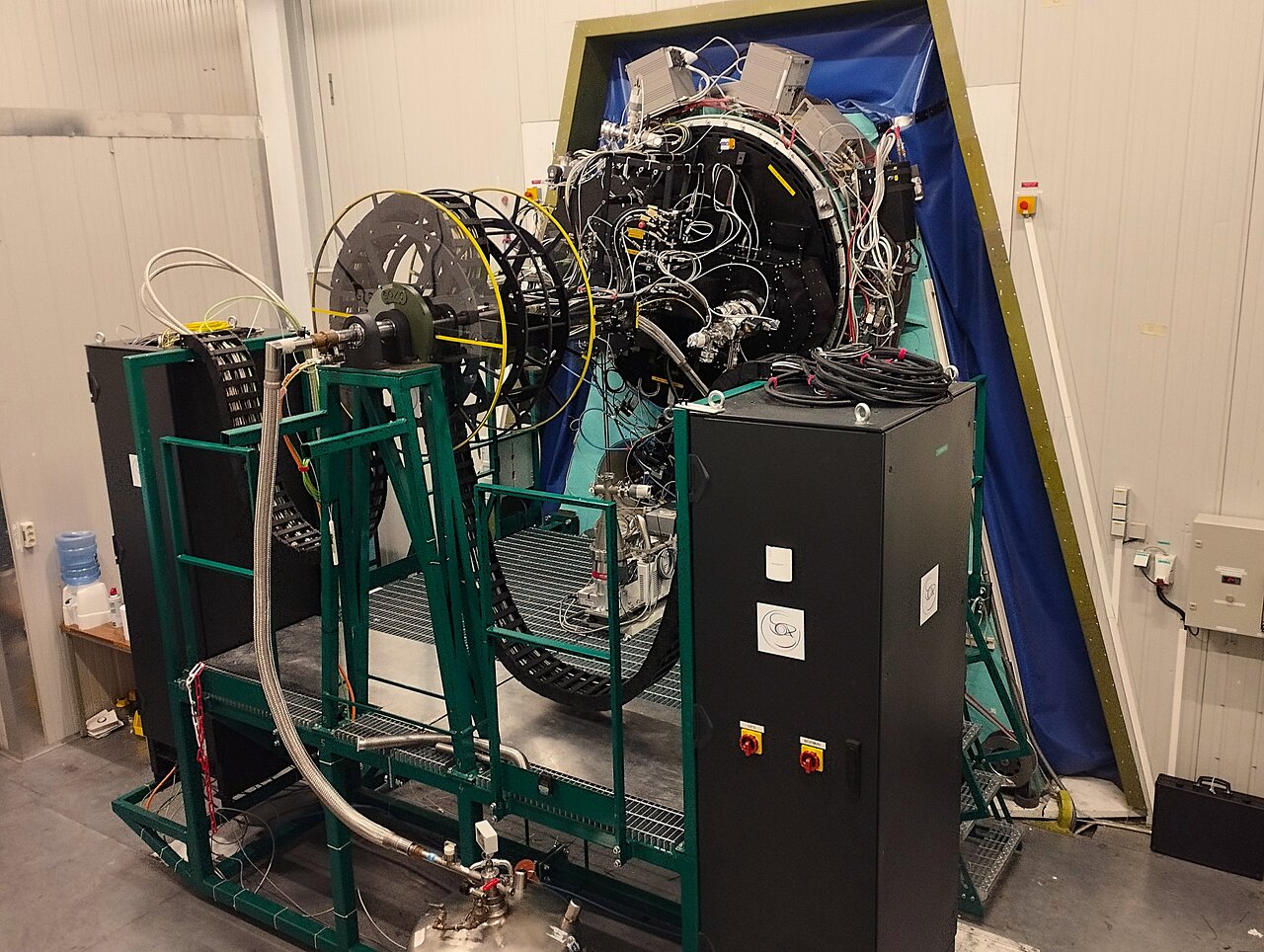
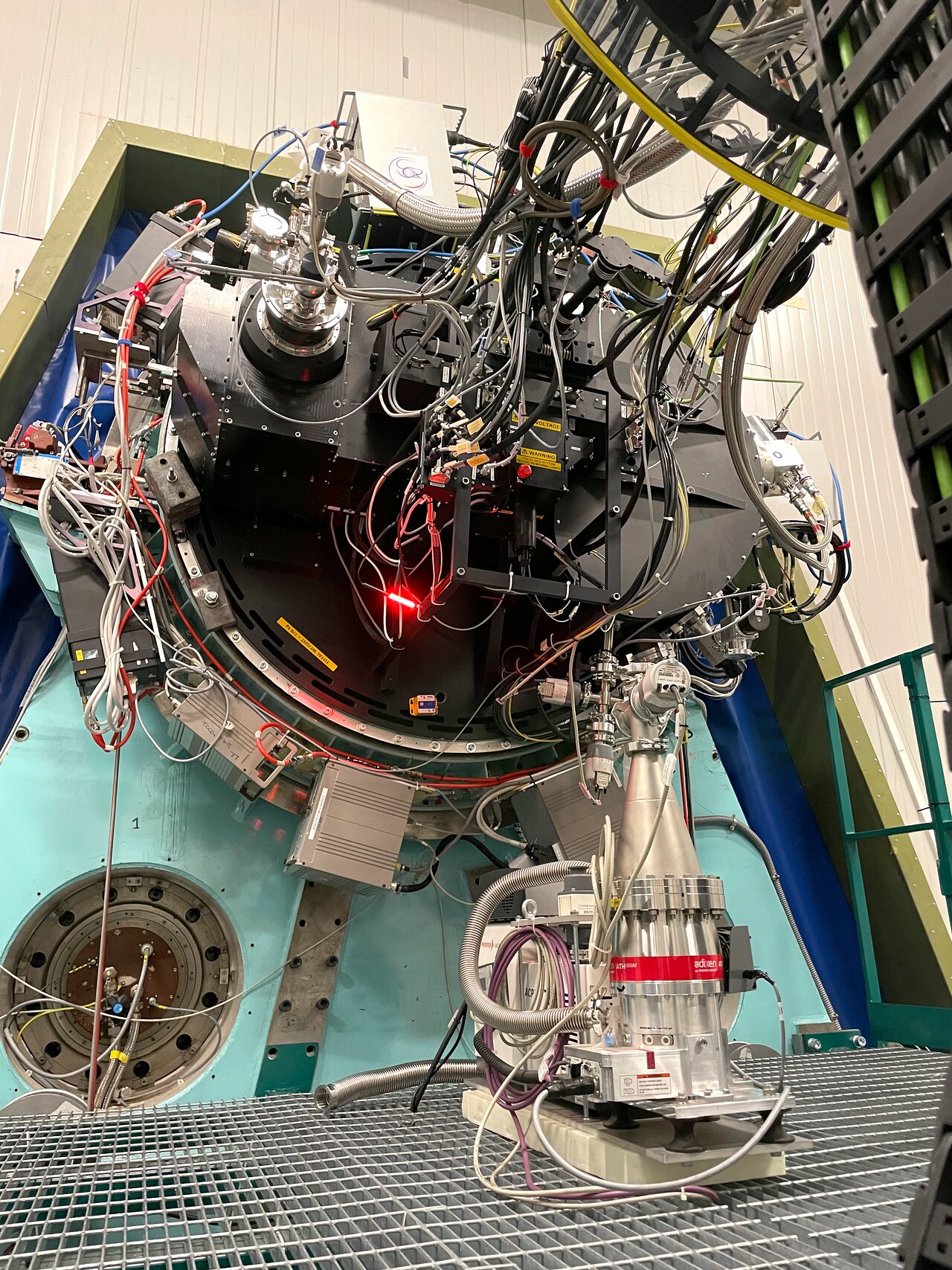
ESO’s new facility, SOXS (Son Of X-Shooter), has successfully made its first observations at the La Silla Observatory in Chile. The spectrograph can be flexibly and rapidly scheduled to make observations of time-critical astronomical events, such as gamma-ray bursts, supernovae, and asteroids passing close to Earth.
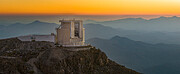
From its new home on ESO’s 3.58-metre New Technology Telescope (NTT, pictured above), SOXS is a unique spectrograph that can be used to quickly observe transient cosmic events, at large distances or closer to home. Designed to see, simultaneously, in both optical and near-infrared wavelengths, SOXS is inspired by the X-shooter instrument currently operating on ESO’s Very Large Telescope.
“SOXS was conceived 10 years ago in view of what is now called time-domain astronomy,” says the project’s Principal Investigator Sergio Campana of the Brera Astronomical Observatory, Italy’s National Institute for Astrophysics (INAF). “After years of hard work, we are now positioned to play a major role in the study of astrophysical transients.”
Transients are astronomical phenomena that occur, or change in brightness or appearance, on relatively short timescales. This includes supernovae explosions, stars pulled apart by supermassive black holes, bursts of gamma-rays in the very distant Universe and fast-moving asteroids in our Solar System, all of which SOXS will study. Like X-shooter at the VLT, the instrument will have a wide variety of applications, but SOXS was specifically designed to conduct follow-up observations of transient events found in wide-field imaging or following real-time alerts sent to the astronomical community after specific cosmic events.
Since transient events last only a fleeting moment, which can be as short as a few milliseconds, it is critical that discoveries of these cosmic phenomena are followed up within minutes or hours by dedicated instruments. The nature of these objects will also change with time, sometimes dramatically so. To study and understand these changes, astronomers need uninterrupted follow-up over time with a dedicated instrument and telescope, something which is not commonly available given the demand for observing time on professional telescopes. SOXS on the NTT will fill this missing gap and provide unprecedented continuous coverage of these elusive, yet fascinating, astronomical objects.
“Specialising a medium-sized telescope like the NTT to a specific task like chasing transients is key to success,” says SOXS Project Manager Pietro Schipani of INAF Capodimonte Astronomical Observatory. “We are very proud of the people who have been working for many years to make our dream come true.”
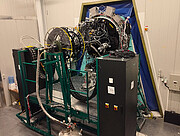
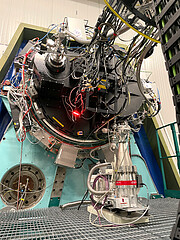
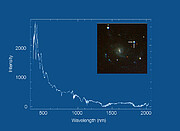
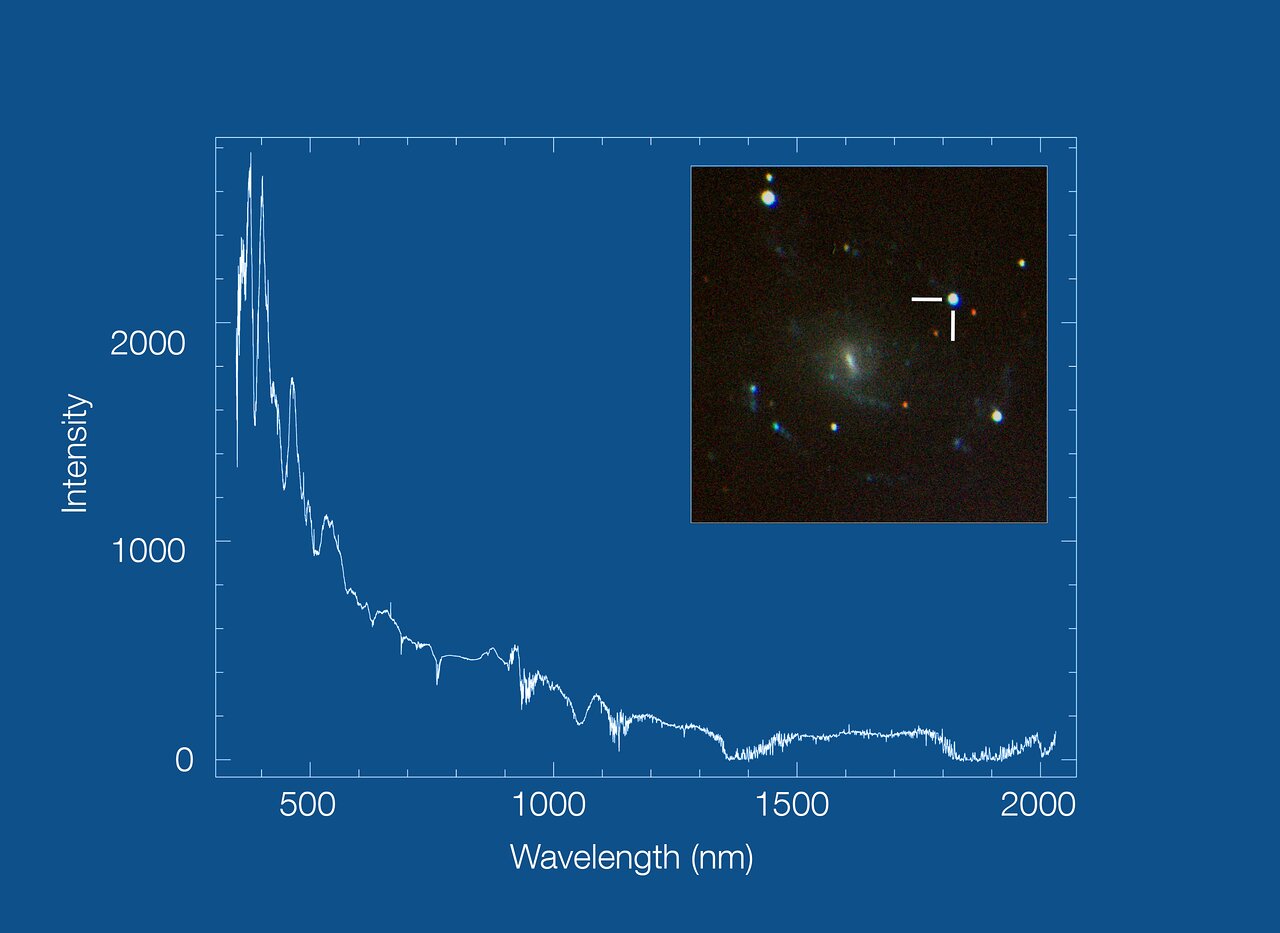
SOXS simultaneously replaces NTT’s two previous spectrographs SOFI (Son of Isaac) and EFOSC2 (ESO Faint Object Spectrograph and Camera 2). “Effectively, it is two instruments in one”, says SOXS Instrument Scientist Paolo D’Avanzo of INAF-Brera, “with a double spectrograph designed to cover the whole optical and near-infrared wavelength range in a single shot, significantly increasing the efficiency of the NTT.” This device works similarly to how a prism splits light, allowing astronomers to unveil the characteristics of the events observed, such as the chemical composition or the distance to the source. Besides, it will also allow observations in imaging mode in the optical bands. The instrument is undergoing the final commissioning phase at the telescope under the supervision of the ESO team, ahead of starting the scientific observations of both the consortium and the wider ESO community.
More Information
The SOXS consortium consists of:
- Italy: INAF (Osservatorio astronomico di Brera, Osservatorio astronomico di Capodimonte, Osservatorio astronomico di Padova, Osservatorio astronomico di Catania, Osservatorio astronomico di Roma and Fundación Galileo Galilei) — consortium leader
- Israel: The Weizmann Institute and Tel Aviv University
- UK: Queen’s University Belfast and University of Oxford
- Finland: University of Turku and Finnish Centre for Astronomy with ESO (FINCA)
- Chile: Millennium Institute of Astrophysics
- Denmark: The Niels Bohr Institute and Aarhus University
Linki
- Always ready: how the new SOXS instrument will capture fleeting events (ESO blog post)
- More general information about SOXS
- More technical information about SOXS
- Images related to the New Technology Telescope
- For scientists: report on SOXS Day, an event to present the SOXS instrument and its science opportunitites to the community (SOXS Day website)
Kontakt
Bárbara Ferreira
ESO Media Manager
Garching bei München, Germany
Email: press@eso.org
O ogłoszeniu
| Identyfikator: | ann25011 |
Zdjęcia
Our use of Cookies
We use cookies that are essential for accessing our websites and using our services. We also use cookies to analyse, measure and improve our websites’ performance, to enable content sharing via social media and to display media content hosted on third-party platforms.
ESO Cookies Policy
The European Organisation for Astronomical Research in the Southern Hemisphere (ESO) is the pre-eminent intergovernmental science and technology organisation in astronomy. It carries out an ambitious programme focused on the design, construction and operation of powerful ground-based observing facilities for astronomy.
This Cookies Policy is intended to provide clarity by outlining the cookies used on the ESO public websites, their functions, the options you have for controlling them, and the ways you can contact us for additional details.
What are cookies?
Cookies are small pieces of data stored on your device by websites you visit. They serve various purposes, such as remembering login credentials and preferences and enhance your browsing experience.
Categories of cookies we use
Essential cookies (always active): These cookies are strictly necessary for the proper functioning of our website. Without these cookies, the website cannot operate correctly, and certain services, such as logging in or accessing secure areas, may not be available; because they are essential for the website’s operation, they cannot be disabled.
Functional Cookies: These cookies enhance your browsing experience by enabling additional features and personalization, such as remembering your preferences and settings. While not strictly necessary for the website to function, they improve usability and convenience; these cookies are only placed if you provide your consent.
Analytics cookies: These cookies collect information about how visitors interact with our website, such as which pages are visited most often and how users navigate the site. This data helps us improve website performance, optimize content, and enhance the user experience; these cookies are only placed if you provide your consent. We use the following analytics cookies.
Matomo Cookies:
This website uses Matomo (formerly Piwik), an open source software which enables the statistical analysis of website visits. Matomo uses cookies (text files) which are saved on your computer and which allow us to analyze how you use our website. The website user information generated by the cookies will only be saved on the servers of our IT Department. We use this information to analyze www.eso.org visits and to prepare reports on website activities. These data will not be disclosed to third parties.
On behalf of ESO, Matomo will use this information for the purpose of evaluating your use of the website, compiling reports on website activity and providing other services relating to website activity and internet usage.
Matomo cookies settings:
Additional Third-party cookies on ESO websites: some of our pages display content from external providers, e.g. YouTube.
Such third-party services are outside of ESO control and may, at any time, change their terms of service, use of cookies, etc.
YouTube: Some videos on the ESO website are embedded from ESO’s official YouTube channel. We have enabled YouTube’s privacy-enhanced mode, meaning that no cookies are set unless the user actively clicks on the video to play it. Additionally, in this mode, YouTube does not store any personally identifiable cookie data for embedded video playbacks. For more details, please refer to YouTube’s embedding videos information page.
Cookies can also be classified based on the following elements.
Regarding the domain, there are:
- First-party cookies, set by the website you are currently visiting. They are stored by the same domain that you are browsing and are used to enhance your experience on that site;
- Third-party cookies, set by a domain other than the one you are currently visiting.
As for their duration, cookies can be:
- Browser-session cookies, which are deleted when the user closes the browser;
- Stored cookies, which stay on the user's device for a predetermined period of time.
How to manage cookies
Cookie settings: You can modify your cookie choices for the ESO webpages at any time by clicking on the link Cookie settings at the bottom of any page.
In your browser: If you wish to delete cookies or instruct your browser to delete or block cookies by default, please visit the help pages of your browser:
Please be aware that if you delete or decline cookies, certain functionalities of our website may be not be available and your browsing experience may be affected.
You can set most browsers to prevent any cookies being placed on your device, but you may then have to manually adjust some preferences every time you visit a site/page. And some services and functionalities may not work properly at all (e.g. profile logging-in, shop check out).
Updates to the ESO Cookies Policy
The ESO Cookies Policy may be subject to future updates, which will be made available on this page.
Additional information
For any queries related to cookies, please contact: pdprATesoDOTorg.
As ESO public webpages are managed by our Department of Communication, your questions will be dealt with the support of the said Department.