Annuncio
Più di metà del gigantesco specchio dell'ELT si trova ora in Cile
14 Ottobre 2026
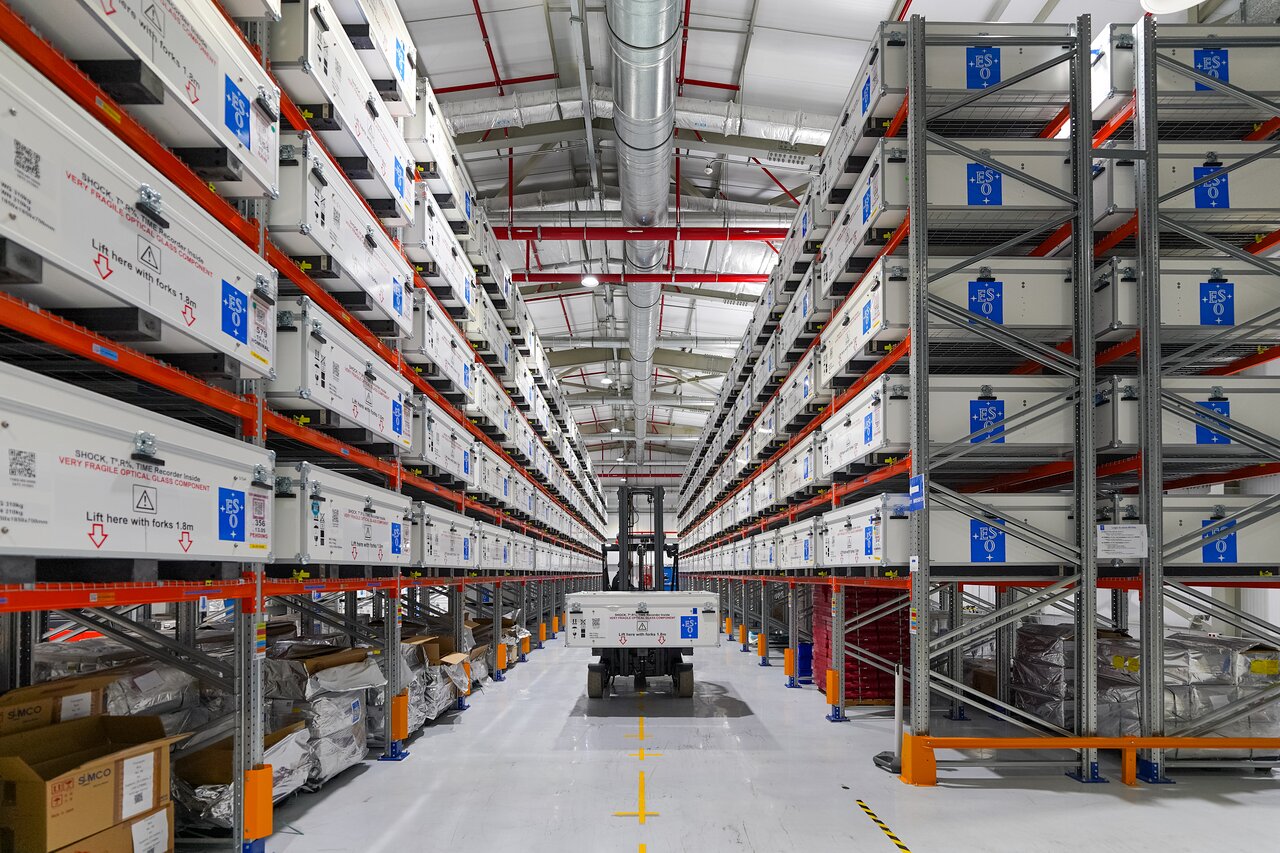
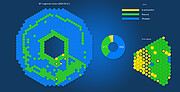
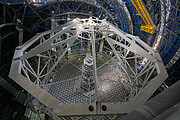
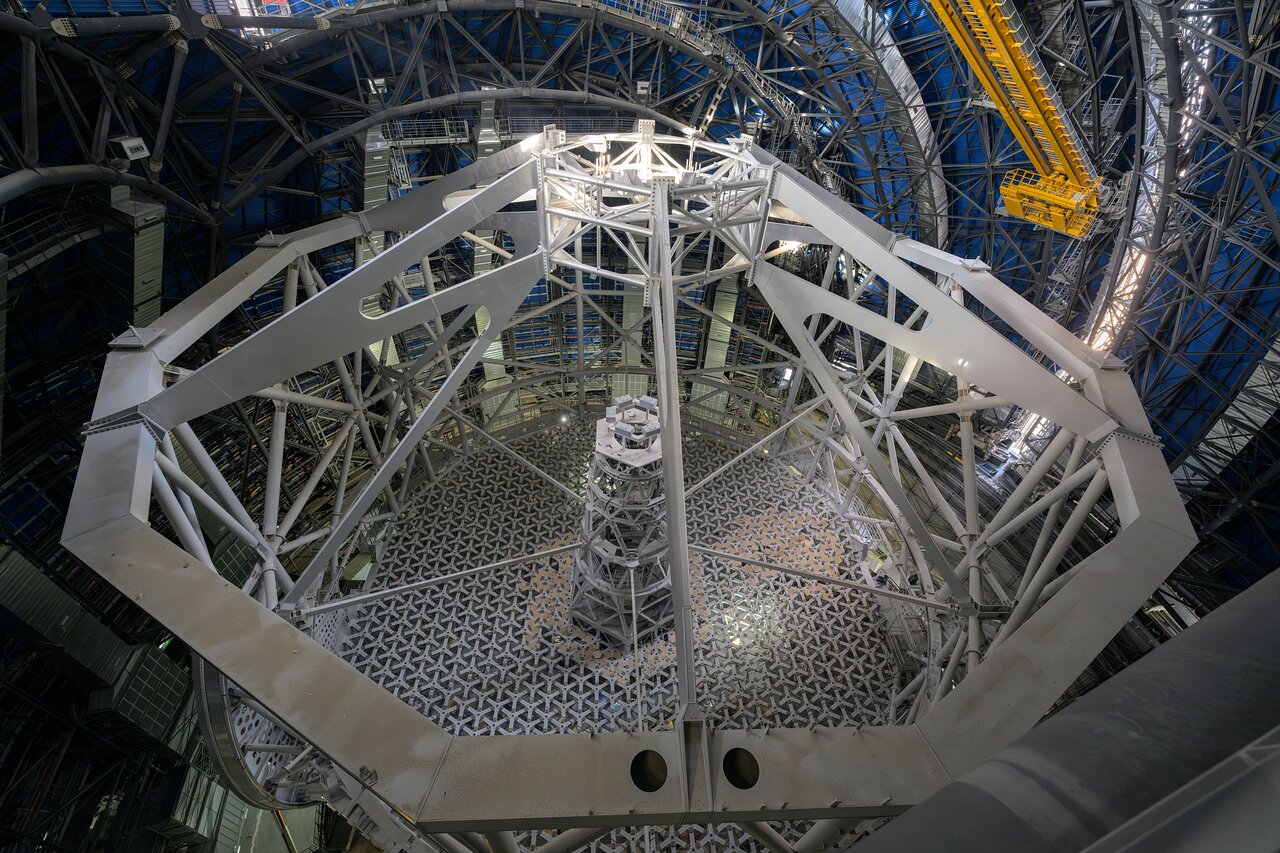
Pezzo dopo pezzo, lo specchio per telescopio più grande che sia mai stato costruito sta attraversando l'Atlantico. Quasi 500 segmenti dello specchio principale dell'ELT (Extremely Large Telescope o Telescopio Estremamente Grande) dell'ESO sono ormai giunti presso l'Infrastruttura Tecnica dell'ELT, all'Osservatorio dell'ESO al Paranal in Cile; si tratta di circa la metà dei segmennti previsti per quello che diventerà un "occhio sul cielo" dal diametro di 39 metri. Ma c'è di più: la produzione dell'ultimo segmento è stata iniziata presso la Safran Reosc, in Francia. Non è possibile realizzare uno specchio così grande partendo da un unico blocco di vetro; per questo motivo, lo specchio principale dell'ELT (M1) è composto da 798 segmenti individuali che si orientano all'unisono per osservare il cosmo con profondità e ricchezza di dettagli.
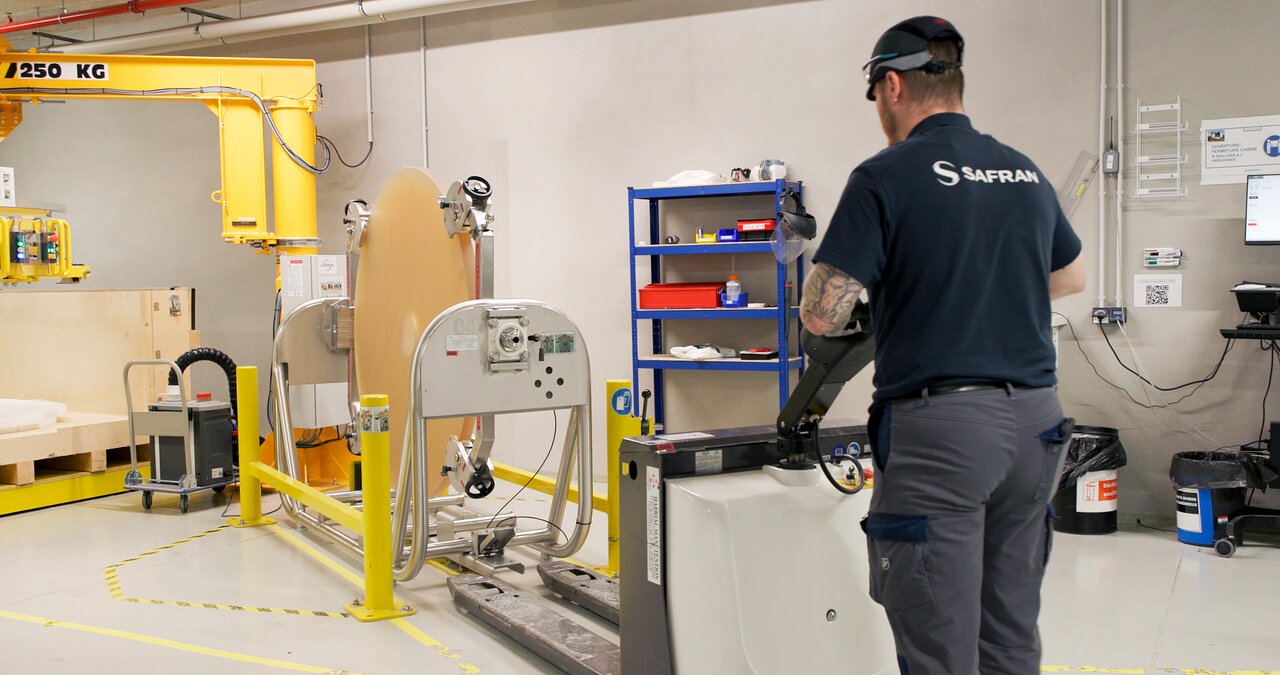
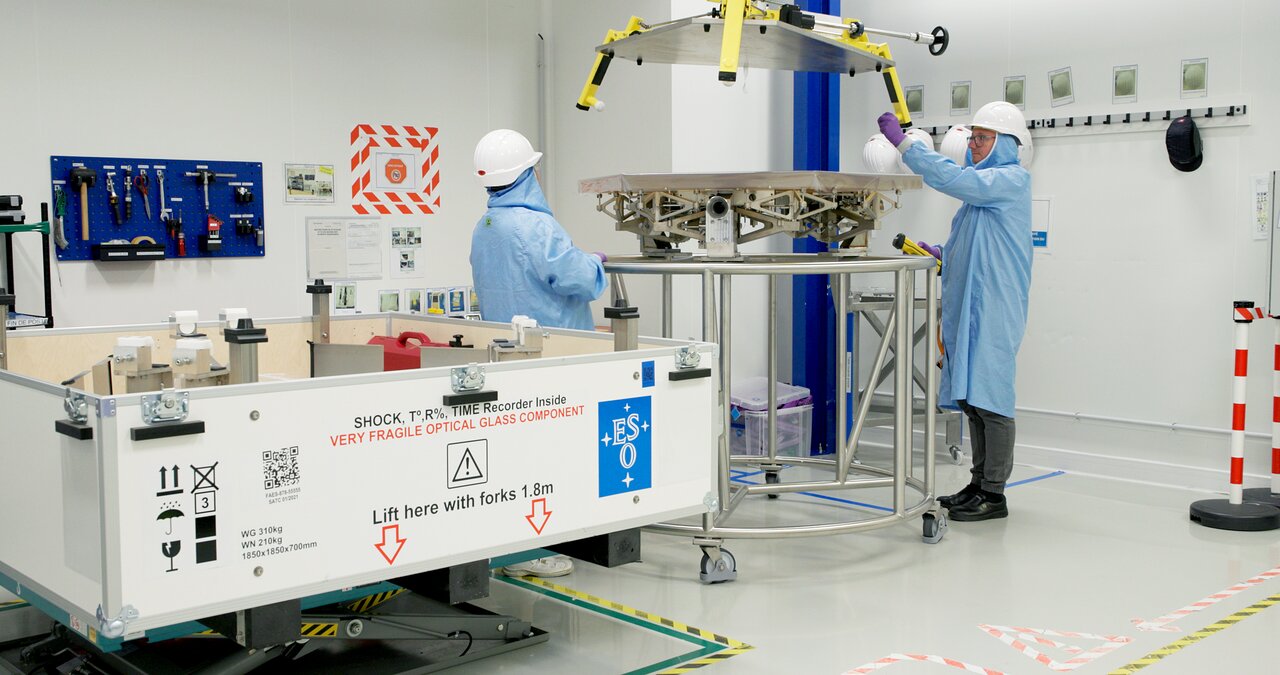
La produzione dei segmenti esagonali di M1 è un procedimento complesso che mette in evidenza la collaborazione internazionale grazie alla quale l'ELT prende forma. Il viaggio dei segmenti ha avuto inizio in Germania, dove l'azienda SCHOTT ha prodotto i pezzi grezzi in Zerodur©, una vetroceramica che subisce solo minime variazioni di forma al variare della temperatura. I pezzi grezzi sono stati poi trasportati presso la Safran Reosc, vicino a Poitiers (Francia), per la lavorazione della superficie, la lucidatura e il montaggio sui relativi supporti, progettati dalla TNO e realizzati dalla VDL ETG Projects BV (due aziende olandesi). Il consorzio FAMES (Fogale, Francia; MicroEpsilon, Germania) ha progettato e prodotto i sensori che tengono sotto controllo la posizione relativa di ciascun segmento, mentre l'azienda tedesca Physik Instrumente ha realizzato gli attuatori che mantengono ogni segmento perfettamente allineato con quelli adiacenti. L'ultima tappa del viaggio per i segmenti di M1 e i loro supporti – percorso già completato dalla maggior parte dei pezzi – consiste in un viaggio di 10.000 chilometri, via terra e via mare, fino al deserto di Atacama: l'operazione è affidata all'azienda danese DSV.
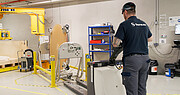
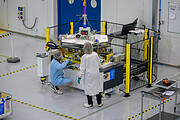
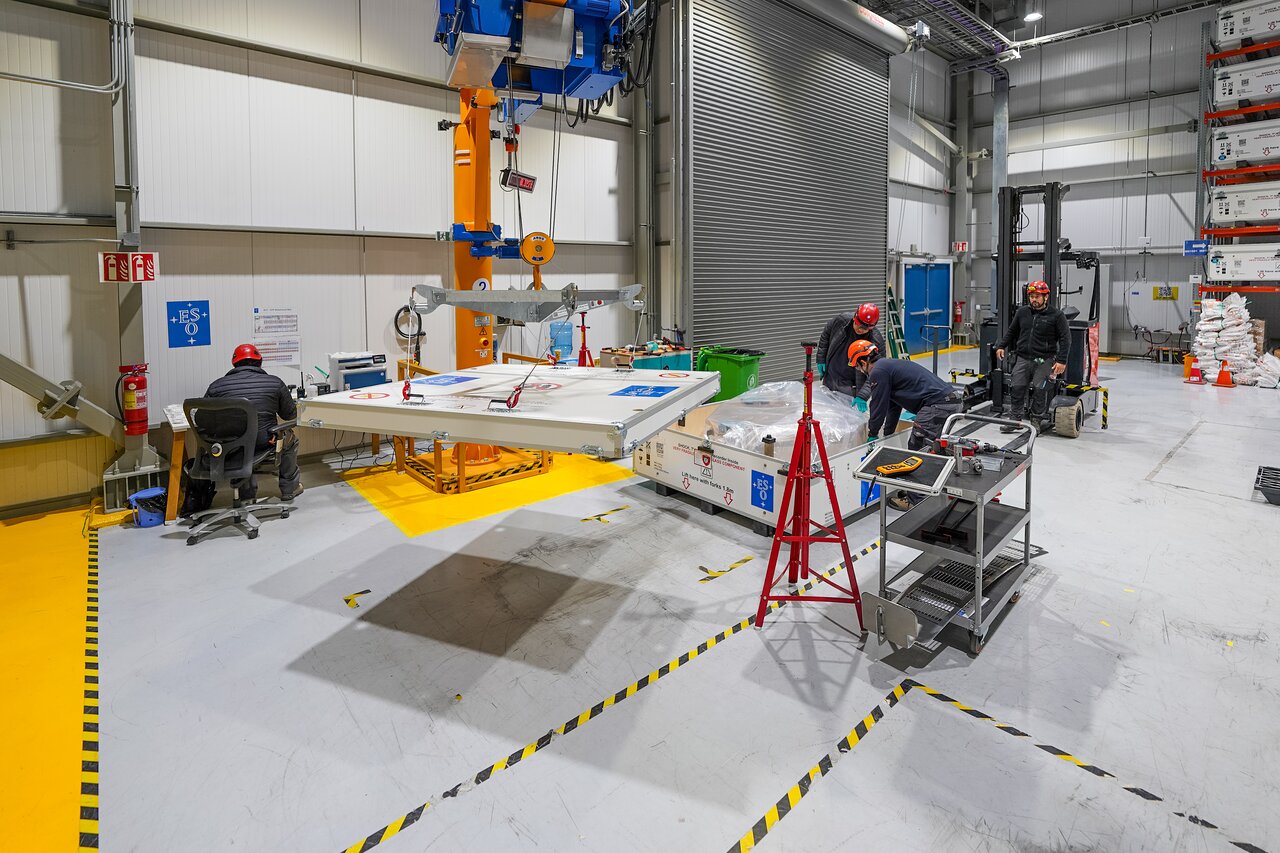
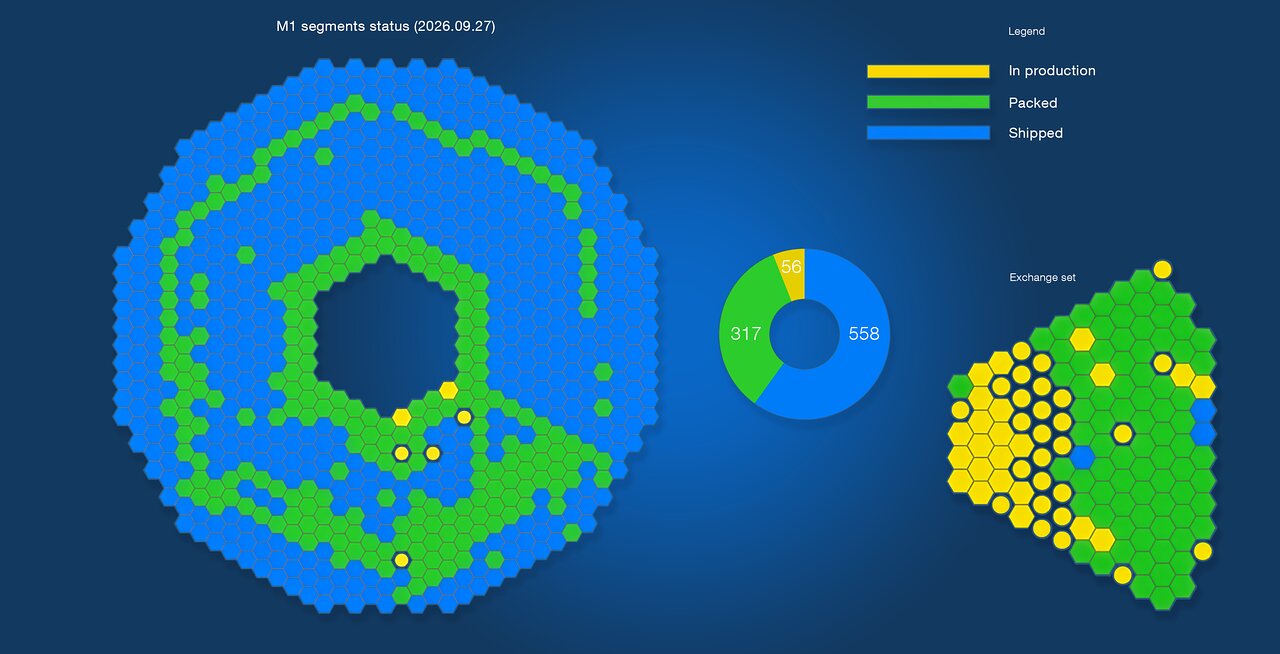
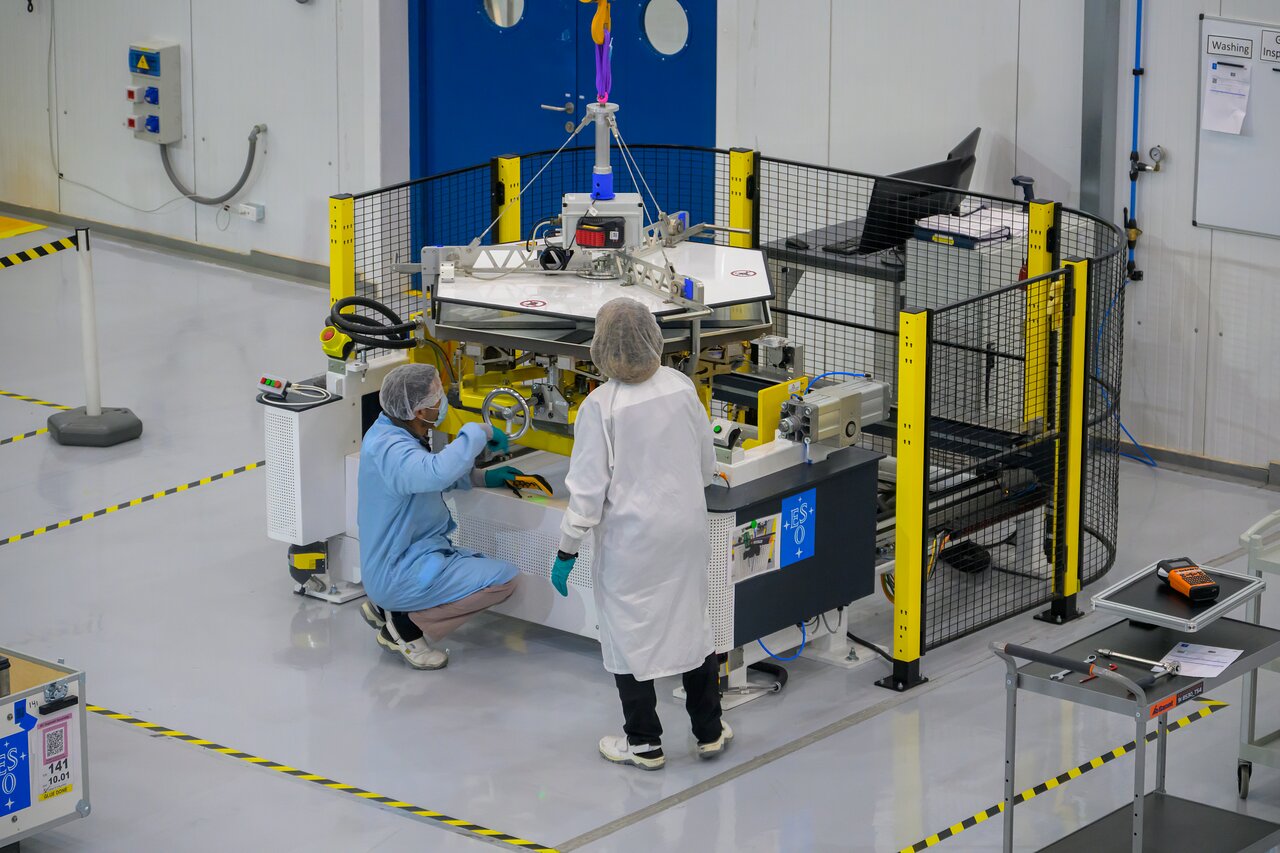
All'arrivo presso l'Infrastruttura Tecnica dell'ELT, i segmenti vengono ispezionati e verniciati dagli ingegneri e dai tecnici dell'ESO, per realizzare la finitura altamente riflettente necessaria per raccogliere la luce celeste. Tuttavia, il rivestimento non dura in eterno: quando il telescopio sarà operativo, sarà necessario sostituire due segmenti al giorno per applicare un nuovo strato riflettente, attività che il gruppo di lavoro dell'ESO al Paranal svolgerà per l'intera vita operativa dell'ELT. Per rendere questo possibile senza mai lasciare un buco nello specchio, sono stati prodotti 133 segmenti aggiuntivi (portando il totale a 931), in modo che ogni segmento rimosso per la verniciatura possa essere immediatamente sostituito. Con l'arrivo del lotto più recente, oltre il 50% dei 931 segmenti si trova ora in Cile.
I primissimi segmenti sono arrivati in Cile all'inizio del 2024, circa sette anni dopo la firma dei primi contratti industriali per la loro produzione. Ora, però, Safran Reosc ha raggiunto un ritmo produttivo di un segmento al giorno. Sebbene più della metà dei segmenti, completi dei relativi supporti, sia già in Cile, la maggior parte dei restanti è in viaggio o imballata e pronta per la spedizione. Solo pochi esemplari sono ancora in fase di produzione. Ciò significa che, nei prossimi mesi, tutti i segmenti dell'M1 saranno in Cile.
Quando tra qualche anno inizierà a osservare l'Universo dal Cerro Armazones vicino a Paranal, l'ELT sarà il più grande occhio ak mondo puntato verso il cielo. Lo specchio gigantesco, i sofisticati sistemi di gestione e il cielo buio in cui opererà gli permetteranno di studiare le atmosfere di pianeti rocciosi intorno ad altre stelle, di osservare le prime galassie e le prime stelle formatesi dopo il Big Bang e di verificare se le costanti fisiche siano cambiate nel corso del tempo cosmico. Il progetto ELT è ormai completato per oltre il 75% e le prime osservazioni con strumenti scientifici sono previste per la fine del 2030.
Contatti
Bárbara Ferreira
ESO Media Manager
Garching bei München, Germany
Tel: +49 89 3200 6670
Email: press@eso.org
Riguardo all'annuncio
| Identificazione: | ann26009 |
Immagini




Our use of Cookies
We use cookies that are essential for accessing our websites and using our services. We also use cookies to analyse, measure and improve our websites’ performance, to enable content sharing via social media and to display media content hosted on third-party platforms.
ESO Cookies Policy
The European Organisation for Astronomical Research in the Southern Hemisphere (ESO) is the pre-eminent intergovernmental science and technology organisation in astronomy. It carries out an ambitious programme focused on the design, construction and operation of powerful ground-based observing facilities for astronomy.
This Cookies Policy is intended to provide clarity by outlining the cookies used on the ESO public websites, their functions, the options you have for controlling them, and the ways you can contact us for additional details.
What are cookies?
Cookies are small pieces of data stored on your device by websites you visit. They serve various purposes, such as remembering login credentials and preferences and enhance your browsing experience.
Categories of cookies we use
Essential cookies (always active): These cookies are strictly necessary for the proper functioning of our website. Without these cookies, the website cannot operate correctly, and certain services, such as logging in or accessing secure areas, may not be available; because they are essential for the website’s operation, they cannot be disabled.
Functional Cookies: These cookies enhance your browsing experience by enabling additional features and personalization, such as remembering your preferences and settings. While not strictly necessary for the website to function, they improve usability and convenience; these cookies are only placed if you provide your consent.
Analytics cookies: These cookies collect information about how visitors interact with our website, such as which pages are visited most often and how users navigate the site. This data helps us improve website performance, optimize content, and enhance the user experience; these cookies are only placed if you provide your consent. We use the following analytics cookies.
Matomo Cookies:
This website uses Matomo (formerly Piwik), an open source software which enables the statistical analysis of website visits. Matomo uses cookies (text files) which are saved on your computer and which allow us to analyze how you use our website. The website user information generated by the cookies will only be saved on the servers of our IT Department. We use this information to analyze www.eso.org visits and to prepare reports on website activities. These data will not be disclosed to third parties.
On behalf of ESO, Matomo will use this information for the purpose of evaluating your use of the website, compiling reports on website activity and providing other services relating to website activity and internet usage.
Matomo cookies settings:
Additional Third-party cookies on ESO websites: some of our pages display content from external providers, e.g. YouTube.
Such third-party services are outside of ESO control and may, at any time, change their terms of service, use of cookies, etc.
YouTube: Some videos on the ESO website are embedded from ESO’s official YouTube channel. We have enabled YouTube’s privacy-enhanced mode, meaning that no cookies are set unless the user actively clicks on the video to play it. Additionally, in this mode, YouTube does not store any personally identifiable cookie data for embedded video playbacks. For more details, please refer to YouTube’s embedding videos information page.
Cookies can also be classified based on the following elements.
Regarding the domain, there are:
- First-party cookies, set by the website you are currently visiting. They are stored by the same domain that you are browsing and are used to enhance your experience on that site;
- Third-party cookies, set by a domain other than the one you are currently visiting.
As for their duration, cookies can be:
- Browser-session cookies, which are deleted when the user closes the browser;
- Stored cookies, which stay on the user's device for a predetermined period of time.
How to manage cookies
Cookie settings: You can modify your cookie choices for the ESO webpages at any time by clicking on the link Cookie settings at the bottom of any page.
In your browser: If you wish to delete cookies or instruct your browser to delete or block cookies by default, please visit the help pages of your browser:
Please be aware that if you delete or decline cookies, certain functionalities of our website may be not be available and your browsing experience may be affected.
You can set most browsers to prevent any cookies being placed on your device, but you may then have to manually adjust some preferences every time you visit a site/page. And some services and functionalities may not work properly at all (e.g. profile logging-in, shop check out).
Updates to the ESO Cookies Policy
The ESO Cookies Policy may be subject to future updates, which will be made available on this page.
Additional information
For any queries related to cookies, please contact: pdprATesoDOTorg.
As ESO public webpages are managed by our Department of Communication, your questions will be dealt with the support of the said Department.