


ESO Scientific Staff in Santiago/Chile
- Faculty & Scientists
- Fellows
- Fellows Hosted outside ESO
- Paid Associates
- Unpaid Associates
- Students
- Support Staff
GAR = Garching; LS = La Silla; PAO = Paranal; SCV = Science Vitacura
See also the ESO Garching Staff and Research page for scientific staff in Garching.
Also available is a List of the Astronomers and Astronomical Institutes in Chile.
Faculty & Scientists
|
Joseph Anderson is an ESO support astronomer and currently FORS2 instrument scientist. He obtained his PhD in astronomy at the Astrophysics Research Institute at Liverpool John Moores University in the UK, in 2009, investigating the parent stellar populations of supernovae under the supervision of Phil James. Joseph then moved to a postdoc position at the Universidad de Chile, Chile, working with Mario Hamuy. He joined ESO at first as a fellow in 2013. Hi main research interests are the study of supernovae of different types, with a focus on investigating the progenitor and explosion characteristics of type II supernovae through analysing their observed diversity. He also spends a significant amount of time analysing supernova host galaxy and environment properties in order to constrain progenitor properties while also learning about star formation processes within galaxies. |
Marco Berton |
Marco Berton is an Operations Staff Astronomer at Paranal Observatory, where he is currently involved in the instrument operations teams of HAWK-I and MUSE. He obtained his PhD from the University of Padova (Italy) in 2016, where he worked on the class of active galactic nuclei (AGN) known as narrow-line Seyfert 1 (NLS1) galaxies. In particular, he studied the parent population of gamma-ray emitting NLS1s, and he developed an orientation-based unification model for AGN in an early evolutionary stage. After a first postdoctoral position in Padova, he moved to Finland, working for the Finnish Centre for Astronomy with ESO at the Aalto University Metsähovi Radio Observatory. There he continued his research on the radio, optical, and X-ray properties of NLS1s. In 2021 he joined ESO at first as a fellow on UT4, working on the MUSE and ERIS instruments, before moving to his current role in 2023. Scientific interests:
|
(PAO/SCV) |
Scientific interests:
|
Stephane Brillant |
Stephane Brillant is an Operations Astronomer at the Paranal observatory. He received his PhD in physics from the University of Paris XI in 1999. After 2 years as a student in ESO during his PhD he came back in 1999 as a fellow and moved in 2001 to his current position in Paranal. While his PhD was more in theoretical physics, he moved to more observational study and has been working mostly on extrasolar planet using various technics including microlensing. He is now working mostly on the study of the atmosphere of extrasolar planet using in particular CRIRES to study their chemical composition. |
Jesus M. Corral-Santana |
Jesús Corral-Santana received his PhD in Astrophysics at the Instituto de Astrofísica de Canarias (IAC) and the University of La Laguna (ULL) in the Canary Islands (Spain) in 2012, working in the X-ray binaries group leaded by Jorge Casares. After his thesis, he moved to Chile as a FONDECYT Fellow at the Pontificia Universidad Católica de Chile where he worked with Franz E. Bauer. His main research topic is the study of stellar-mass black holes in X-ray binaries and, in particular, those found in X-ray transients. One of his main goals is to dynamically confirm the presence of black holes (using optical and near-infrared photometry and spectroscopy) in order to increase the currently scarce sample of black hole transients, which is essential to understand several aspects of physics and astrophysics such as, for instance, the final stages of stellar evolution, supernovae explosions and the formation of compact objects. In addition, he is a member of the VVV and EGAPS (IPHAS, UVEX and VPHAS+) surveys performed, among others, with the VISTA and VST telescopes. Scientific interests:
|
|
Itziar de Gregorio-Monsalvo was the Head of the Office for Science in Chile from November 2018 to November 2024. Before she was the Head of the ALMA Program Management group. She did her PhD in the Spanish National Institute for Aerospace Technology, using the NASA Deep Space Network antennas to set up Radio Astronomy observations and perform star formation studies at centimeter wavelengths. She joined ESO in 2006 as an ESO ALMA fellow with duties at the APEX telescope, the Atacama Test Facility (in Socorro, New Mexico), and the Operations Support Facilities near San Pedro de Atacama. She became an ESO Faculty member in 2010, working as an ALMA Science Operations Astronomer. Her main research activities are focused in star and planetary formation, in particular:
|
Robert de Rosa |
Robert De Rosa is an Operations Staff Astronomer at Paranal Observatory, where he is currently instrument scientist for ERIS. He obtained his PhD from the University of Exeter in 2012 where he worked on studying the multiplicity of nearby stars using adaptive optics. He spent his post-doctoral career in the USA working on the Gemini Planet Imager instrument, before joining ESO in late-2019. His main research interest is the direct detection of giant extrasolar planets via direct imaging, and the characterisation of their bulk properties via astrometry, photometry, and spectroscopy. Personal home page - https://www.sc.eso.org/~rderosa/ |
Willem-Jan De Wit |
Willem-Jan de Wit joined ESO in 2010. He received his PhD from Utrecht University in 2001. Scientific interests:
|
Abigail Frost |
Abigail Frost, joined ESO in February 2023 as an operations staff astronomer. They obtained their PhD from the University of Leeds in 2019, during which they spent ~3-months at ESO Chile as a DGTF student. Since completing their PhD they have also worked at KU Leuven as a postdoctoral research associate, been a visiting research fellow at the University of Leeds and a visiting early-career scientist at ESO Chile. Their research focusses on the study of massive stars, namely their formation and the multiplicity, using high-resolution techniques, particularly infrared interferometry. |
Boris Haeussler |
Boris Häußler (Haeussler) is an ESO staff astronomer at Paranal as of November 2015. Born in Karlsruhe, he received his Ph.D. in 2007 from the University of Heidelberg in Germany (PhD thesis at MPIA). He then moved to Nottingham, UK for 2 consecutive 2 postdoc positions and, after another postdoc in Oxford (while also being associated with Hertfordshire), he moved to ESO/Santiago to work at Paranal Observatory. His research interests are:
|
Xavier Haubois |
Xavier Haubois is the VLTI System Scientist at Paranal Observatory since December 2016. Xavier was previously a Fellow since October 2014. He got his PhD in 2009 at Observatoire de Paris that was focused on infrared interferometric imaging of evolved stars and the design phase of GRAVITY. After his thesis, he obtained a post-doctoral contract at the University of São Paulo (IAG) to work on the modelling of circumstellar environments and at the University of Sydney to deepen his skills in optical interferometry. His research focuses on mass-loss processes in evolved stars observed at high angular resolution. His research interests are:
|
Pascale Hibon |
Scientific Interests:
|
Matias Jones |
Scientific Interests:
|
Thomas Klein |
Thomas Klein is the Deputy Director of La Silla Paranal Observatory. In 1996 he received his degree in Physics from the University of Bonn where he also graduated with a PhD in Astronomy in 1999. Since then he was a staff scientist at the Max-Planck Institut fuer Radioastronomie, where he focused his interests on the development of THz instrumentation for astronomy and accumulated a strong background on submillimeter observing techniques at various telescopes. In 2000 he started his involvement in the HERSCHEL/HIFI project as the lead system engineer for the HIFI local oscillator system. Until the end of the HIFI mission, in April 2013, he supported HIFI’s Instrument control center. In 2007 he became the group leader of the MPIfR’s heterodyne submillimeter technology group, developing the institute’s PI instrumentation for APEX and SOFIA. Since 2008, he was a frequent guest scientist at APEX, accompanying the PI instruments of the MPIfR, before he joined ESO and APEX in September 2013. |
Ruediger Kneissl |
Rüdiger Kneissl joined ESO in 2009 as Science Operations Astronomer in the ALMA project. He received his PhD from the University of Munich and the Max-Planck-Institute for Astrophysics in 1997. During appointments at the University of Cambridge, UC Berkeley and MPI for Radio Astronomy in Bonn he worked with various radio interferometers and the APEX telescope. He has also been involved in the Planck satellite mission for many years. His main scientific interest is in
|
Evgenia Koumpia |
Evgenia Koumpia is an ALMA System Astronomer at JAO. Previously she was an ESO fellow with ALMA duties from December 2021 to end February 2025. She obtained her PhD from the University of Groningen (NL) and in 2017 she moved to the University of Leeds (UK) as a Research Fellow in the field of Star Formation. Her scientific interests include high and low mass star formation, close binaries, dense cores, and massive stellar evolution. For her research she uses high angular and spectral resolution observational techniques from near-infrared to sub-mm wavelengths. |
Aaron Labdon |
Aaron Labdon, is an Operations Staff Astronomer at Paranal Observatory, where he is currently involved in the instrument operations team of GRAVITY. He obtained his PhD from the University of Exeter (UK) in 2021, with a thesis titled ‘The Inner Astronomical Unit of Protoplanetary Disks’. During this time he worked as part of the MIRCX instrument team, an interferometric beam combiner at CHARA. In 2021 he joined ESO as a fellow working with the VLTI, specifically as the GRAVITY instrument fellow, before moving the his current role in 2023. His current research interests focus on optical interferometry of young stellar objects and variable accretors with interferometry and spectroscopy. Scientific interests:
|
 Cédric Ledoux |
Cédric Ledoux is a Faculty astronomer supporting the science operations of the Very Large Telescope. He obtained his PhD in Astrophysics at the University of Lyon I in 1999. His research includes the properties and evolution of galaxies revealed by high-redshift QSO absorption-line systems, the study of metals, dust, and molecules, in the interstellar medium of galaxies, and the distribution and physical properties of the gas in and around the host galaxies of Gamma-Ray Bursts. He is involved in the operations of the Ultraviolet and Visual Echelle Spectrograph (UVES) and the Echelle Spectrograph for Rocky Exoplanets and Stable Spectroscopic Observations (ESPRESSO). His main research interests are:
|
Gaspare Lo Curto |
Gaspare Lo Curto has experience in precise radial velocity instruments and in high-resolution stellar spectroscopy. He followed HARPS as instrument scientist from the commissioning in 2003 until today. His scientific interests lie mainly in the detection of extra-solar planets via the radial velocity method, and in the architecture of extra-solar planetary systems. |
 Gianni Marconi |
Gianni Marconi is Commissioning Scientist of the ALMA Observatory (Array Group lead). He received his degree (cum Laude) in Astronomy from Bologna University in 1987. In 1991 he graduated with a PhD in Astronomy from the same university. From 1994 to 2005 he held an assistant professorship and was member of the Director Board at the Observatory of Rome. In 1999 he became ESO staff member and joined the VLT Science Operations department. He has been the Paranal instrument scientists of VIMOS between 2002 and 2005. From 2006 to 2010 he has been the Instrumentation Operation Teams Coordinator of the La Silla Paranal Observatory. From 2010 he has been seconded to the JAO office for the commissioning of ALMA. Starting in June 2010 has been appointed as Commissioning Scientist for the European Alma Support Center (EASC) and in charge of the integration and verification of the development projects for ESO in ALMA. His main research activities focus on the fields of stellar astrophysics, star formation history and chemical evolution of galaxies, and state-of-the-art astronomical instrumentation and telescopes. Scientific interests:
|
Sergio Martin |
Scientific Interests:
|
|
Gautier Mathys received a PhD degree in 1983 and a habilitation degree in 1990, both from Liège University (Belgium). He held postdoctoral positions at the Swiss Federal Institute of Technology (ETH) in Zurich (1983–1985) and at the Geneva Observatory (1986–1991). In 1991, he joined ESO in Chile as operations support astronomer, first on La Silla, where he was responsible for the support of the high-resolution spectrographs (1991–1993) and then led the Chile part of the NTT Team. In 1998, he moved to Paranal, where he became Head of the VLT Science Operations Department in 1999 and Head of La Silla Paranal Science Operations in 2005. Beginning of 2006, he became the Head of the ESO Observing Programmes Office (then known as the Visiting Astronomers Department) until early 2011, when he joined ALMA as Lead Astronomer of the ALMA Proposal Handling Team. In August 2018, he was appointed Science Advisor to the ESO Representative in Chile. In parallel, he served on several opportunities as Organising Committee member of the Scientific Bodies of the International Astronomical Union: Commission 29 (1994–2003; President from 2000 to 2003), Division G Working Group Ap & Related Stars (Chair from 2009 to 2021), Commission G5 (2018–2024), Commission G3 (from.2024). Since reaching the retirement age in September 2022, he has held the status of Retired ESO Astronomer. In this quality, he continues to serve the astronomical community and to carry out a vigorous research programme, primarily in the scientific area of Ap star rotation, magnetic fields, and pulsation. |
Andrea Mehner |
Scientific interests:
|
|
Jorge Melnick was the VLT Programme Scientist. His research interests include violent star formation, galactic and extragalactic starbursts and the evolution of massive stars. |
Hugo Messias |
Hugo Messias is an Astronomer at ALMA’s Department of Science Operations since January 2020. He obtained his PhD in 2011 at the Universidade de Lisboa, in Portugal. He went on to Universidad de Concepción, in Chile, as an ALMA-CONICyT postdoc. He was then a FCT Fellow at Institute of Astrophysics and Space Science (IA, Portugal) since 2014, where he was also the Lead Scientist of the Portuguese ALMA Centre of Expertise. That led to his moving back to Chile as an ALMA Fellow from 2016 and 2019. After a short period at IA at the end of 2019, he was back again to ALMA as a DSO Astronomer. His scientific interests are mostly related to extra-galactic astronomy: galaxy and super-massive black-hole (co-)evolution; gas content and dynamics in galaxies; galaxy growth mechanisms; IR-selected AGN; distant (sub-)millimeter/radio-selected galaxies. |
James Miley |
James Miley joined ESO as an Operations Astronomer at the ALMA Observatory in 2025. He received his PhD in Astrophysics from University of Leeds, UK in 2020 with his thesis "Characterising the gas and dust in protoplanetary discs around Herbig stars". After his PhD, James joined the National Astronomical Observatory of Japan (NAOJ) and the Joint ALMA Observatory (JAO) as an ALMA Fellow based in Santiago between 2020-2023. James then joined the Millennium Nucleus on Young Exoplanets and their Moons (YEMS) and the Centre for Interdisciplinary Research into Astrophysics and Space Sciences (CIRAS) at Universidad de Santiago de Chile as a postdoctoral researcher before returning to ALMA in 2025. Scientific Interests:
|
Steffen Mieske |
Steffen Mieske is the Head of Science Operations at Paranal. He obtained his PhD in astronomy in 2005 from Bonn University. Between 2000 and 2004 he spent about 3 years in Chile at PUC, pursueing research for his Master's and PhD theses. In 2005 he joined ESO as a fellow in Garching and moved to ESO Chile in August 2008 as Staff Astronomer. Steffen has acted as instrument scientist of OmegaCAM and VIMOS, and was Deputy Head of Science Operations between 2014 and 2015 before moving to his current position in July 2015. His scientific interests comprise the high-mass end of the globular cluster population and ultra-compact dwarf galaxies (UCDs), and generally the internal dynamics of compact stellar systems. Recently he has focused in particular on the search for super-massive black holes in UCDs. Steffen is also interested in ensemble properties of dwarf galaxies, such as their scaling relations, luminosity function, internal kinematics and stellar populations. During his PhD time, he studied the shape of the Hubble flow in the "Great Attractor" region. |
|
Lars-Åke Nyman received his Ph.D. in 1985 at Onsala Space Observatory in Sweden. In 1989 he joined ESO to be in charge of operations of the SEST (Swedish-ESO Submm Telescope) on La Silla. From 2002 he participated in the startup of APEX and in 2003 he became its first Station Manager. From 1995 to 2000 he was involved in the site testing for the precursors to ALMA, and from 2000 responsible for the European part of the ALMA site characterization. He joined the ALMA project in July 2007 as Head of Science Operations during construction and first years of full operations. In 2018 he returned to APEX as Station Manager during the upgrades of the telescope, instrumentation and infrastructure, and stayed until May 2020 when he retired. Scientific interests:
|
 Angel Otarola (JAO/SCV) |
Angel Otarola is a member of the ESO Science Operations team in the position of Atmosphere Scientist, responsible for the Astronomical Site Monitor (ASM) system. Holds a PhD in atmospheric sciences from the University of Arizona, with a minor in planetary sciences. Has participated in worldwide site testing studies intended for the identification of the best location for the deployment of astronomical projects such as the Atacama Large Millimeter and Submillimeter Array (ALMA) and the Thirty-Meter Telescope (TMT) Project. Conducts research on the atmospheric properties of best sites for the location of astronomical observatories and their operation. More recently, Dr. Otarola has participated in various initiatives for the preservation of the natural brightness of the night-sky. Is an organizing committee member of IAU’s inter-Division B-C Commission for the protection of existing and potential observatory sites, member of the Chilean Astronomy Society’s light pollution working group, and the Chilean low-earth orbits satellite group. Scientific interests:
|
Claudia Paladini |
Claudia Paladini is Operations Staff astronomer at the Paranal Observatory. Scientific Interests:
|
|
Rodrigo Parra is the Head of Science Operations Group APEX. He obtained an Electrical Engineering Degree at Universidad Tecnica Federico Santa Maria and a MSc in Microwave Digital Communications Systems at Chalmers University. Subsequently, he received a PhD in Radio Astronomy from the Onsala Space Observatory. He has a strong background in both single dish and interferometric observational astronomy at cm/mm/submm wavelengths. He is expert in holographic techniques (used to assess and maintain the APEX main dish surface accuracy) and development and implementation of telescope pointing models. Scientific interests:
|
 Emanuela Pompei |
Emanuela Pompei is working as FORS and NACO instrument scientist at the Paranal La Silla Observatory. She obtained her PhD from University of Trieste in Italy in 1999 and joined ESO the same year. She has worked both on La Silla and on Paranal as Boller&Chivens, DFOSC, FEROS, EMMI- NTT, MUSE and HAWK-I instrument scientist, WFI, EFOSC2 , KMOS, SINFONI support astronomer. |
 Thomas Rivinius |
Thomas Rivinius has studied at the University of Heidelberg, where he got his PhD in 1998. After three years of ESO fellowship in Garching he returned to Heidelberg to become "Privatdozent". Since 2005 he's back at ESO, this time in Chile as science operations support astronomer on Paranal at the VLTI. Currently, he's the intrument scientist for MIDI. His research focusses on hot stars and their circumstellar environments, covering stellar pulsation, hot star winds, magnetic O and B-type stars, and Be stars and their disks. |
Florian Rodler |
Florian Rodler is an ESO Staff Astronomer at the Paranal Observatory since September 2016. Already as kid he was fascinated by the stars and the universe; he decided to make his dream come true and studied Astronomy at the University of Vienna, Austria. In 2008, Florian obtained his PhD degree at the University of Vienna with a thesis on atmospheric properties of giant exoplanets. After his PhD he spent five years in Spain, working in Tenerife and Barcelona. In 2013, he joined the Harvard-Smithsonian Center for Astrophysics in Cambridge, USA. In 2014, he was awarded the Alexander-von-Humboldt fellowship at the Max-Planck-Institute for Astronomy in Heidelberg, Germany.
|
Eleonora Sani |
Eleonora Sani joined ESO as a Staff Astronomer in March 2015. In 2009 Eleonora obtained her PhD degree at the University of Firenze, Italy, in collaboration with the Max Planck Institute fuer Extraterrestrische Phisik in Munich, Germany. Her scientific research focuses on supermassive black holes and their (co)-evolution with their host galaxies. For her investigations Eleonora adopts an holistic multiwavelength approach, spanning from the X-rays to the sub-mm frequencies, with the development of diagnostic diagrams and analytical models. Her technical background starts back in 2012 as a fellow at the Large Binocular Telescope with duties on schedule optimization, user support and observatory work and she broadens her competences at ESO being part of various instrument. and operations teams. Currently she is Deputy Head of the Paranal Science operations department with duties as Instrument Operations Team Coordinator. |
 Ivo Saviane |
Ivo Saviane has been in its position as La Silla Site Manager officially since October 2013. However, his history at ESO commenced about 12 years ago. That is when he first came to ESO, to join a fellowship scheme at La Silla that lasted three years from 2001 to 2003. Right after that he became an Operations Staff Astronomer at La Silla, starting a steady career closely related with the site. Among other positions at La Silla, he has been at various times Instrument Scientist of FEROS, TIMMI2, EMMI, and EFOSC2, and he became Head of Science Operations in 2008. After moving to Paranal as an Operations Staff Astronomer, he became Instrument Scientist of FORS2 and later KMOS. |
Luca Sbordone |
Luca Sbordone joined ESO in June 2016 as a Staff Astronomer and is currently UVES instrument scientist, X-Shooter second instrument scientist and support astronomer for UT1, UT2, and UT3. He obtained his PhD in Astronomy from the University of Rome “Torn Vergata”, Italy, in 2005. Subsequently, he was part of the CIFIST Marie Curie Excellence Team at Paris Observatory, France, and held postdoc positions at Max Planck Institüt für Astrophysik, Munich, Germany, Landessternwarte Heidelberg, Germany, and Pontificia Universidad Catolica de Chile. His main research interests are the chemical analysis of cool stars in the Milky Way and Local Group (LG) galaxies, and the modeling of cool stars atmospheres. He is particularly interested in the chemical composition of LG dwarf Spheroidal galaxies and associated tidal streams, the characterization of multiple populations in globular clusters, the evolution of Lithium, and the search and characterization of extremely metal-poor stars. He is also an expert in the development and deployment of fast automatic codes for the determination of stellar atmospheric parameters and chemical abundances in large spectroscopic samples, and in the production of large libraries of synthetic stellar spectra. Observationally his main tools are intermediate- and high-resolution optical and infrared spectroscopy. |
 Linda Schmidtobreick |
Linda Schmidtobreick is currently the deputy Head of the Office for Science at Chile. She is also working on Paranal as support astronomer. |
 Elyar Sedaghati |
Elyar Sedaghati is an ESO Staff Astronomer at the Paranal Observatory since July 2022. After studying natural sciences at Cambridge University in the UK, he obtained his Master’s degree in physics and astronomy from Freie Universität Berlin. He obtained his PhD in 2017 from the Technische Universität Berlin and the German Space Agency (DLR), including a two-year studentship at ESO, under the joint supervision of Heike Rauer (DLR) and Henri Boffin (ESO). His PhD work focused on the detection and characterisation of exoplanetary atmospheres through low resolution transmission spectroscopy, using data mainly obtained with the VLT. He then spent 3 years at Paranal as an ESO fellow working in the instrument operations teams of FORS2 and ESPRESSO. He spent the 4th year of his fellowship at the Instituto de Astrofísica de Andalucía in Granada, working in the CARMENES consortium; the high resolution visible and near-IR spectrograph at CAHA observatory. After a short post-doc at the Universidad Adolfo Ibáñez in Santiago, he returned to ESO, currently working in the FORS2 and ESPRESSO operation teams. He is currently involved in several scientific and instrumental projects, answering questions such as 1) what planet formation theories describe best the currently observed exoplanetary systems; 2) how to best interpret three dimensional, disequilibrium and dynamic pictures emerging from high resolution spectroscopic observations of exoplanetary atmospheres; 3) how to best improve and optimize current and future high resolution spectrographs in order to facilitate detailed characterisation of smaller exoplanetary atmospheres; and 4) how to optimize telluric correction of spectra using the radiometers installed at Paranal. His scientific interests include:
|
Giorgio Siringo |
Giorgio Siringo joined ESO in September 2009 as Operations Staff Astronomer at APEX. In June 2012 he moved to the Joint ALMA Observatory (JAO) as Test Scientist. Since September 2013 he works at JAO as Senior RF Engineer and Front-End Technical Lead within the Engineering Services Group.
|
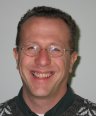 Alain Smette |
Alain Smette is a VLT operations Staff Astronomer since 2004. Following studentships at ESO-Garching and La Silla, he received his PhD from the Universite de Liège, Belgium, in 1994. He was then a Post-Doc at Kapteyn Institute, Groningen. He became a research associate at the NASA-Goddard Space Flight Center, in the STIS team, in 1997, then came back to Liège in 2001. His research interests mainly include the study of absorption lines in the spectra of quasars and gamma-ray burst optical afterglows, gravitational lensing and AGN. In addition, together with several colleagues, he develops Molecfit, a tool to correct telluric absorption lines. As member of the Science Operations Department until December 2021, he was successively the instrument scientist for VISIR, then CRIRES and Instrument Operations Team coordinator. He is currently System Scientist in the Paranal System Engineering group, within the Director’s office. |
Jonathan Smoker |
Jonathan Smoker is a VLT Operations Staff Astronomer and the instrument scientist for CRIRES (previously FLAMES and UVES). He obtained his PhD from Manchester University (Jodrell Bank), England in 1993 studying low surface brightness dwarf galaxies in HI and the optical, before moving on to be a computer systems administrator at the Royal Greenwich Observatory and IoA, Cambridge. After that came a 4-year stint as a postdoc at Queen's University, Belfast, Ireland, then 3 years at ESO Chile which he left in 2005. He is now back at the VLT, working on high velocity clouds, tiny-scale structure in the interstellar medium, the Magellanic system and some work on supernovae, B-type and Post-AGB stars. |
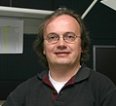 Thomas Szeifert |
Thomas Szeifert is support astronomer at the VLT since 1999. Before he was working for the FORS instrument consortium at the observatory in Heidelberg. He has been instrument scientist at Paranal for the FORS optical multi-mode instrument and the SINFONI near-IR adaptive optics integral field spectrograph. His primary fields of research are the study of long-term wind variability of Luminous Blue Variables and other massive hot stars and stellar abundance studies in the Galaxy and local group galaxies. He obtained his PhD in 1995 at the Heidelberg University for his work on Luminous Blue Variable Stars in the Magellanic clouds, M31 and M33. |
|
|
Astronomer Emeritus |
Konrad Tristram |
Konrad Tristram is an operations staff astronomer at Paranal. He received his PhD in 2007 from the University of Heidelberg, Germany, where he started his investigation of active galactic nuclei (AGN) at highest angular resolutions. After his PhD he moved to Bonn becoming an interferometry specialist. He joined ESO in April 2014 in order to support the interferometric effort at Paranal. He continues working on the dust and gas surrounding the supermassive black holes in AGN. Driven by his science, he holds a special interest in high angular resolution imaging and spectroscopy as well as in infrared & submm interferometry. Since 2015, he is the instrument scientist of VISIR. His research interests are:
|
Baltasar Vila Vilaro (JAO/SCV) |
Baltasar Vila Vilaro, is a System Astronomer in ALMA (Array Performance Group). PhD in Astrophysics at the Universidad de La Laguna/Instituto de Astrofisica de Canarias (Spain) in 1993. Moved to Japan as a post-Doc for 6 years at the Nobeyama Radio Observatory. In 1999 moved to Arizona (USA) to work at the SMTO (Sub-millimeter Observatory) of the Steward Observatory. In 2004 moved back to Japan as Instrument Scientist for the Atacama Compact Array (part of ALMA), and since 2009 is a System Astronomer at the Joint ALMA Office in Chile.
|
Zahed Wahhaj |
Zahed Wahhaj joined ESO as a VLT astronomer in 2012, as one of the instrument scientists for the exoplanet imager, SPHERE. He is interested in the direct-imaging and characterization of exoplanets, brown dwarfs and circumstellar debris disks. Before joining ESO, he was a core team member of the Gemini NICI Planet-Finding Campaign, a direct-imaging search for giant planets around 300 nearby young stars, at the University of Hawaii. He was also involved in the Cores-to-Disks Spitzer Legacy Program (2003-2006), where he worked on understanding weak-line TT stars, through the evolution of their mid-infrared (MIR) disk emission. His dissertation work was on planetary signatures in debris disks. This involved Keck high-resolution MIR imaging and Bayesian modeling of the dust disks around Beta Pictoris, HR 4796A and 49 Ceti. Zahed Wahhaj received his PhD in Physics and Astronomy from the University of Pennsylvania, Philadelphia in 2005.
|

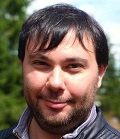


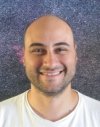

















Elizabeth Artur de la Villarmois |
Elizabeth Artur de la Villarmois is an ESO fellow with duties at ALMA. She obtained her PhD in 2019, at the Niels Bohr Institute, in Denmark, on the physical and chemical properties of embedded low-mass protostars. After her PhD, she moved to Chile as a FONDECYT postdoctoral Fellow at the Pontificia Universidad Católica de Chile where she worked with Prof. Viviana Guzmán. Scientific Interests:
|
Martina Baratella |
Martina Baratella is an ESO Fellow with duties in Paranal since November 2023. She received her Ph.D. in Astronomy at the University of Padova in Italy in 2021, with a thesis on the effects of activity on the stellar spectra of young (ages less than 150 Myr) Galactic open clusters stars observed within the Gaia-ESO Public Survey. During her Ph.D, she also became an active member of the stellar characterisation working group of the Global Architecture of Planetary Systems (GAPS) Italian collaboration. From November 2021 to October 2023, she moved to Potsdam, Germany, to join the High-Resolution Spectroscopy and Polarimetry Group as a post-doctoral researcher. There, she worked on the characterisation and the abundances determination of 1067 dwarf and giant stars observed in the Northern Hemisphere with PEPSI and STELLA-Echelle Spectrograph facilities. Scientific Interests:
|
Abel de Burgos Sierra |
Abel de Burgos Sierra is an ESO Fellow with duties in Paranal since November 15th, 2024. He did his Bachelor in Physics and Master in Astrophysics at the Universidad Complutense de Madrid (Spain). Then he moved to the Canary Islands where he worked as support astronomer for the INT and NOT telescopes in La Palma. Afterwards he continued in Tenerife where he did his PhD in Astrophysics at the Instituto de Astrofísica de Canarias. His main research interest is to study the evolution and nature of massive stars by combining empirical information derived from spectroscopic analysis, photometric lightcurves, and astrometric data. He is also interested in studying young stellar open clusters and associations to test and improve our understanding of massive stars. Scientific and technical interests:
|
Luca Cacciapuoti |
Luca Cacciapuoti is an ESO Fellow with duties at ALMA since December 1st, 2024. He graduated (BSc, MSc) in Physics at the University of Naples Federico II (IT), with theses on exoplanet detection and characterization. He was then awarded a PhD by the Ludwig Maximillian University (Munich, DE), while working on his dissertation “The inheritance of dust from cores to disk” during a 3yr studentship at ESO (Garching, DE). Luca’s research interests include different aspects of stellar and planet formation, as well as of fully-formed exoplanets. Luca’s current research focuses on characterizing the evolution of interstellar dust from the ISM to protoplanetary disks via (sub)millimetre observations:
|
Mar Carretero |
Mar Carretero-Castrillo is an ESO Fellow with duties at Paranal since December 1, 2025. She obtained her PhD at the Universitat de Barcelona. Her research focuses on massive stars and high-energy astrophysics, with particular emphasis on the identification and characterization of Galactic runaway stars. She investigates their ejection mechanisms, environments, and evolutionary pathways. Her work combines Gaia astrometry with multi-wavelength observations to search for runaways and high-energy binary systems. This is complemented with observational experience with ground-based facilities such as the MAGIC Telescopes, and is member of the Cherenkov Telescope Array Observatory (CTAO). Scientific interests:
|
Enrico Congiu |
Enrico Congiu is an ESO fellow with duties in Paranal since November 2022. He obtained his Ph.D. at the University of Padova, with a thesis on the properties of extended structures in nearby AGN. After his Ph.D. he moved to Chile to the Las Campanas Observatory where he started studying the properties of ionized nebulae in nearby galaxies as part of the PHANGS collaboration. After this first experience he moved to Universidad de Chile as a CATA/DAS fellow, continuing his work on the identification and classification of ionized nebulae, and joining the Local Volume Mapper Science team. Scientific interests:
|
Akke Corporaal |
Akke Corporaal is an ESO Fellow with duties in Paranal since May 2024. She obtained her PhD from KU Leuven (Belgium) in 2023. Akke's research focuses on the characterisation of the inner regions of the discs around post-AGB binary systems using VLTI data from the near-infrared to the mid-infrared to study both disc-binary interactions and potential planet formation processes. Scientific interests: • Infrared interferometry |
Celia Desgrange |
Célia Desgrange is an ESO Fellow with duties in Paranal (UT3) since November 15, 2024. She did her Bachelor’s in Physics at ENS de Lyon (within Université Claude Bernard Lyon 1) and her Master’s in Physics and Astrophysics at ENS de Lyon and Observatoire de Paris in France. She carried out her Ph.D. in Astrophysics at the Institut de Planétologie et d’Astrophysique à Grenoble (IPAG) within the Université Grenoble Alpes in France and at the Max-Planck Institute für Astronomie (MPIA) in Heidelberg in Germany. Her research focuses on direct imaging of exoplanets and circumstellar disks, such as debris or protoplanetary disks. By coupling different detection methods or multi-wavelength observations, she studies planetary system architectures and determines the clues they provide to constrain planet formation and evolution. Scientific and technical interests:
|
Julien Drevon |
Julien Drevon is an ESO fellow with duties at Paranal since November 2023. He did his 3-year PhD thesis in France at Nice at the Université Côte d'Azur including 1-year studentship at ESO in Chile. His PhD aimed to improve our comprehension on the mass-loss mechanism and dust formation in the circumstellar medium of evolved stars using data from the interferometric VLTI/MATISSE instrument. Scientific interests:
|
|
Carolina Finlez is an ESO Fellow with duties in ALMA since September, 2025. She obtained her PhD at Universidad de Concepción, Chile in 2019, followed by a postdoctoral position under the TITANs núcleo milenio, and joined as a Fondecyt fellow at Pontificia Universidad Católica in 2022. Their research focuses on the impact of AGN in their host galaxies, by studying feeding and feedback loops, as well as long-term variability, by analyzing extended emission line regions to infer the past history of the AGN active phases. Scientific interests:
|
Elisa Rita Garro |
Elisa Rita Garro, is an ESO Fellow with duties in Paranal since September 2023. She obtained her PhD from the Universidad Andrés Bello in Chile on August 2023. During her PhD, she focused her investigation on the discovery and characterization of new globular clusters in very obscured regions of the Milky Way, using near-IR/optical photometry and spectroscopy. Her main long term goals are to reveal the nature of new hidden star clusters, recover their origin (in-situ or ex-situ), complete the census of the Milky Way Globular Cluster system, in order to reconstruct the formation and the evolution of our Galaxy. Main Scientific Interests:
|
Ana Jimenez-Gallardo |
Ana Jimenez-Gallardo is an ESO Fellow with duties in Paranal since October 2023. She obtained her PhD at the University of Turin, Italy, in 2022, and moved to the University of Bologna for a 1-year postdoc. Ana's work focuses on the AGN feeding and feedback loop in radio galaxies, the impact of radio jets in the multiphase gas haloes in which they are embedded, and the effect of large-scale environments in radio galaxy accretion and morphology.
|
Claudio Hernandez Vera |
Claudio Hernández-Vera is an ESO Fellow with duties at ALMA since October 15, 2025. He obtained his PhD from the Pontificia Universidad Católica de Chile, which included a six-month studentship at ESO in Garching, Germany. His research focuses on the chemical composition of molecular gas during star and planet formation, using sub-millimeter observations and chemical models, with particular emphasis on the role of UV radiation in the production of organic species in protoplanetary disks. Scientific interests:
|
Robert Klement |
Robert Klement is an ESO Fellow with duties at Paranal since November 2022. He finished his PhD in 2017 at the Charles University in Prague, Czech Republic, after which he spent five years as a postdoctoral associate at the optical interferometric CHARA Array of Georgia State University located at the Mt. Wilson Observatory in California. Scientific interests:
|
|
Francesca Lucertini is an ESO fellow with duties in Paranal since October 2023. She received her PhD in stellar astrophysics from the Universidad Andrés Bello in Santiago, which included 2-years studentship at ESO in Chile. During her PhD, she used high-resolution optical and near-infrared spectroscopy to provide high-quality measurements of the chemical element sulfur in the Milky Way major components. The broader goal of her work is the chemical characterization of stars to investigate the Galactic Archaeology. Scientific interests:
|
Alonso Luna Ruiz Fernandez |
Alonso Luna is an ESO Fellow with duties in Paranal since December 2024. He did his BSc and MSc at UNAM, México, characterising globular clusters through their variable stars. He obtained his PhD in 2023 from Universidad Andrés Bello in Santiago, Chile, with a two-year studentship at ESO in Garching, Germany, where he studied the kinematics of the Galactic bulge inner region looking for Hypervelocity stars. After that, he spent a year as a postdoc at INAF-OACN in Napoli, Italy, working in astrometry and multi-epoch photometry of dense stellar fields. Scientific and technical interests:
|
Hannah Osborne |
Hannah Osborne is an ESO Fellow with duties in Paranal since July 1st, 2025. She did her Bachelor's in Physical Science at the University of Exeter (UK), Master’s in Planetary Science at University College London (UCL, UK), and her PhD in the Astrophysics of Exoplanets at the Mullard Space Science Laboratory - UCL (MSSL-UCL, UK). Her research interests are in understanding exoplanets through radial velocity observations. Her current main research is in characterizing the compositions of small exoplanets and investigating system architectures of giant planets. Scientific and technical interests:
|
Thallis Pessi |
Thallis Pessi, is an ESO Fellow with duties in Paranal since August 1st, 2024. He obtained his Bachelor's and Master’s in Physics at Universidade Federal de Santa Maria (UFSM, Brazil), and his PhD in Astrophysics at Universidad Diego Portales (UDP, Chile). His research interests are transient events, with a focus on core-collapse supernovae. His current main research is in characterizing the environments, progenitor stars and occurrence rates of supernovae. Scientific and technical interests:
|
Andrealuna Pizzetti |
Andrealuna Pizzetti is an ESO fellow with ALMA duties since September 2024. Scientific Interests:
|
Maria Jose Rain |
Maria Jose RAIN, ESO fellow with Duty Station at Paranal & Santiago Scientific Interests:
|
Camila de Sá Freitas |
Camila de Sá-Freitas is an ESO Fellow with duties in Paranal since December 1st, 2023. She did her Bachelor's and Master's in Astronomy at the Observatório do Valongo (UFRJ, Brazil), and her PhD in Astrophysics at ESO (Garching, Germany). Her research interests are in different aspects of galaxy evolution, focusing on secular evolution, dynamics, structure/morphology evolution, and quenching. Her current main research is in timing the bar formation epoch of nearby galaxies and associated evolutionary aspects. Scientific and technical interests:
|
 Rob van Holstein |
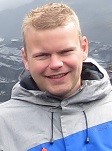
Rob van Holstein is an ESO fellow since November 2021 with duties at Paranal. He obtained his MSc in Aerospace Engineering from the Delft University of Technology in 2016. He received his PhD from the Leiden University in October 2021 on high-contrast imaging polarimetry of exoplanets and circumstellar disks, in particular using the instrument SPHERE-IRDIS at the Very Large Telescope. His main research interests are:
|













Ian BAEZA |
Working on:
|
|
Anuroop Dasgupta |
Working on:
|
|
Santiago Gil Toriello |
Working on:
|
|
Ivanna Hernández |
Working on:
|
|
|
Working on:
|
|
Kevin Hoy |
Working on:
|
|
Kristina Kallova |
Working on:
|
|
Lydia Konstantinou |
Working on:
|
|
Yi Lu |
Working on:
|
|
Nitya Pandey |
Working on:
|





 |
 |
 |
| Leslie Kiefer Librarian |
Paulina Jiron Science Office Assistant |
Helpdesk Technical Support |